I had already purchased the book online — and was waiting for it to arrive in my mailbox — when I discovered an article about its publication on page 10 of the Dec. 29, 1956, Fairbanks Daily News-Miner. The article was positive, but reading it left me feeling that I might have erred in ordering the book.
The book, by George C. Kosmos, who lived for many years in Seward, was called “Alaska Sourdough Stories” and had come to my attention while I was doing a Google search for a completely different man, King David Thurman, whom I had been researching for another story I hoped to write, and who had also spent time in Seward (sometimes in court or in jail).
The connection between King Thurman and Kosmos’ book seemed unclear to me, but as I expanded my search, I found a listing of chapters and noticed that the last one was entitled “King of the Kenai.” Perhaps, I thought, this title was a reference to King Thurman.
Anyway, the price had right: $8 for a used copy, plus shipping and handling ($3.99) and sales tax (36 cents). I figured I could afford a $12.35 shot in the dark. I entered my credit card information and placed the order.
A couple days after ordering, I found the News-Miner article, which informed me that the book was a collection of “short stories … based on fact, fiction and folklore of adventure, romance, humor and tragedy of Alaskan Sourdoughs.” It was the “fiction and folklore” part that alarmed me.
I suppose that other writers and researchers of history must experience sinking feelings similar to those I experienced upon reading those words. I had been seeking a new reliable source of information to support and broaden what I already knew about Thurman. Suddenly, this publication seemed unlikely to be of much help.
But I’m an optimistic guy. I waited and hoped for the best.
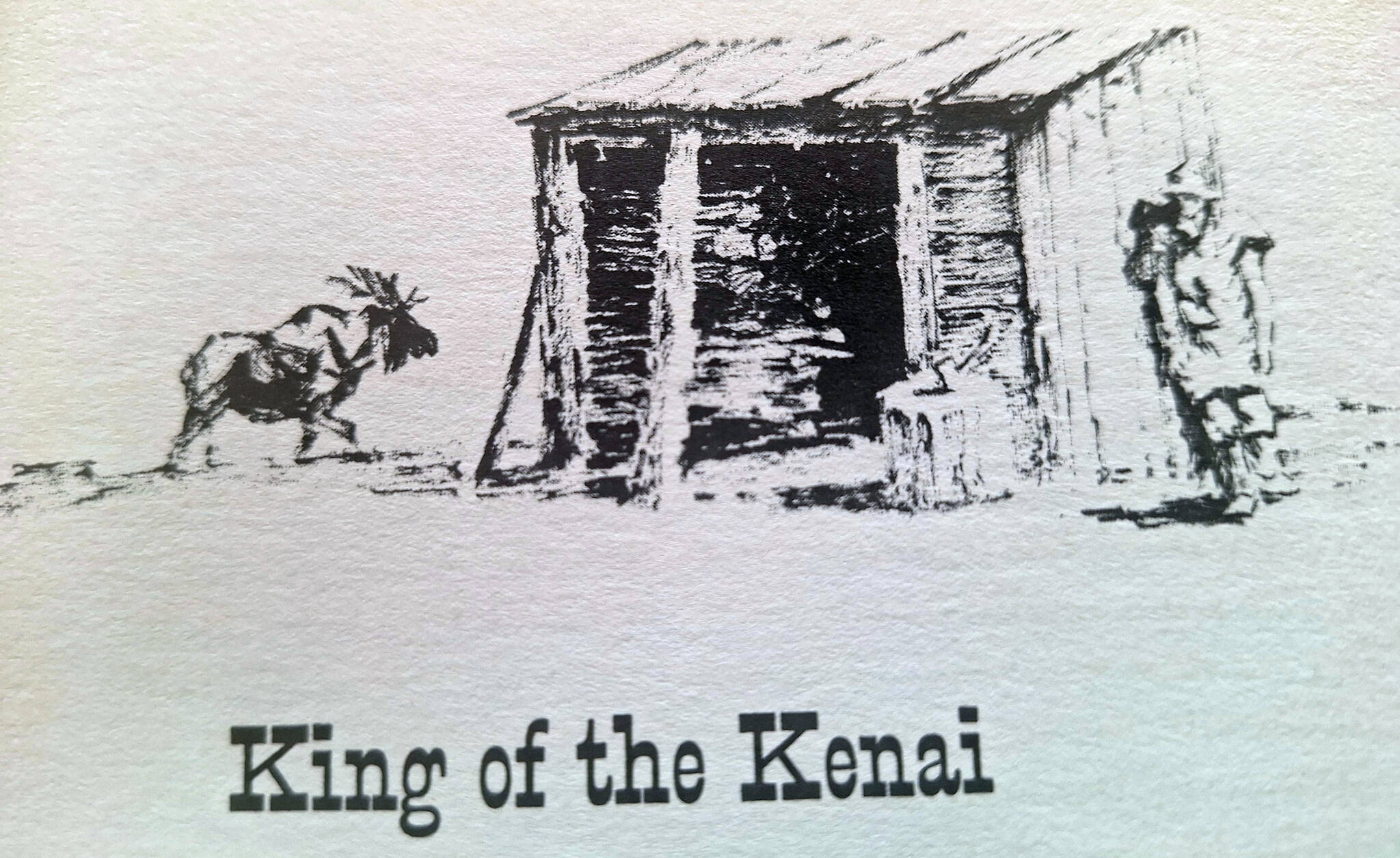
After all, George Kosmos really did have experience in this part of Alaska, his time in Seward had briefly overlapped King’s, and he had actually managed somehow to convince Eustace Ziegler, a nationally recognized painter of Alaska and Northwest scenes, to create sketches for each of the 12 stories in his book. How bad, how unreliable, could it be, given those facts?
When the package arrived in my mailbox, I grew more concerned before I even began unwrapping. To begin with, the package was remarkably slim, not much larger than a health pamphlet from a doctor’s office and thinner than a single pane of window glass.
The soft, red cover had the sturdiness of a manila envelope, and the pages inside numbered only 30, including two-page bios of both Kosmos and Ziegler. The first story began on page 7. Each tale covered about a page and a half.
I turned to the back and found “King of the Kenai,” which I quickly learned had nothing to do with King Thurman. It purported to be about Charles “Windy” Wagner, a man I had written about fairly extensively about a year earlier. My first thought was, “Well, maybe I’ll learn something new about Wagner.” But I needed to read only the first paragraph to realize that I was, once again, mistaken.
Besides the use of his name, the article also had nothing to do with Windy Wagner. Instead, it concerned a man named Steve Melchior, whom I had also previously researched and written about, and his pet bull moose Tommy (named “Billy” in Kosmos’ writing). Not only that, but other details of the story were incorrect.
Mildly entertaining, yes. Truthful and accurate, no.
Kosmos’ story about the S.S. Dora contained similar problems with the facts. In Kosmos’ version of events, the Dora was constructed to be a whaling vessel, was kept adrift by storms one winter for 92 days, and in the early 1920s was in such bad shape that it was burned and destroyed. None of those data points are correct, but they contain elements of truth that lend them an air of legitimacy.
And so on and so forth throughout the slim volume.
To me, the real tragedy of “Alaska Sourdough Stories” is that George Kosmos had a better, more authentic story to tell — his own, much of which has been well documented elsewhere.
George Christ Kosmopulos was born in Roino, Greece, on Aug. 26, 1893. He and his father came to the United States when George was 11 years old. They arrived in New York City in June 1905 on the S.S. Hudson and soon headed for California.
Even as a boy, Kosmos took advantage of his opportunities. He was a quick learner, and before long he was working as an interpreter for the Mammoth Copper Company near Redding. He lived with and worked for an uncle who owned a restaurant and then bought an interest in a gold mine in Alaska. When the uncle headed north, Kosmos tagged along.
By the time he was 15, he had landed in Seward with, according to his biography, only 15 cents in his pocket. He worked in a restaurant and in railroad construction, built fish-traps, acted as a packer for big-game hunters, mined for gold, and helped install a telephone line between Seward and Anchorage.
He also participated in one of the earliest runnings of the Mount Marathon race in Seward. (His bio claims he ran in the very first race up Mount Marathon on July 4, 1912; however, such a claim is debatable since various versions of the race origin say it began in 1908, 1909 or 1912. The first official race occurred in 1915. Kosmos definitely participated that year, finishing second behind James Walters, who completed the course in one hour and two minutes.)
What is not debatable is Kosmos’ overall athletic prowess. Besides his success as a runner and an endurance walker, he was a boxer and a baseball player and, according to his 1973 obituary, “almost — but not quite — made it to the top of Mount McKinley” in 1914.
He was also a championship-level bowler, becoming, at the time of his death, one of only 13 members of the Greater Seattle Bowling Hall of Fame.
He was said to have been in the party that discovered the Valley of Ten Thousand Smokes, to have carried mail by dog team in Interior Alaska, and to have taken Sydney Laurence on the sketching trip that resulted in Laurence’s famous paintings of Denali.
Although he continued to work in Alaska off and on, by 1920 he was once again a resident of California. He was also a married man, and he and his wife had their only child, a daughter named Elaine, a year later.
By 1930, the Kosmos family was living in Washington. He divorced his first wife, Mary, and a year later married his second, Yvonne. Four years later, when George was 57, he had his second child, a son named Philip.
He petitioned to become a U.S. citizen in 1934, and he died in Seattle on July 2, 1973.
But instead of writing about these impressive accomplishments — about the things he knew — George Kosmos stuck to a handful of sourdough tales, and few of us are richer for his effort. What he offered was much less important than what he chose to hold back.
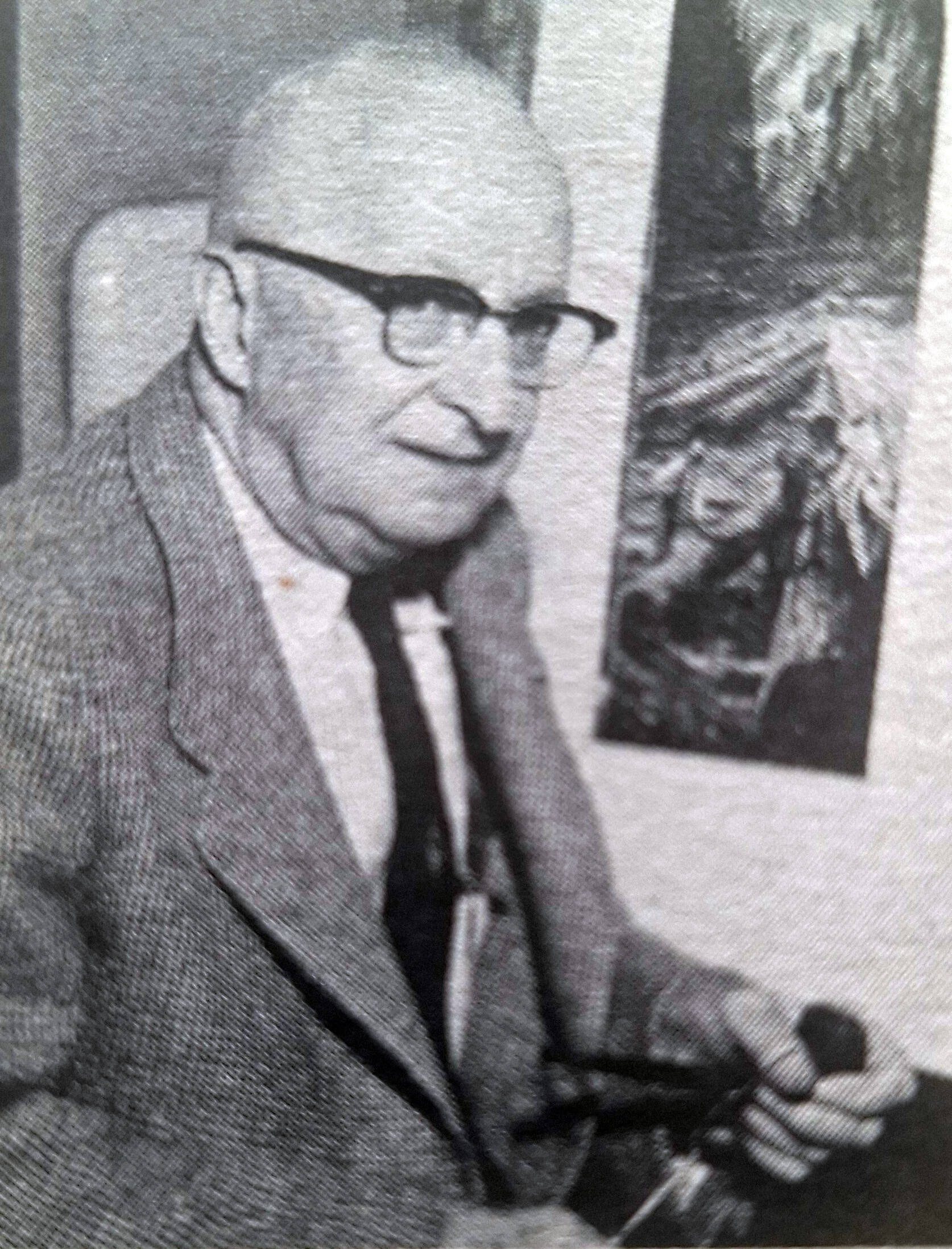
This photographic portrait depicts Eustace Ziegler, the then-nationally famous oil painter who agreed to provide the artwork for George Kosmos’ publication, “Alaska Sourdough Stories.”
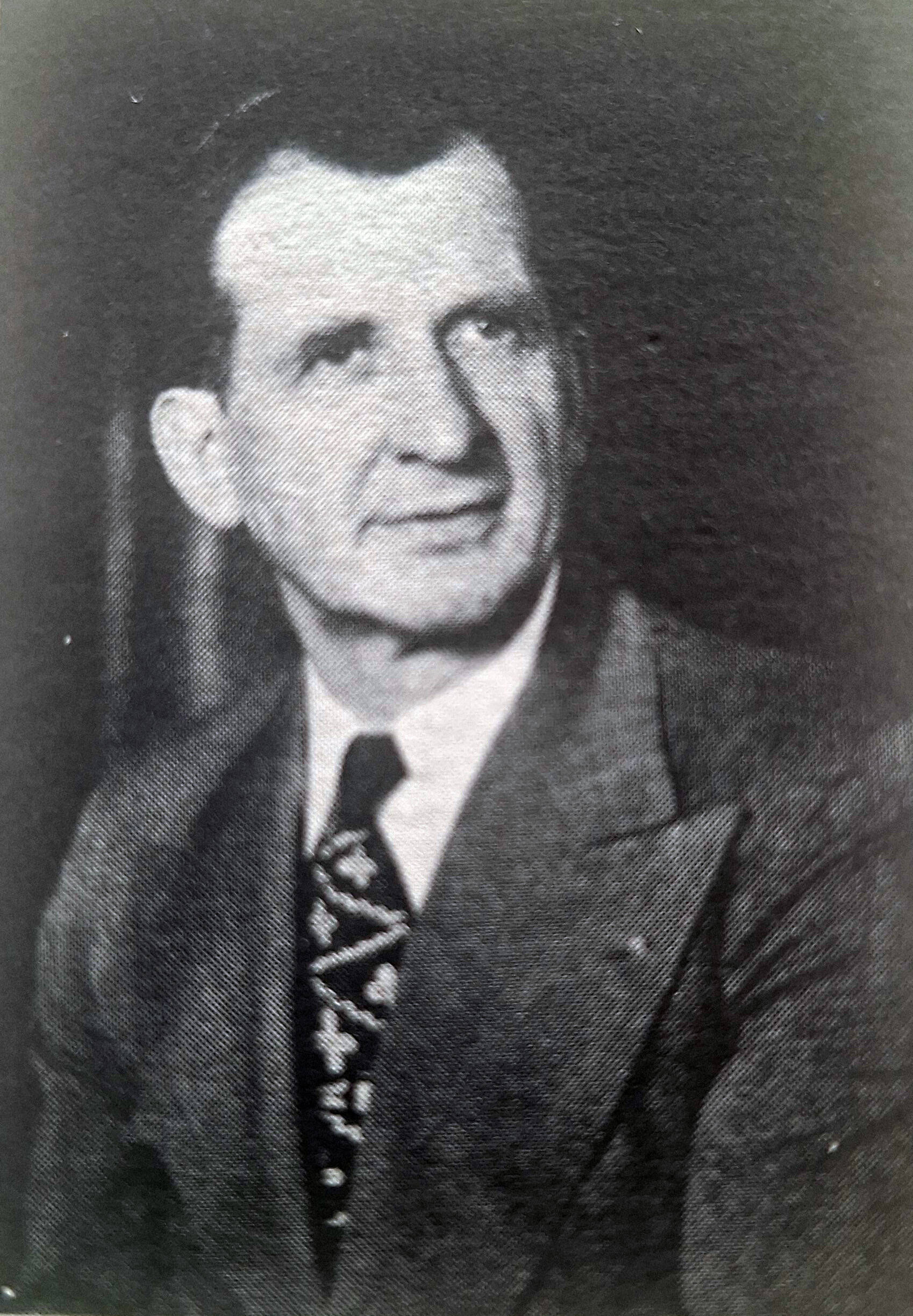
This is the portrait that author George Kosmos used in his biography in his short collection entitled “Alaska Sourdough Stories,” published in 1956.