Life in the Wilderness: The Henry Lucas Story – Part 1
Published 4:30 am Thursday, August 13, 2026


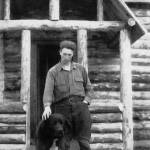
AUTHOR’S NOTE: Many of the sections in this series about the life of Henry Lucas would have been next to impossible for me to document adequately without the generous assistance of Gary Titus.
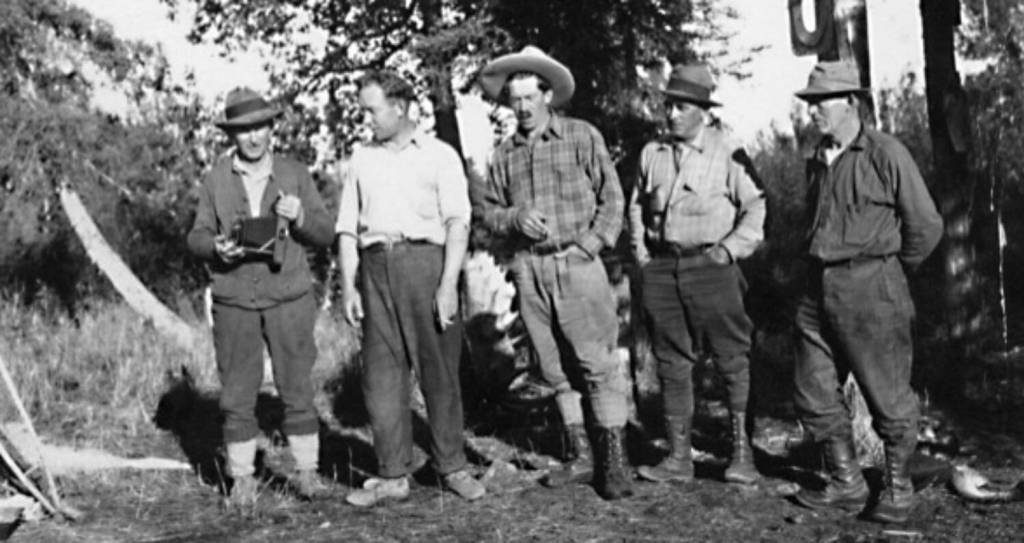
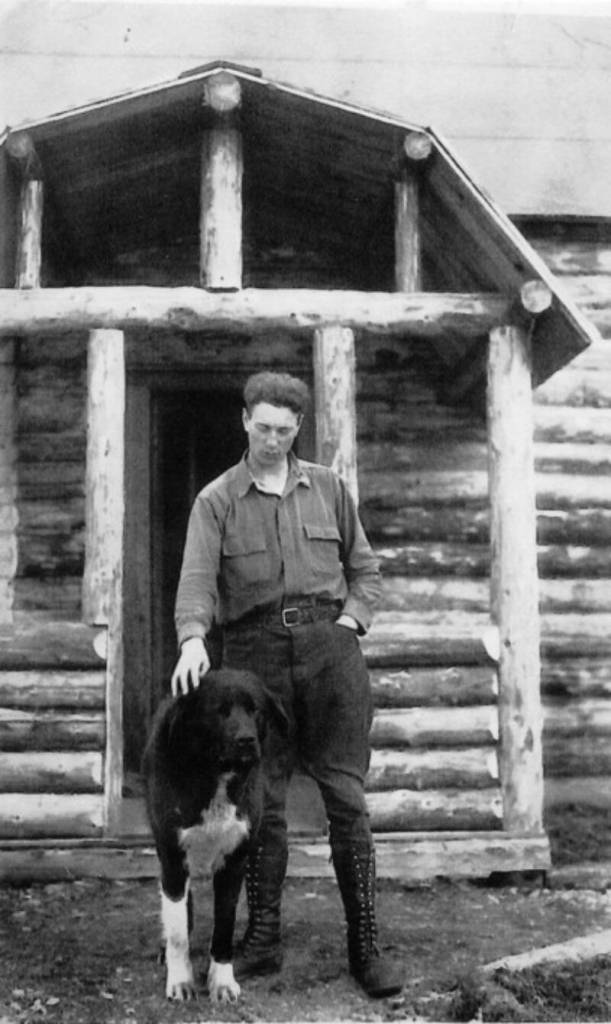
Like most big-game hunting guides, Henry “Hank” Lucas relied on his assistants during their often weeks-long outings with clients. During the 1931 hunting season, Lucas’s chief assistant helped save his life.
The assistant was Ardith Mead Crocker, but everyone knew him as “Slim.” Although he stood six feet tall in his stocking feet, and weighed only 170 pounds, he was tough. In the fall of 1931, he demonstrated that toughness and the limits of his endurance.
Slim Crocker was part of the six-man guiding and packing unit, led by Lucas, that traveled into the Kenai Mountains for a four-week hunt in the Kenai Mountains that August and September. Their East Coast clients were the Webb party, which included internationally known polo player J. Watson Webb, his wife and their two sons, plus two Yale students.
The plan called for the Webbs to cruise from Anchorage aboard the motorship Discoverer, under a special charter to Alaska Guides Inc., to Tustumena Lake, where they would be met by AGI president Robert S. Bragaw and escorted to the guide camp near Birch Creek.
There, they would be delivered into the hands of Lucas and his crew. This assemblage would ride about 15 miles on horseback into the benchlands, following the Moose Horn Trail into prime moose- and sheep-hunting grounds.
The trip proceeded as planned until the first few days of September, when Henry Lucas suddenly fell ill with what newspapers initially termed an “intestinal attack.” According to a Sept. 4 article in the Anchorage Daily Times, Lucas’s pain was so acute “that it was feared an attempt to move him [back] to the lake would prove fatal.”
In 1931, the construction of the Sterling Highway was a decade and a half away. There were no forms of electronic communication in the wilderness. Lucas needed a hospital, the closest of which were in Seward and Anchorage.
Someone was going to have to go for help. That “someone” was Slim Crocker.
Crocker saddled one of the hunting party’s horses and rode down out of the mountains to Tustumena Lake, where he switched to a small boat powered by an outboard almost certainly no larger than 20 horsepower.
He motored down the lake to its outlet and down the full length of the Kasilof River to Cook Inlet. He then cruised along the coast to the northern Kenai Peninsula and crossed Turnagain Arm to Anchorage. His entire journey from hunting camp to hospital required approximately 24 hours.
According to the Times, within 20 minutes of his arrival at the Alaska Railroad Hospital, he was on the move again — back to Henry Lucas, who was being attended to by guiding-crew members. The return trip, for Crocker, would occur in an eyeblink of time compared to what he had already accomplished. This time, he would be flying.
In Anchorage, an emergency response was quickly arranged. Accompanying Crocker back to Lucas was an Anchorage surgeon named Dr. August Stanley “A.S.” Walkowski and Pacific International Airways pilot Frank Dorbandt. After landing a floatplane on the lake, the trio traveled on horseback to Lucas’s camp.
Dr. Walkowski quickly diagnosed that Lucas, already in critical condition, had a ruptured appendix. “His only hope of recovery,” wrote the Times, “lay in reaching a hospital without delay.” For Lucas, however, getting to a hospital initially required a long and painful horseback ride to the lake.
Crocker, a licensed guide in his own right, remained in camp to rest briefly before completing the hunt that the Webb party had paid for.
Dorbandt, Walkowski and Lucas reached the Anchorage hospital in the evening on Sept. 4, and as quickly as the patient could be prepped for surgery, he went under the knife.
Walkowski’s main concern was containing infection. He determined that Lucas was in such a weakened state that it was best to leave the damaged organ in place and to clean and disinfect the area and stabilize the patient.
The next afternoon, the Times wrote that Lucas’s condition was “slightly improved” but added that he was “a very sick man, and the outcome [of the emergency procedure] is still a matter of uncertainty. He is making a brave fight for life, however, and the fact that he possesses a robust constitution is in his favor.”
Despite his well-earned reputation for toughness, the nearly 48-year-old Lucas was hardly an imposing figure. Lean and wiry like Crocker, Lucas stood six inches shorter and often weighed less than 150 pounds. But a lifetime of outdoor living and working had indeed hardened him.
A week after his hospitalization, the Anchorage paper reported that Lucas was continuing to rally. After a second week had passed, he was feeling well enough to see visitors. By mid-October, he was walking around inside the hospital and making daily trips into town.
On Oct. 27, he boarded a train in Anchorage and traveled to Seward to complete his convalescence in the home of some friends. The Anchorage Daily Times called his recovery “miraculous.”
But his medical journey was incomplete. His body still contained the remnants of his ruptured appendix, and doctors had informed Lucas that the rest of that organ would have to be removed.
On Dec. 9, he returned to the hospital for a second operation. On Dec. 22, he boarded the train back to Seward to spend the holidays. By spring, he was hiking in the mountains again.
Back to the Beginning
Henry Lucas was born on either Oct. or Nov. 25, 1883, in the tiny village of Ribnik in northern Croatia, then part of the Austro-Hungarian Empire. His last name at birth was Lukač, with an approximate pronunciation of “LOO-kotch.”
Some documentation states that Lucas’s parents were John Lukač and Anna Wadwan, but the validity of that information is unclear. In fact, almost nothing is thus far known about Lucas’s life before he emigrated to the United States.
One thing is certain, however: He had an older brother, Peter Lukač, who also emigrated to the United States.
Peter, who was born in the same village on April 27, 1876, moved to the United States by 1898, settled in Kansas City, Kansas, and was likely the sponsor for Henry’s arrival in 1901. Peter, who found work in one of the Kansas City slaughterhouses, brought Henry there and probably helped him get a job.
How long Henry remained as a slaughterhouse employee is uncertain, but it appears that he moved to Alaska in 1907.
At least one source states that he spent some time in Montana prior to making Alaska his permanent home.
Peter Lukač, on the other hand, spent the rest of his life in Kansas City, which had a large ethnic-Croat population and was generally ethnically diverse. He married fellow Croatian immigrant Jana “Anna” Sopcic (sometimes spelled Soptic), fathered a number of children, moved his family into the Strawberry Hill neighborhood, and remained a meat packer for decades.
Henry, on the other hand, never married and never, as far as anyone knows, had any children.
TO BE CONTINUED….