Group tracking sandhill crane numbers in Kachemak Bay area
Published 4:30 am Friday, May 1, 2026
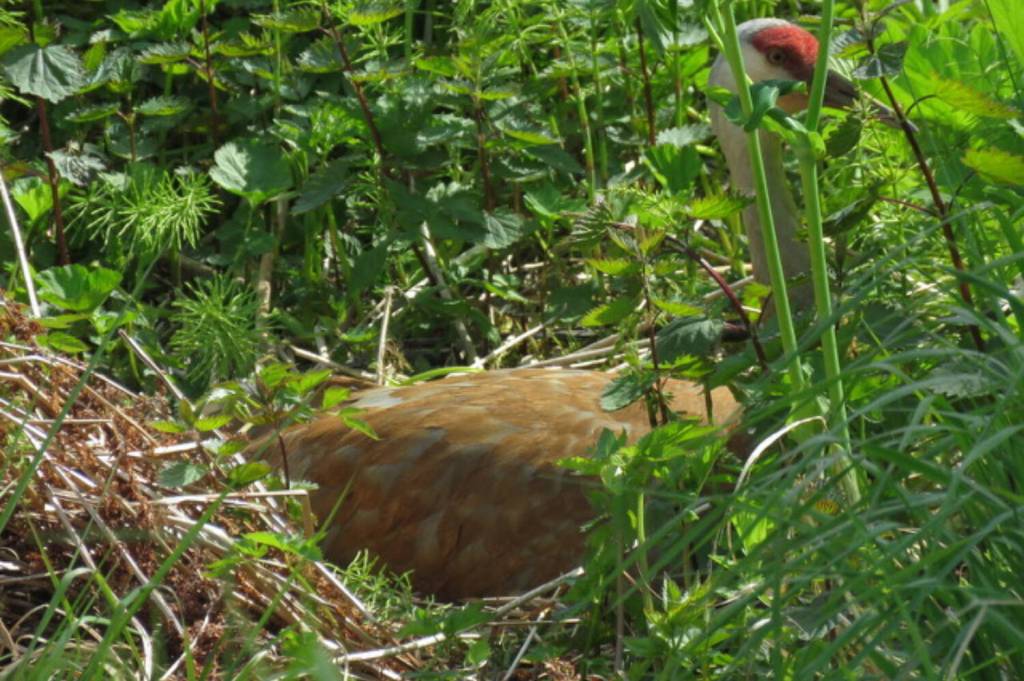
The sandhill cranes have returned for their annual nesting cycle, and a local group is asking the public to help gather information on the birds in the Kachemak Bay area.
After arriving, crane pairs paint their feathers, perform elaborate courtship dances, choose a nest, mate, and then lay their eggs. Since pairs arrive at their territories on different dates, eggs will be laid over several weeks and will start hatching during late May and into June. The pair trades nesting duties so one is off the nest feeding, preening, and resting while the other is incubating the eggs.
Kachemak Crane Watch is attempting to gather accurate information for its nesting ecology study, recording the distribution of cranes from Anchor Point to the head of Kachemak Bay; nests and colts (chicks); population numbers; arrive and departure dates; and mortality due to eagle predation, dogs, and other causes.
The public is asked to record how many cranes you saw, when and where you saw them, what they were doing, the number of young, and the type of habitat they were in.
According to Kachemak Crane Watch, sandhill cranes use a variety of habitats for nesting around the Kachemak Bay region. Nests are frequently located in upland areas among pushkie, native grasses, and fireweed. An island within a pond makes an ideal nesting area. Bogs, marshes, or estuaries are also used. Around Homer and Anchor Point, sandhill cranes are often found nesting near people’s homes.
Please report nesting sandhill crane pairs to Kachemak Crane Watch at reports@cranewatch.org or by calling 907-235-6262. Leave your name, phone number, and the location and date when nesting started. KCW does not share nesting site locations with the public for the safety of the cranes and privacy of their human neighbors.