Brick by Brick: Kenai’s Russian Kiln — Part 3
Published 4:30 am Thursday, August 6, 2026

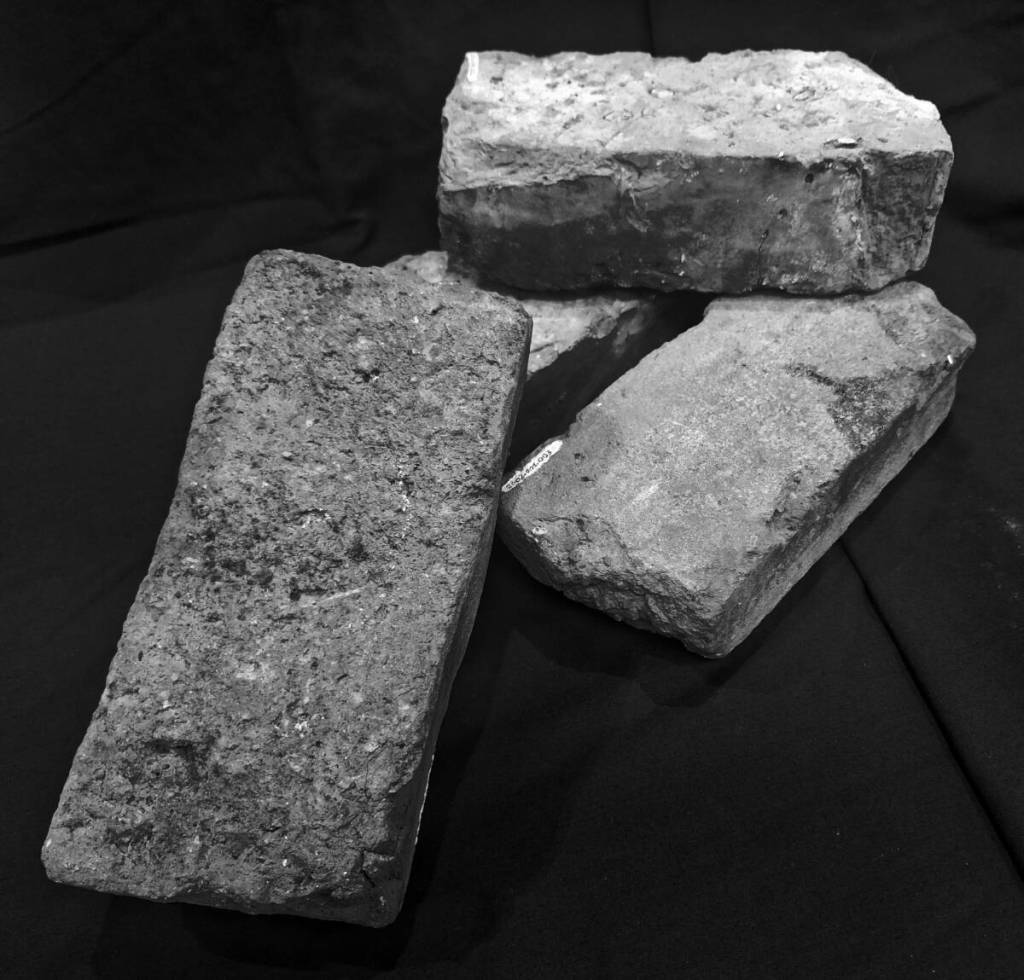
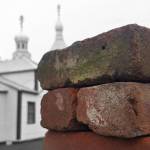
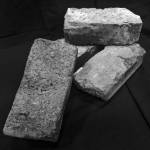
AUTHOR’S NOTE: Other than some raw numbers, the history of brick making in colonial Alaska is poorly understood. Nevertheless, the Russian government in Alaska considered the manufacture of bricks highly important. During the 19th century, the Russian-American Company had kilns in at least nine different locations, including Kenai from 1841 to 1866.
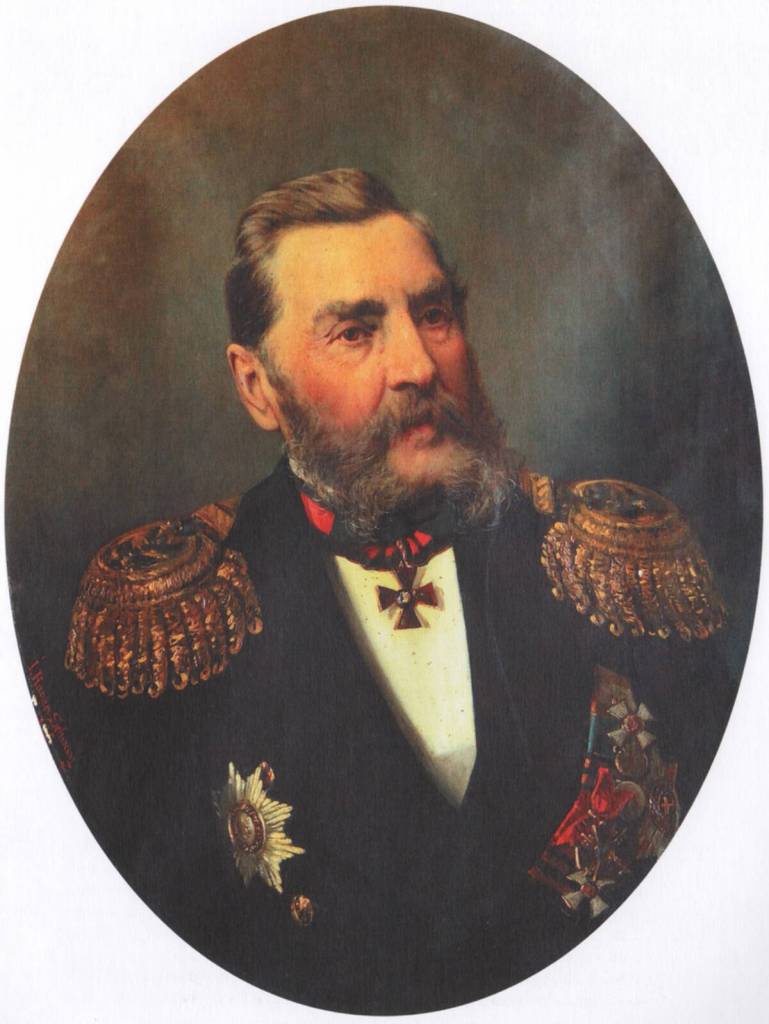
On July 7, 1842, Arvid Adolf Etolin, chief manager of the Russian-American Company (and de facto governor of the Alaska colony), directed Capt. Kashevarov, commander of the schooner Kvikhpak, to prepare his ship to sail from Kodiak to Kenai to pick up bricks and other items. Kashevarov was to deliver the bricks to Ukamok Island, in the Kodiak archipelago, where they were to be stored until an autumn delivery could be arranged for the bricks to be hauled to the capital city of Sitka.
In September, Etolin informed the Kodiak office that when “Mr. Pavlov” sailed for Sitka — very soon, he hoped — bricks should fill the hold rather than the usual ballast. Etolin expected to receive as many bricks as possible.
By this time, the brickworks in Kenai, under the direction of master brickmaker Efim Abyshev, had been up and running for almost a year and a half. Although Etolin was pleased with the quality of the bricks being produced, especially given the demand in Sitka for the bricks, he always wanted more.
In August 1843, Etolin instructed that a shipment of mostly Kenai bricks stored in Kodiak be delivered soon to Sitka. If fewer than 10,000 bricks were available for this shipment, he stated, the Kvikhpak should divert to Kenai for more. He urged any opportunity for another brick delivery.
In the spring of 1844, although Capt. Lindenberg, commander of the Russian vessel Chichagov, was dealing with an incursion of American whalers attempting to kill whales near Kodiak and its archipelago, Etolin instructed Lindenberg to leave the area in July and cruise to Kenai to pick up furs and bricks.
Lindenberg was further instructed to then return to Kodiak, stow his Kenai freight and resume his watch for pirating whalers. In the fall, after the end of the whaling season, Lindenberg was to reload his ship with the stored furs and bricks and hurry on to Sitka.
It was also during this time that the first problem arose at the Kenai brickworks. Abyshev, a colonial master brickmaker since 1825, was ill. Etolin suggested that he be sent for treatment to Sitka. Once Abyshev was well, said Etolin, he should be returned to Kenai to continue his work.
The following year, the cause of Abyshev’s illness became clearer. Although he received a certificate acknowledging his 20 years of “zeal” and his faithful service to the colony, it was noted by an unnamed administrator that Abyshev was “given to drunkenness,” prompting “sickness and unfitness.” He was also 1,321 rubles in debt to the RAC.
The decision was made to forgive his debt, terminate his job, and send him back to Russia.
Meanwhile, production at the Kenai brickworks continued apace, and a new company manager, Mikhail Dmitriyevich Tebenkov, took over for Etolin. Kenai’s new master brickmaker, Nikolai Ittuliakh — with a salary of 240 rubles per year and about 36 pounds of flour per month — was instructed to “try to have at least 20,000 [bricks] made per year, and made as durable as possible.”
In the summer of 1846, Tebenkov, eager to bring as many Kenai bricks as possible to Sitka, ordered a second ship to check in with the Kodiak office to determine whether another visit to Kenai was necessary. In 1848, he personally visited Kenai and returned to Sitka on a ship — the brig Baikal — bearing a load of furs and 19,000 bricks, in spite of the Baikal’s construction rendering not ideal for entering the mouth of the Kenai River.
He complained that the Kenai River lacked effective anchorage and lamented the lack of a good master brickmaker, but he also praised the brickworks for its well-maintained buildings and generally congenial work atmosphere.
In comparison to what he characterized as the wild, gloomy and sometimes severe vistas he had encountered elsewhere in the Russian colony of Alaska, he said that the eastern shore of Cook Inlet looked “like a land created for man.” Many former Kodiak employees of the RAC, he said, had requested resettlement in Kenai.
Over the years that followed, the Kenai bricks kept coming, and new RAC directors/governors — Rosenberg, Rudakov, Voyevodsky, Maksutov — kept cycling in, each one, until the last, eager for more bricks from Cook Inlet.
Rosenberg, in 1851, reported that Sitka, despite the annual shipments, was nearly always short of bricks.
In April 1852, Rosenberg informed the Kodiak office that, “due to the complete lack of bricks” at Sitka, the schooner Tungus must sail twice to Kenai during the summer to get as many bricks as possible, even if that meant that the Tungus would have to either adjust or forego its other duties.
“More, more, more!” seemed to be the administrative mantra, regardless who was the master brickmaker and who was the governor. Until Maksutov.
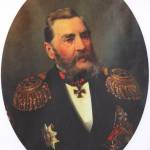
In his November 1865 report, Dmitry Petrovich Maksutov said that things were in good shape at the fort in Kenai but that change was imminent.
The company’s buildings in Kenai were well maintained, both within the fort and without. Company accounts were in order. Gardens were prospering.
But, Maksutov stated, an actual garrisoned fortress was no longer necessary. A basic, nonmilitary outpost, with one manager and assistant, an interpreter and some menial labor, would suffice.
Also, he contended, it was time to move away from “poor quality” Kenai bricks and start paying for the importation of a better, cheaper product from Canada’s Vancouver Island. In place of the brickworks, the RAC’s commercial fishery would ramp up production.
Money generated by the fishery would help to fund the importation of Canadian bricks.
As a result, production at the Kenai brickworks came to a halt.
For the fishery, some of the workers — about five men, said Maksutov — were to be brought in each summer from Kodiak and sent back during the winter months. He believed it would not be efficient to bring in permanent employees from Kodiak.
Kenai residents in the winter, he said, “have no particular occupations and all their work consists solely in laying in a supply of firewood for themselves, clearing snow, preparing lumber for buildings in which they themselves live, etc. In a word, they work only for themselves.”
Maksutov’s concern was the bottom line, and that bottom line no longer favored Kenai bricks.