Council discusses short-term rental policies
Published 1:30 am Tuesday, March 3, 2026
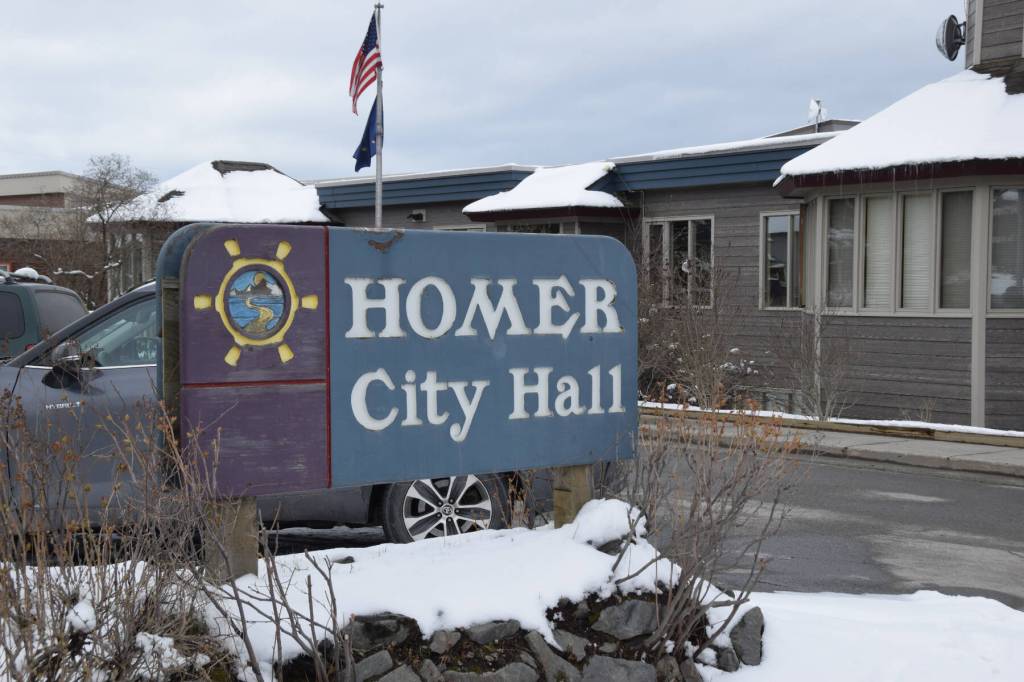
The Homer City Council revisited the conversation on short-term rentals regulation during their last regular meeting on Feb. 23, with discussion held on some specific questions.
In a Feb. 19 memo included on the agenda, council member Jason Davis summarized a discussion he had earlier that month with Kenai Peninsula Borough officials regarding STR sales tax collection options. Memorandum CC-26-050 also outlines potential policy options that, Davis wrote, “the Council may wish to consider for improving long-term compliance, administrative clarity and encouraging a level playing field among lodging providers.”
“For the last couple years at (the Alaska Municipal League meetings) in Anchorage, when council members have spoken with the Airbnb representatives there, they have said they have a program where they could collect city and borough sales tax at the point of sale, the way it’s done with Amazon and other companies,” he said during the meeting. “Because the borough collects our sales tax for us normally, we had asked the borough a couple of times about whether they might be interested in doing that. The answer had come back no.”
According to the memo, Davis met with Kenai Peninsula Borough Mayor Peter Micciche and finance director Brandi Harbaugh on Feb. 12 to discuss the possibility of booking platforms like Airbnb collecting borough and City of Homer sales tax directly from consumers at the time they make their reservations.
“I explained that because short-term rentals are decentralized, frequently changing and primarily transacted through online platforms, there is a widely shared belief that the only consistently reliable point to capture tax is at the moment of booking,” he wrote in the memo. “Many municipalities nationwide, including Anchorage and Juneau, have already moved to direct collection.”
Micciche and Harbaugh both expressed reservations to Davis about platform-based collection and explained that because there are many jurisdictions within the borough — each with different sales tax rates and some that vary throughout the year — it would be a “big undertaking” for the borough to implement in partnership with Airbnb.
According to the memo, Harbaugh also was concerned about reliance on aggregate reporting from Airbnb rather than transaction-level data, as well as potential issues presented by the borough’s $500 taxable cap. She also told Davis that she understood that Anchorage’s agreement with Airbnb had negatively impacted the municipality’s ability to audit local businesses.
Paula Birmingham, a tax enforcement officer in the Anchorage Treasury Department, said that was not the case.
“We audit hotels and bed-and-breakfasts all the time. When we do (financial) audits, I look at their records, I look at pretty much everything,” she told the Homer News Monday. “It has not had that kind of an impact on our room tax audits or any other tax audits.”
Harbaugh did not respond to a request for comment by press time.
While the borough might not be interested in pursuing STR platform-based sales tax collection, Davis said that during his meeting with Micciche and Harbaugh, he was told that there is nothing preventing the City of Homer from entering into its own agreement with Airbnb to collect the 4.85% city sales tax — which the borough currently collects for the city as an administrative service — directly at the time of booking.
“This wouldn’t be something new if we did it,” Davis said during the Feb. 23 meeting. “To me, it sounded kind of new, but (Micciche and Harbaugh) informed me that when I pay sales tax to Amazon, or to Etsy, or to H&M, that tax does not go through the borough. It’s collected by the online retailer, and it makes its way to the city directly, not through the borough, via the (Alaska Remote Sellers Sales Tax Commission). So, I think it’s worth thinking about and pursuing.”
Additionally, Davis said, Harbaugh noted that the borough currently utilizes a compliance software that identifies STR operators who appear to be noncompliant on sales tax collection.
“They mentioned that the one city in the whole borough that has basically perfect compliance, or very close to perfect compliance in the sense that the software never turns up people that are out of compliance, is Seward,” Davis said. “And the reason for that, the finance director said, is that Seward requires short-term rental owners to register their property with the city.”
Davis clarified that, should the council choose to pursue STR registration requirements, it would be treated as a separate issue from sales tax collection.
He also confirmed Monday that any new STR regulations would only affect rentals within Homer city limits.
The city previously considered, in late 2023 and early 2024, an ordinance to add short-term rentals regulations in Homer City Code Title 5, including a requirement for STR owners to register their business with the city and confirm state business license and borough sales tax compliance. The Homer Chamber of Commerce held a panel discussion on the proposed ordinance in January 2024, during which two of the panelists said they didn’t see the need for city-level regulation of the STR industry. Public feedback received by the city was largely opposed to the regulations proposed in the ordinance, and the council ultimately voted it down in February 2024.
The conversation continued, however, as the council approved a resolution in May 2024, asking the borough to coordinate with Airbnb on the direct collection of sales tax on STRs. Short-term rentals also continued to be a topic of discussion as the city worked with consultant Agnew::Beck to finalize the 2045 Homer Comprehensive Plan rewrite.
Homer resident Karin Marks said during the public comment period at the beginning of the Feb. 23 that the information provided in the memo, as well as community comments and discussions on STRs in the Homer Planning Commission’s Title 21 work sessions, showed a need “to address this whole subject with a standalone ordinance.”
Council member Bradley Parsons said he supported pursuing a larger conversation with the community, and that he appreciated there were other communities within the borough and state that Homer could look to, “so we’re not reinventing the wheel.”
“We know what has worked, and Seward strikes me as a sister city in this,” he said. “Granted, they have other money sources that we don’t quite have, with cruise ships, but still, it’s a similar community that we might be able to draw from.”
Council member Donna Aderhold said she was “intrigued” by the proposed policy options but the council would need to be mindful of staff time if they decided to pursue further.
“We’ve gotten some indication individually from several members of (the Economic Development Advisory Commission) about the interest of the EDC in taking up this whole short-term rentals thing,” she said. “In terms of the tax collection, I think it would be interesting — I definitely would like to hear from short-term rental owners on how that would affect them.”
Council member Shelly Erickson stated support for the city pursuing the platform-based direct tax collection to help provide “a good level playing field inside and outside the City of Homer.”
“I do support a registration, but I wouldn’t like it to have a cost with it, because they’re going to be actually working for us in making sure that we’re getting the sales tax that is due us,” she said.
Mayor Rachel Lord raised concerns about the logistics of platform-based sales tax collection, as the city currently does not have infrastructure in place for collecting tax itself. Davis clarified that Airbnb would collect sales tax on behalf of the city and make a monthly payment to the City of Homer, as is currently done for other businesses through ARSSTC.
“If it’s simple like that, cool,” Lord said.
She encouraged the rest of the council to have a conversation to “really try to pinpoint” what the council’s appetite and interest is, should they decide to pursue STR policy.
“I personally think that moving forward in some sort of short-term rental policy landscape is smart,” she said. “That’s just my opinion, but a lot of other opinions exist out there, and I anticipate a lot of the same conversation happening.”
No official action was taken nor direction given to the city manager or commissions by the council on Feb. 23 regarding implementation of or investigation into either policy option. Rather, council discussion on the memo was intended to measure interest among council members, commission members or city staff in pursuing either or both policy options in future.
The Homer Planning Commission has included on their March 4 meeting agenda a memorandum brought forth by commissioners Dotti Harness that proposed options for long-term rental incentives. An introduction to Memorandum PL26-002 states that as the topic of short-term rentals continues to be discussed in the community, Harness has suggested ideas to consider “changing the STR registration narrative to long-term rental incentives.”
According to Community Development Director Julie Engebretsen, the Economic Development Advisory Commission will also discuss STRs at their next meeting on Tuesday, March 10 at 6 p.m.
“Ideally each commission puts their ideas in a memo to council, and then council can draft a resolution with tasks for commissions and staff,” she wrote in an email to Homer News Tuesday.
Short-term rental regulation will also be included in the public review draft of Homer’s Title 21 Zoning and Planning Code, which Engebretsen said will come out later this month.
Find Memorandum CC-26-050 and the Feb. 23 meeting recording in full at www.cityofhomer-ak.gov/citycouncil/city-council-regular-meeting-357.