Life-changing moments in the Hawley Sterling story — Part 2
Published 1:30 am Thursday, April 9, 2026
AUTHOR’S NOTE: On Oct. 4, 1918, a young mother named Margaret Sterling left her Nenana home to ride a launch up the Tanana and Chena rivers to Fairbanks to be with her ailing and hospitalized father. The next day, a telegraph message reached Nenana—and Margaret’s engineer husband Hawley W. Sterling—that the boat and all its passengers had sunk in the Tanana’s icy, turbulent waters. It was believed that all aboard had drowned.
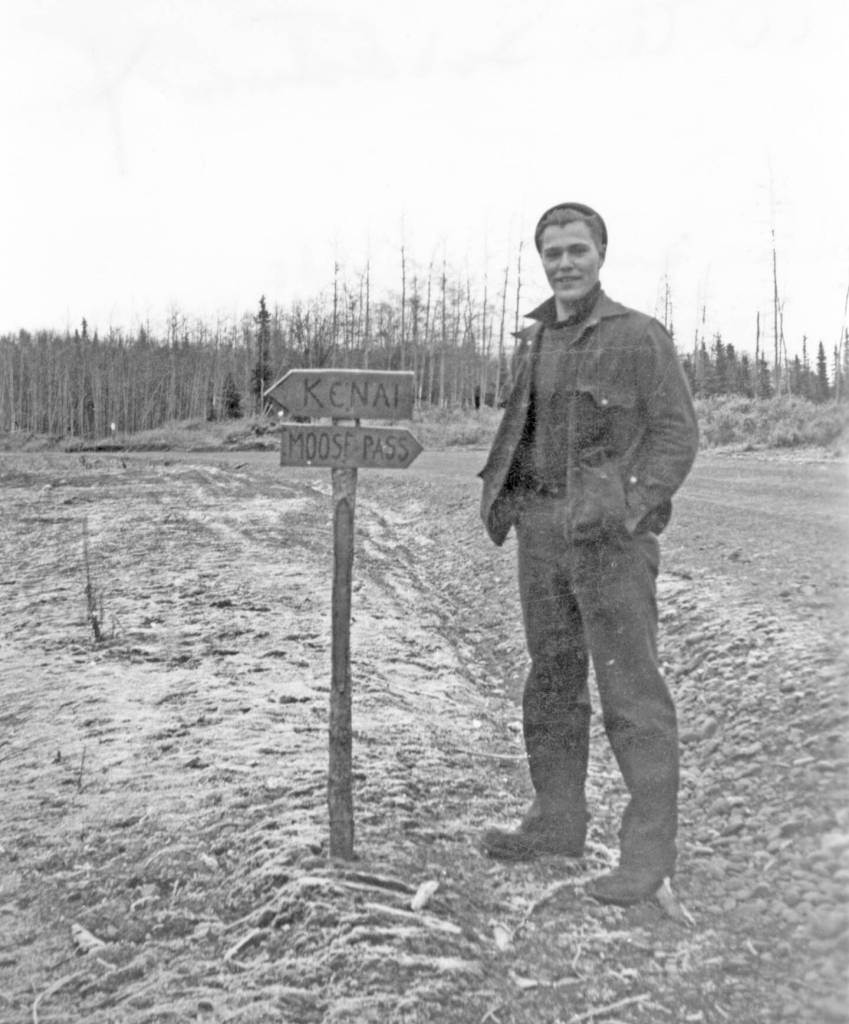
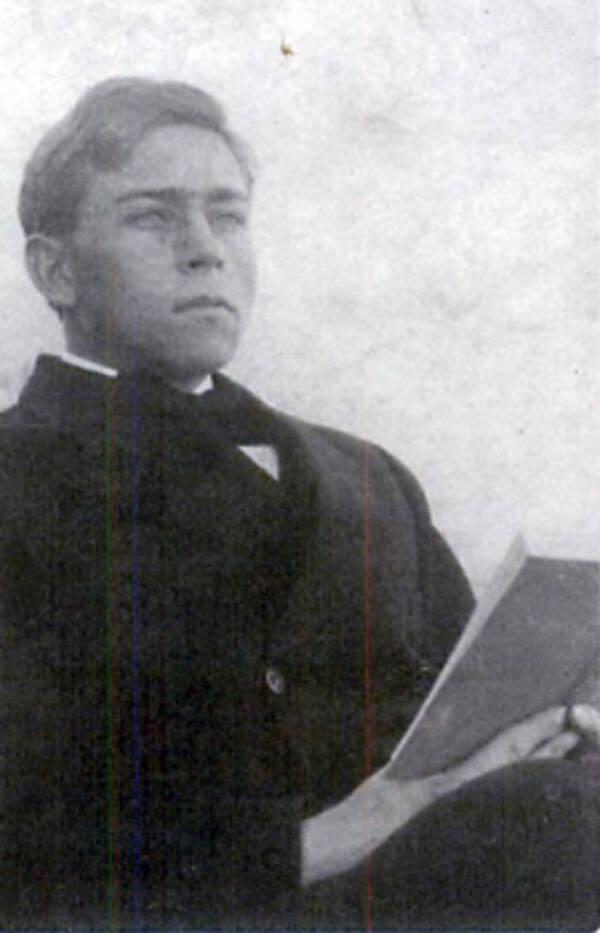
On Oct. 5, 1918, Hawley Winchell Sterling, the man who would become the namesake of a Kenai Peninsula community and highway, learned of the prior day’s sinking of the launch Flyer on the Tanana River. It was suspected that neither the pilot nor any of his passengers, including Sterling’s wife, Margaret, had survived.
As soon as he could make arrangements for the care of his infant son Joseph, Sterling climbed aboard a boat in Nenana and made his way upriver to the accident scene, planning to join the search for survivors or bodies.
In order to improve communication between search parties and those awaiting word in Nenana and Fairbanks, a temporary telegraph station was established near Norman Hadley’s home, about three miles downstream from the original accident site.
On Oct. 10, the first body was found. Anna Otilla Craig, wife of passenger Charles Craig and mother to their two-year-old son Robert, was discovered floating about 300 yards above the place where the Flyer had first been spotted sinking.
Although there were conflicting details, Mrs. Craig was wearing a life preserver, apparently tied to her back. When her body was recovered from the water, searchers discovered inside one tightly closed fist a tuft of blond hair, believed to have belonged to her son.
Around the same time, Margaret Sterling’s handbag was found, as were a campstool belonging to the boat owner, Mrs. Craig’s hat, a ball of yarn with knitting needles stuck through it, and a notebook of passenger George Coleman, manager of the Northern Commercial Company story in Fairbanks.
The search dragged on, with searchers doubting that any of the individuals aboard could have survived. Many assumed that, other than Anna Craig, the rest of those in the Flyer, were still aboard, trapped beneath the silty current and the advancing ice. The searchers just hoped to recover the bodies and find closure for affected families.
Sometime during October, Hawley Sterling offered a $1,000 reward—more than $21,000 in 2026 dollars—to the first person to discover the launch. By Oct. 28, however, the launch had not been located, and the search had been abandoned.
Sterling refused to give up. He announced plans to use lights to search through the heavy river ice, but bitterly cold weather eventually obliged him to halt his attempt and await the spring thaw.
By mid-November—as rumors abounded concerning the cause of the wreck—it was generally acknowledged in the press that everyone who had been on board the Flyer as it neared the village of Chena on Oct. 4 was no longer simply missing. All were presumed dead.
Coming into the country
Hawley Sterling appears to have first come to Alaska in 1910. He was about 21 years old and had headed north for the summer after completing another year at the University of Denver. In Juneau that summer, he landed an engineering assignment with the Treadmill Mine. In 1911, he returned to the territory and accepted a position on the survey team marking the physical boundary between Alaska and Canada’s Yukon Territory.
Sterling graduated with a degree in civil engineering from the University of Denver with the Class of 1912, three years after his older brother Charles had graduated from the same school.
Their father, Joseph Sterling, was a lawyer and reportedly had wanted his sons to enter the same profession. Charles obliged, as did their younger brother Theodore, but Hawley forged his own path.
Hawley was born June 12, 1889, in Leroy, Illinois. His parents, Joseph and Hattie (nee Winchell) Sterling, also produced three younger children, Theodore and two daughters. By 1900, the Sterling family was living in Denver.
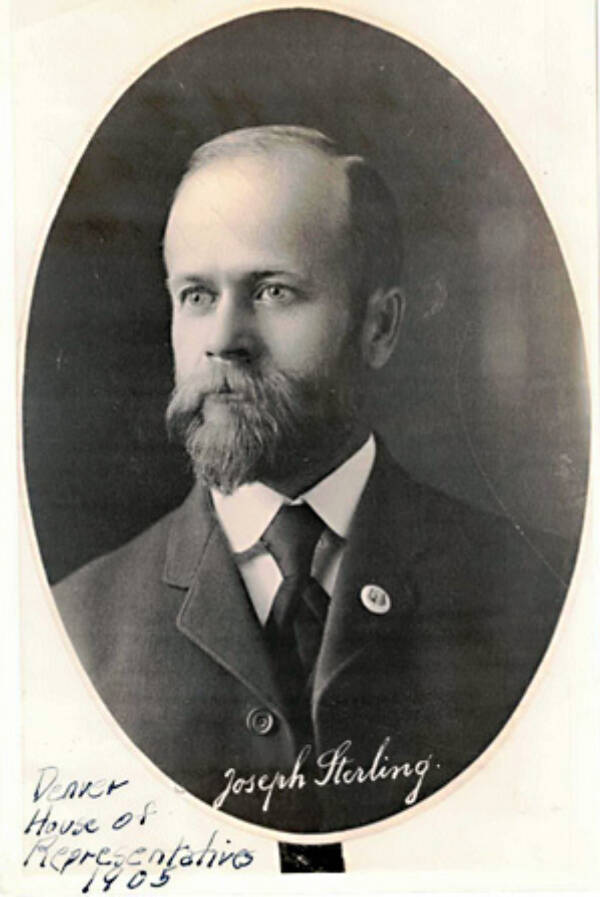
Hawley’s father became a Republican member of the Colorado State Legislature in 1905, then suffered a stroke just three years later. He died at home at the age of 49, leaving his widow and their five children, the youngest of whom were ages seven, 12 and 17.
According to the Official Register of the United States in 1913, Hawley Sterling was stationed in Juneau and was serving as the assistant chief engineer for the Alaska Road Commission. His annual salary was $6,700.
Also during this year, he worked again on the survey team marking the Alaska-Yukon Territory boundary, a 1,507-mile straight line that followed the 141st meridian, starting at the Arctic Ocean in the north and ending on the towering Mount St. Elias.
In the late summer and early fall of 1913, a U.S.-Canadian survey team, including Sterling, attempted to summit the 18,000-foot peak and add the final stone monuments to its demarcation of the boundary line, thus officially completing a seven-year, $1.5 million effort. Mount St. Elias, known for its sometimes-tumultuous weather, produced a storm that forced the team to retreat at about the 16,000-foot mark.
In 1914, the Alaska Railroad Act—signed by President Woodrow Wilson and, via the creation of the Alaska Engineering Commission, designed to facilitate the construction of a railway system throughout Alaska—provided an opportunity for Sterling to become an AEC surveyor and engineer. As he focused on the track south of Fairbanks, his career led him to the newly established rail station at Nenana.
It was at this post that Sterling found himself when Margaret and the other passengers disappeared on the fatal final voyage of the Flyer.
The Juneau Empire ran an obituary for Margaret on Nov. 14, 1918. An excerpt indicates the high regard in which she had been held:
“In 1906 [when she was eight or nine years old] the family came to Fairbanks, which has been their home ever since. During her early girlhood days, she attended the Fairbanks public schools. As she grew to womanhood, she also grew more beautiful and, at the time of her death, was considered one of the most beautiful women in the interior of Alaska. Lovable, and of an amiable disposition, her death has cast a pall of gloom over a wide circle of friends.”
Meanwhile, as the winter dragged by, Hawley Sterling, now an agonized widower and single parent, sought companionship wherever he could find it. Part of his journey to renew the happiness in his life was captured by Lael Morgan in her 1998 history, Good Time Girls of the Alaska-Yukon Gold Rush. Morgan relied on contemporaneous newspaper coverage and on modern interviews with Hawley’s son, Joseph.
“Bitterly unhappy,” she wrote, “Hawley frequented Nenana’s red-light district, for few other single women were available…. His son … then almost two years old, was boarding with Margaret’s parents in Fairbanks, and Hawley was anxious to establish a home for him.”
TO BE CONTINUED….