Our Sunday best: Early churches of the central Kenai Peninsula — Part 1
Published 1:30 am Thursday, May 21, 2026
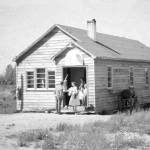
AUTHOR’S NOTE: An earlier version of this story first appeared in May 2013 in the Redoubt Reporter. The focus of this series is churches of the central Kenai Peninsula; clearly, there is also a rich church history on the southern Kenai, in the Seward area and elsewhere, but those stories, and stories of non-Christian congregations, will be a topic for another time.
Today, celebrating the Sabbath on the Kenai Peninsula is a commonplace occurrence. As is the case across the United States, churches dot the landscape of the central peninsula, and a considerable number of peninsula residents attend regular services.
Peering into the history books to find the local origins of churches on the Kenai reveals that those who first brought Christianity to the peninsula were also among the first to write any history here at all. The local Natives had no written history at that time.
The Russians introduced their new belief system, and they kept meticulous records in the process.
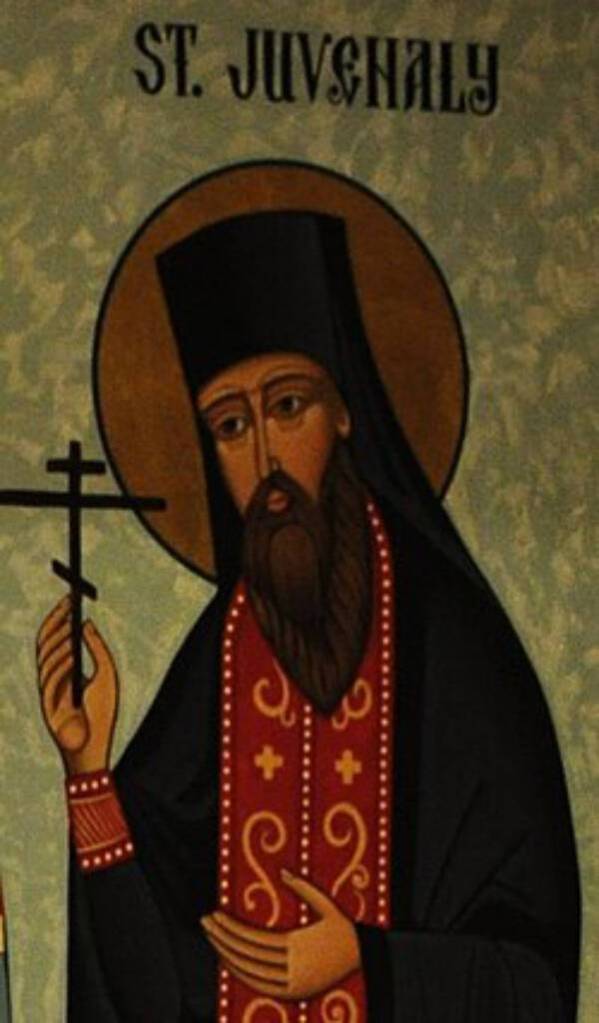
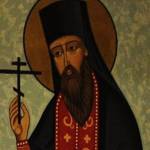
The Russian Orthodox Church established the first Christian presence in the form of 34-year-old missionary, Father Juvenaly, who arrived in Kenai in 1795 and began baptizing local inhabitants. He spent the winter of 1795-96 at Fort St. Nicholas (the first area Russian fur-trading outpost, now Kenai, established in 1795 by the Lebedev-Lastochin Company) and at the nearby village of Shk’ituk’t.
Juvenaly, who was part of a group of eight monks organized in 1793 in a Russia monastery and charged with preaching the Word of God to Alaska Natives, died in 1796 in a village at the mouth of the Kuskokwim River. Although the exact cause of his death appears to be still in doubt, false reports claimed that, as he continued his missionary work westward, he was killed by a group of Yupik villagers he was attempting to convert.
After Juvenaly’s death, the Kenai Peninsula faithful settled for four decades of limited church involvement. Until 1840, Kenai was visited by missionaries from the Kodiak parish only every two to three years.
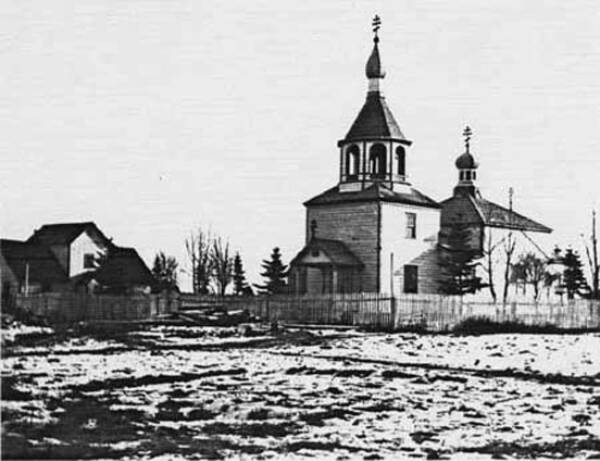
Then, in 1841, Father Nicholas (Igumen Nicholai) arranged the construction of the first Russian Orthodox Church in Kenai. Three years later, Kenai was officially established as an enormous parish. Father Nicholas’s 1859 diary noted that he needed two years to make the rounds of all the villages in his care. Without benefit of any road system, he traveled from Kenai north as far as Knik, south to the tip of the peninsula, and east to the site of present-day Valdez. Typically, he traveled by bidarka, usually accompanied by an interpreter, an assistant, and his oarsmen.
The United States purchased Alaska in 1867, around the same time that Father Nicholas died. Over the next quarter-century, he was succeeded by Father Nikita, who had the church remodeled in 1883, Father Mitropolsky, and then Father Alexander Yaroshevich, who advocated successfully for the construction of a new church.
In April 1894, Russian Orthodox parishioners in Kenai received word that their construction petition had been approved by the Holy Ruling Synod in Russia. To help fund the project, the Alaskan Ecclesiastical Administration had sent along $400.
Since the parishioners had detailed in their petition their expected expenses and listed all the materials they would need to complete the project, they wasted little time celebrating and got right to work. Under the guidance of Father Yaroshevich, construction began on a site just south of the rectory, which had been built in 1881.
Each church family was required to donate five hand-hewn logs to the new church. The plan called for logs six inches by six inches in diameter, bladed flat on each side (to form smooth walls and allow for easier stacking), and for dovetails where the logs met to form perpendicular adjoining walls.
Construction supervisor Alexander Demidov’s inventory of expenses included $49.50 for 16,500 shingles, $57 for several kegs of nails, $8 for two wide-headed axes and a new hand-drill, and $50 for paint. Also included in the budget was $420 for four months of labor at $3.50 a day. The grand total was expected to be $916.31—more than $35,600 in today’s money.
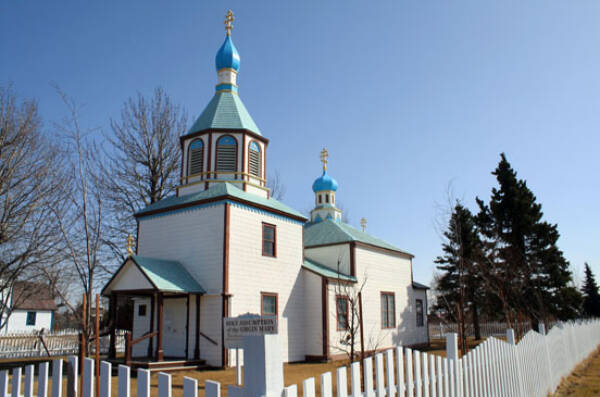
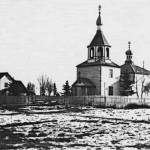
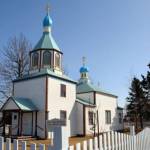
In an October 1895 letter, Father Yaroshevich announced that the church was complete. In the spring of 1896—after Yaroshevich was transferred to Juneau—Kenai’s shiny new church was consecrated to God under the guidance of a new priest, Father Ionn Bortnovsky.
In 1900, at a cost of an additional $300, the church was expanded westward and a belfry was erected over the new addition. At the same time, a white picket fence was constructed around the perimeter of the church grounds. After those renovations, the Kenai church remained virtually unchanged—except for repairs, repainting, and the installation of a concrete-block foundation—for the next century.
Father Bortnovsky returned to Russia in 1906, and Father Paul Shadura took over the following year. He remained in place until about 1950, and there may be some long-time Kenai residents who still remember him.
It was, however, during Shadura’s tenure that other Christian influences began to appear on the Kenai.
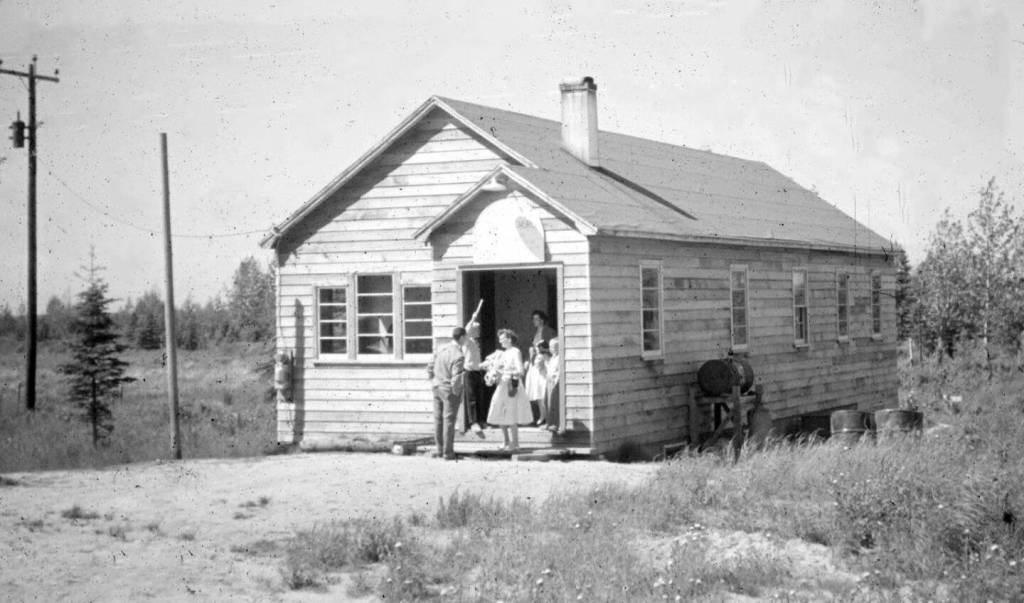
According to the scrapbook of former Kasilof teacher Enid McLane, the Rev. Martin Ramsey (who was living at the home of Clayton and Lucy Pollard) presided in July 1938 at the “first Divine service” for the Kasilof School. More than a decade later, Lucy Pollard, a former missionary with a Baptist orphanage in Kodiak, became a matron for the Kasilof Community Church.
In 1939, Walter Covich, a young missionary with the Slavic Gospel Association, visited Kenai and held special services in the village.
According to the SGA’s official website, the Slavic Gospel Association traces its history back to 1934 and the city of Chicago. Its founder, the Rev. Peter Deyneka, who had come to the United States from Belarus at the age of 15, believed that he had a life mission to share his newfound Christian views with the people of his homeland, and his ministry sprouted from this belief.
In 1925, Deyneka had traveled and preached extensively in Belarus. While there, he had established a relationship with the churches of the Union of Evangelical Christians-Baptists. But in the early 1930s, Soviet dictator Josef Stalin had intensified his persecution of the churches, making it impossible for Deyneka to continue traveling to his homeland.
Convinced that he could still help Belarusian churches from the United States, Deyneka and a small group of Chicago-area businessmen met in the back of a shoe store and founded the Russian Gospel Association, later renamed the Slavic Gospel Association.
Throughout the 1940s, SGA missionaries (and some missionaries from other faiths) served the Kenai area.
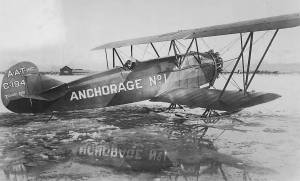
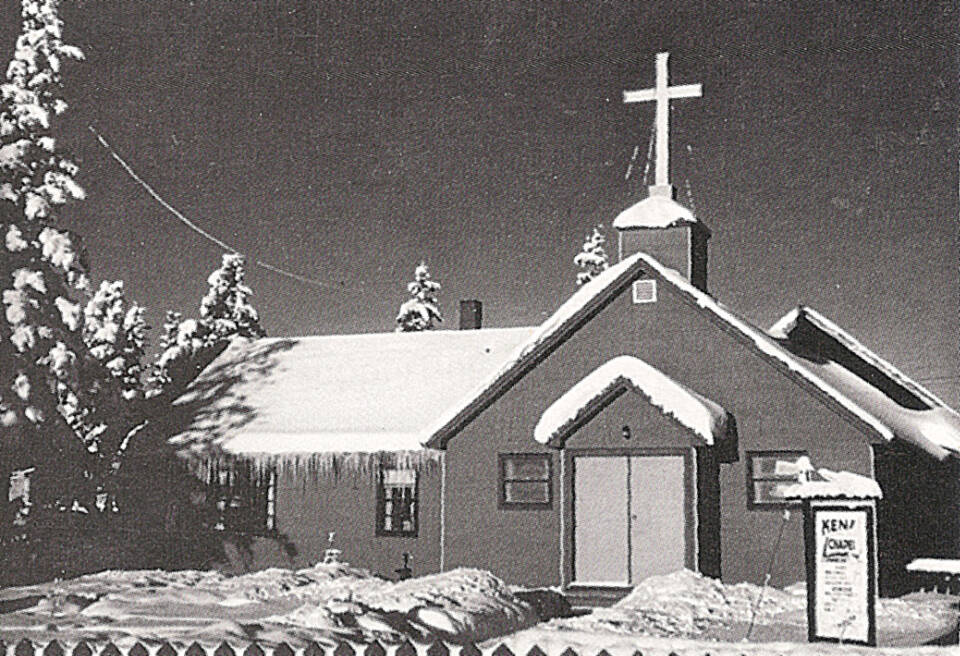
On Aug. 22, 1945, Olga Erickson and Violet Able were flown in an SGA missionary plane to Kenai, where they occupied the old two-story George Pederson home that had been purchased by the SGA and remodeled (under the supervision of Covich, working as a missionary in Port Graham) to include a chapel meeting room downstairs and an apartment upstairs.
This building later became the Kenai Bible Chapel, the first Protestant place of worship in Kenai.
In 1947, SGA missionaries Gladys Erdman and Florence Dalbow began directing Kasilof Community Church meetings in the homes of parishioners. Meanwhile, Erickson and Able served in Kenai until 1948, when they were transferred to other villages. They were replaced by Walter and Eldy Covich, who took charge of the expanding missionary work at Kenai Bible Chapel and remained in Kenai until 1955.
As the second half of the 20th century began, Christian-based churches were expanding rapidly, while becoming considerably more varied and frenetic.
TO BE CONTINUED….