Art collective fosters climate awareness
Published 1:30 am Wednesday, March 11, 2026

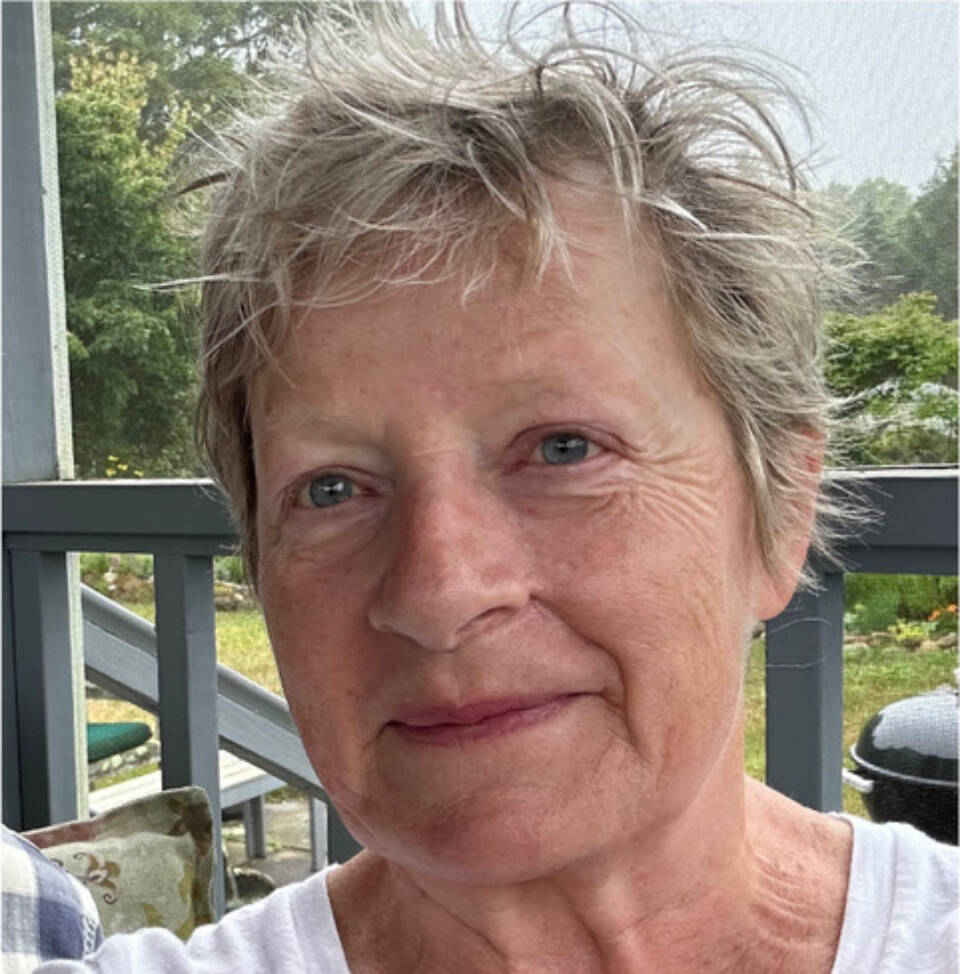
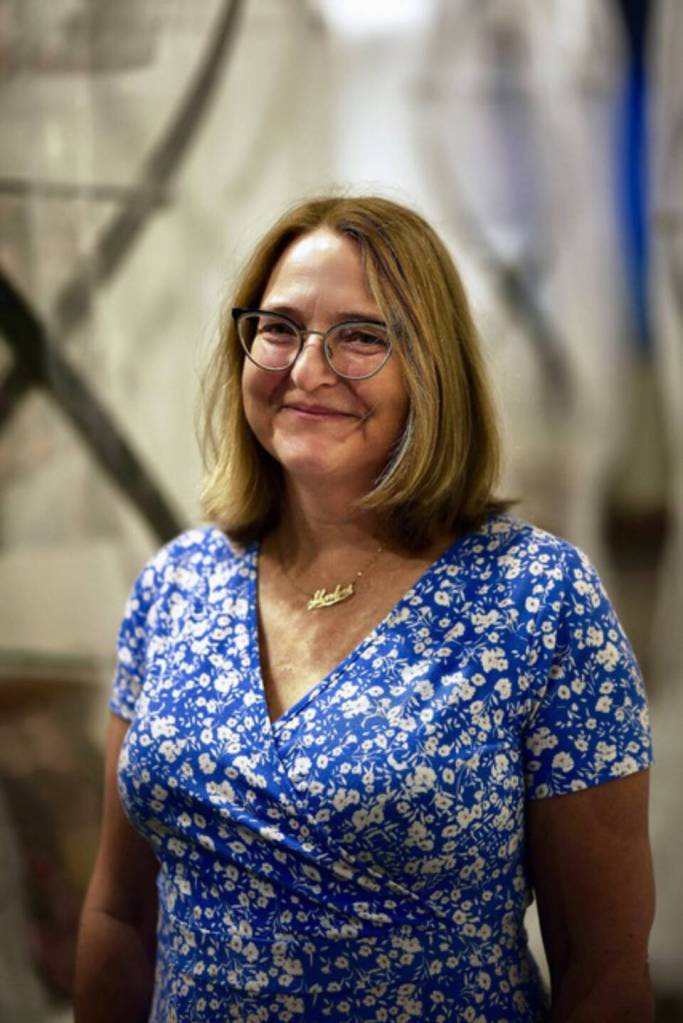
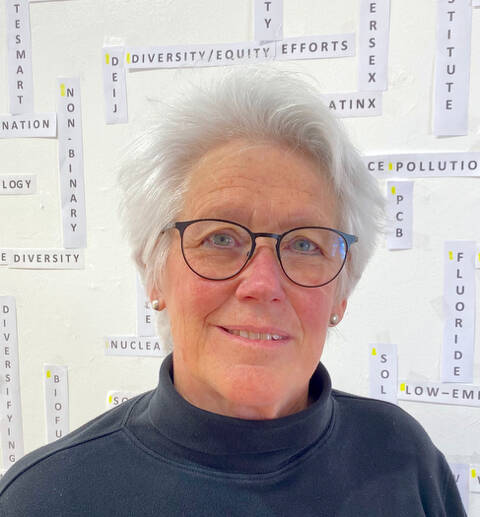




A group of artists from across the United States will be gathering in Homer from mid to late March on a collective artist residency titled “Coastal Contrasts & Sacredness of Place.”
Founding members of the National Climate Artists Collective, these artists actively respond to climate change by offering creative experiences that foster understanding, awareness and action. While in Homer, they will be working on individual projects and at the same time, offering the community opportunities to participate in a variety of workshops and to enjoy presentations, exhibits, installations, live art and a potluck.
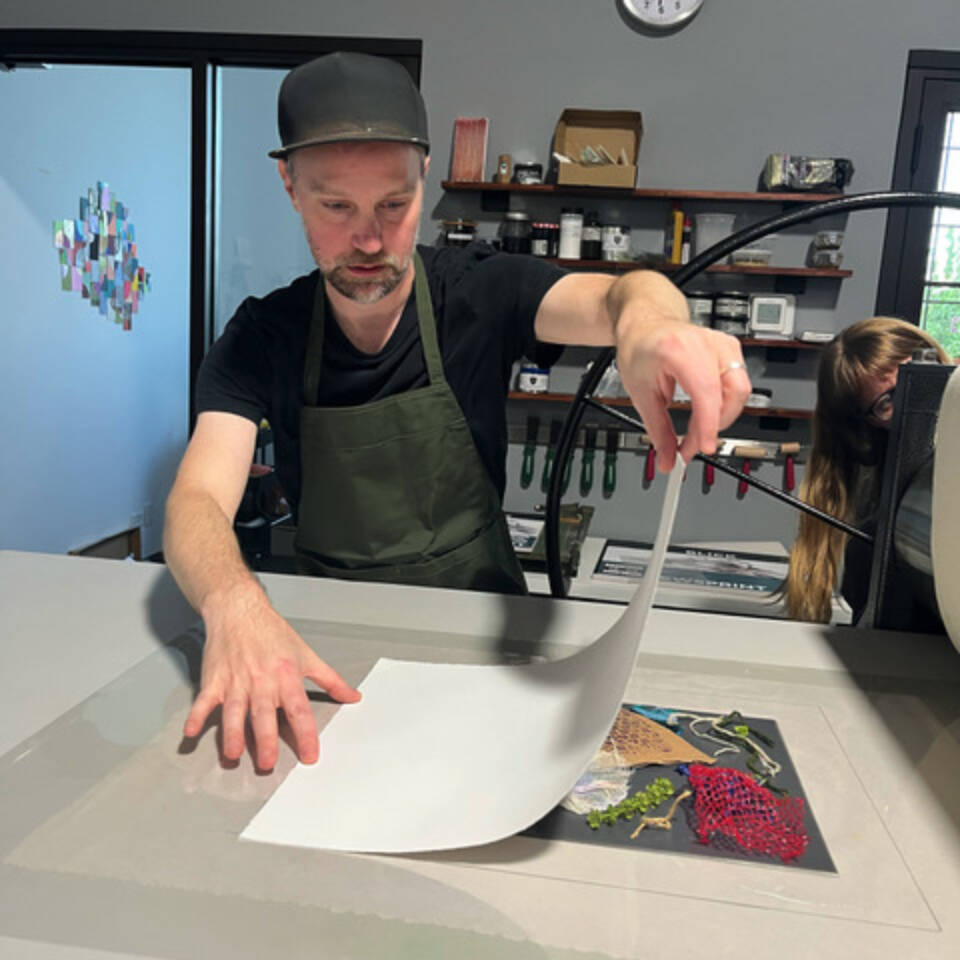
Events kick off with an artist talk at the museum and are followed by printmaking workshops at the college, a live art experience with clay on Bishops Beach and an art exhibit opening and talk at the college and culminates with an art installation and community potluck at the museum. Talks and exhibits are free and open to all, and the workshops are fee-based.
Formed in spring 2025 through Netvvrk, a national online community where visual artists connect, critique each other’s work and share professional resources, the Climate Artists Collective includes Homer’s own Sharlene Cline, Caroline Anderson from Rhode Island, Rebecca Carlton from Wisconsin, Rosemarie Gleiser from Colombia and New York and Elaine Miller from Illinois.
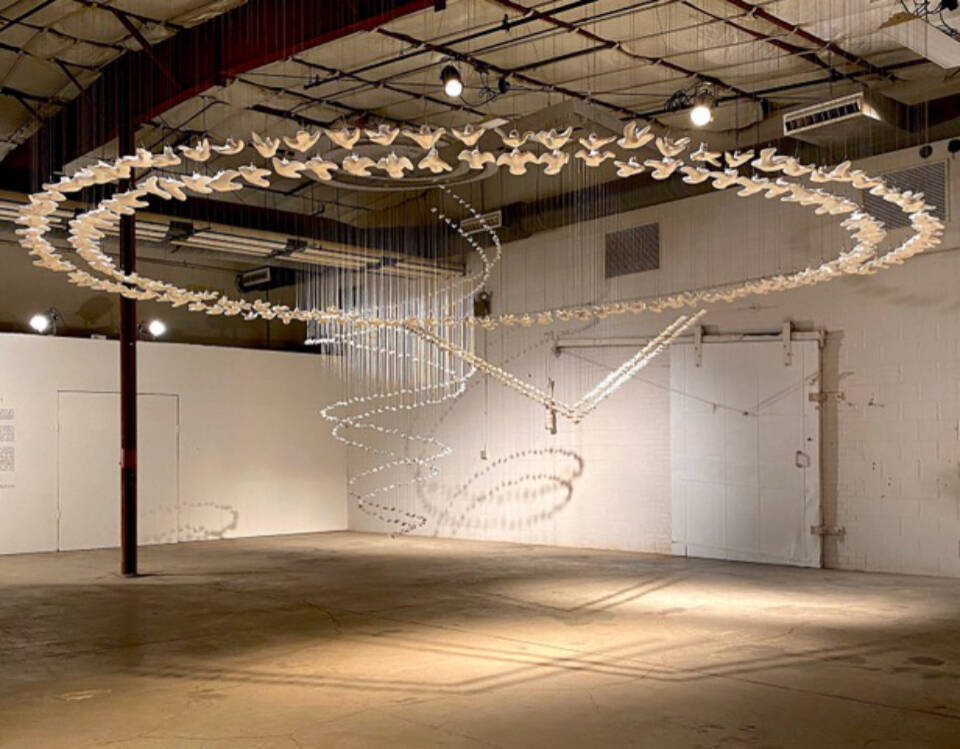
Cline’s work includes installation art, mixed media and Chinese brushwork. Her creativity explores the interconnectedness between humanity and nature and encourages what she sees as the individual and collective need to face the acceleration of climate change. This residency comes at a meaningful moment for Cline who recently exhibited her multidisciplinary installation Connected, featuring suspended DNA sculptures honoring the maternal ancestry of Alaskan women from different continents and exploring themes of genetic memory and intergenerational healing.
Last year, while she cared for her 96-year-old father, who passed away in November, traveling to an artist residency was not possible.
“Bringing a residency to Homer felt like a beautiful solution,” she said.
Cline connected with Kachemak Bay Campus about the idea of a printmaking residency, while the Center for Alaskan Coastal Studies sponsored the group for an Alaska State Council on the Arts Community Development Grant, which they received.
“The idea of the residency grew into two community-centered projects,” Cline said. “Coastal Contrasts focuses on printmaking workshops using upcycled materials and Sacredness of Place invites community members to join us in creating clay relief sculptures, as they reflect on what is sacred about our Alaskan coast. The clay relief sculptures will be raku pit-fired and installed as a temporary environmental artwork on the Pratt Museum grounds.”
Cline is most excited to reintroduce printmaking to the community.
“Homer once had a vibrant printmaking scene, but opportunities have become rare,” she said. “With access to the college’s printing press and the range of media represented in our collective, this residency is a chance to reconnect people with that tradition while also exploring environmental installation and raku firing together.”
A full-time Rhode Island artist, Caroline Anderson is a printmaker and painter who refers to herself as a “materialist.”
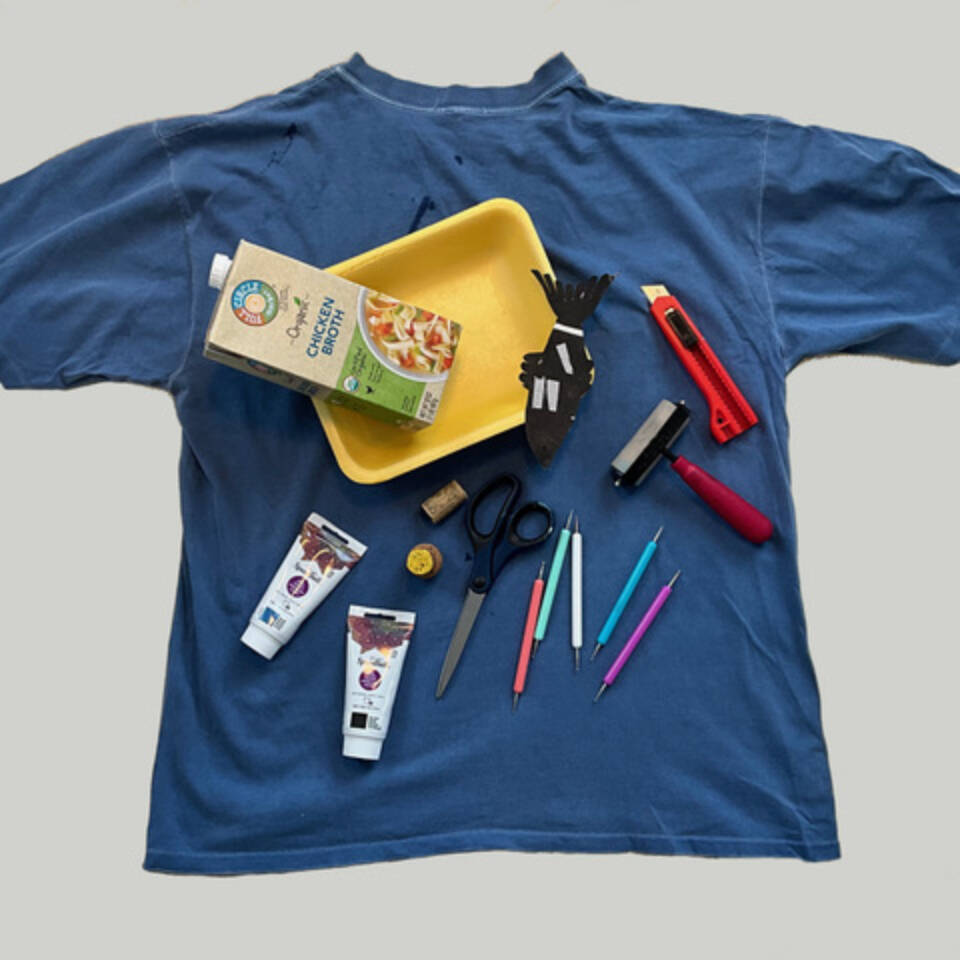
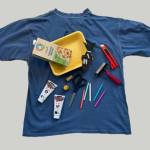
“My work responds to the physicality of the materials I work with,” she said. “For painting, I use acrylic paints, modeling paste and pumice, sometimes mixing in fabric or beads. I also like to work with upcycled fibers and have knitted many afghans with orphaned yarns and hand braided rugs from old t-shirts. My mother’s mother used every scrap of fabric and every old sweater or suit jacket in the house, making rugs, quilts and clothing from things that others would have thrown away. She is my inspiration.”
With a Bachelor of Arts degree and a Master of Fine Arts degree in painting and printmaking, Anderson has taught traditional fine arts classes and tech-related subjects like web design and animation at universities in Washington, D.C., Ohio and Illinois. Her work has been exhibited nationally and internationally, and her creativity is often influenced by what she called hyper normalization.
“The concept of hyper-normalization offers a framework for understanding how contemporary life continues to feel stable despite the presence of multiple, overlapping crises,” she said. “Denial, distraction and systemic complexity flatten our perception of urgency, allowing familiar routines to persist even as environmental, social and political pressures intensify. What falters is not awareness, but our capacity to fully register the scale of what surrounds us.
“My paintings engage an existential unease that is widely felt but rarely named, inviting viewers to reflect on shared anxieties and the challenge of living attentively in a time of ongoing crisis.”
While in Homer, Anderson’s workshop, “Relief Printing on Fabric,” will teach participants to create their own fabric patterns with upcycled materials, including carving designs into materials, mixing and rolling ink and printing the designs on fabrics or clothing.
Rebecca Carlton opens the residency with her talk, “Sacredness of Place,” inviting community members to consider what they find sacred about where they call home.
“It’s a question we don’t often ask ourselves or contemplate,” she said. “It’s easy to take advantage of where we live – to forget to walk along the beach, lay in the forest and smell the pine sap, hear the flutter of a bird’s wings. My hope is that people, if they are not already, will be inspired to celebrate the beauty and sacredness of their place.”
A full-time, research-based transdisciplinary installation artist living and working in Wisconsin, Carlton’s work is inspired by animals, plants, the environment and people.
“The engagement of clay, metals, fibers, paper, glass and text are utilized in my work,” she said. “I love to learn about new things and an obscure detail can often lead me for months, and sometimes years, toward the creation of a work of art. I am curious as to the expansion of a concept through multiple disciplines and the interconnections that exist.”
Holding a Bachelor of Fine Arts degree in sculpture and art history and a Master of Education degree in secondary education, Carlton has taught art to students ages kindergarten through college and has presented art workshops and lectures to artists and non-artists alike.
She recently completed a series titled “Migration: Crossing Borders,” an examination of the consequences of border migration in relationship to survival for both animal species and humans.
“I used the perilously endangered monarch butterfly to beckon our community to protect this beautiful, fragile and rapidly disappearing, multiple border crossing, species,” she said. “With the inclusion of a barbed wire border wall, I directly confronted the exclusion of “others” and ask the question: for their survival, how do we choose who can migrate?”
She currently has several large installations in process, including one that has her collecting water from 100 rivers across the United States, which will soon include water from Alaska’s Kenai River.
“Water is our life blood,” she said. “I wonder… how do we protect it, use it?”
In Homer, Carlton will work with high school students and participate in the collective’s collaborative raku clay pit fire and installation opening. She invites everyone to participate.
“We each experience aesthetic experiences that affect and change our lives,” Carlton said. “Aesthetics is the nature of beauty. It employs our emotional responses to joy, sorrow, anger, disbelief, tenderness and ecstasy, to name only a few. The arts and life experiences provide opportunities for us to feel the depth of humanness.”
Chicago artist Elaine Miller has worked in printmaking, murals and painting for 40 years, and a full-time artist for the past 10. With a BFA and MA in printmaking and MFA in painting, she enjoys sharing her passion for the creative arts with others, including at her local art center and community colleges.
“Protecting and connecting with the natural world is what drives my work and I want to share that with people without the preciousness or elitism of the art world,” she said.
Miller likes to experiment with processes, techniques and color. She is currently working on a series of small paintings on wood panels and at the same time, mono printing, melding the two processes. A strong advocate for creative self-expression, she believes that accessing one’s creativity nurtures critical thinking and influences how we see the world in a whole new way.
“It’s an important part of being an educated and informed person,” she said.
During her Homer workshop, “Monoprinting on Paper Using Upcycled Materials and Color Transparency,” she will teach participants how to use an etching press and work with water-based inks using reductive techniques of removing rolled on ink from a plexiglass plate. Participants will also run prints through a press twice, referred to as a ghost print and use transparent inks.
“The results are often unpredictable, and I hope everyone will enjoy learning about printmaking colors and enjoy experimenting with unexpected results,” she said.
Rosemary Gleiser is a Latin American interdisciplinary artist and writer based in New York. Her creativity includes drawing, printmaking, photography and what she refers to as material intervention.
“I build each piece through layers, adding and subtracting material in a process that mirrors how identity itself is constructed,” she said. “Scanning and enlarging these layered works creates a journey from micro to macro world, revealing details invisible at their original scale.
“I work with materials that hold contradictions. Vinyl becomes second skin. Silicone forms teardrops or water, yet also evokes the plastic that pollutes it, simultaneously protective and contaminating. Like language itself, we carry these materials across borders – sometimes pure, sometimes contaminated by what we carry and what carries us.”
Gleiser’s career began in 1986 in Colombia, where she was eager to study photography and lighting but the lack of photo schools drove her to seek out mentors. She studied analog photography and lab work under cinematographer and painter Jorge Farberoff, went on to study Fine Arts, took experimental photography workshops with Jorge Ortiz, joined the Printmakers Studio of Alfonso Alvarez and worked as photo editor and assistant to Betty Elder, an American documentary photographer. Gleiser was awarded a Fulbright grant to pursue her MFA in studio art at New York University with a focus on printmaking and went on to pursue her doctoral degree in Spain, studying big format digital printing.
“During grad school I learned about digital printing and then started to unite all the techniques I had learned in photography and in printmaking,” she said. “Tactility has always been important to me, so the use of digital technologies didn’t push me out of the materiality of the work. On the contrary, it drove me to create more tactile pieces.”
Gleiser has several current projects in the works, including “Let Me Tell You Something,“ a book preserving her grandmother’s Eastern European recipes, illustrated with Yiddish phrases she learned from her.
“The book gathers histories of ingredients that traveled across continents, embodying the contradiction of constant migration itself: languages dilute and disappear even as we struggle to preserve them,” Gleiser said. “The images play with words in three languages, so I use typesetting, photography, drawing, and bold colors.”
She is also working in parallel on two additional projects. One is an artist book; the other is “Floating Territories,” about plastic pollution where she gathers and prints photographs of glaciers and rivers, draws and prints images of animals endangered due to climate change and plastic pollution and adds messages in Braille and Morse code by embossing the surface or using confetti made of upcycled plastic water bottles.
“’Floating Territories’ stretches my ongoing investigation about the traces we leave on the planet due to our industrial evolution,” she said.
While in Homer, Gleiser and Sharlene Cline will teach “Flocking Art: Textured Printmaking.” They will demonstrate ways to experiment with printing through a variety of materials and different tactile methods. Gleiser invites community members to join the workshop, whether you are familiar with printmaking or not.
“We are going to have fun, and your creativity is going to explode,” she said.
Schedule of Events
Artist Talk: “Sacredness of Place” with Rebecca Carlton. Pratt Museum. Thursday, March 19, 6 p.m.
Workshop: “Relief Printing on Fabric” with Caroline Anderson. Kachemak Bay Campus. Friday, March 20, 5:15-8:15 p.m.
Workshop: “Monoprinting on Paper Using Upcycled Materials and Color Transparency” with Elaine Miller. Kachemak Bay Campus. Friday, March 20, 5:15-8:15 p.m.
Workshop: “Flocking Art: Textured Printmaking” with Rosemarie Gleiser and Sharlene Cline. Kachemak Bay Campus. Saturday, March 21, 1-4 p.m.
Live Art: Raku Clay Pit Fire — Observe the National Climate Artists Collective artists at work. Bishops Beach. Thursday, March 26, 10 a.m. to 6 p.m.
Exhibit and Talk: “Coastal Contrasts Prints & Photography Exhibition.” Kachemak Bay Campus. Opens Friday, March 27 at 5:30 p.m., followed by printmaking artists’ talk at 6:30 p.m.
Installation Opening and Community Potluck: This collaborative environmental art installation will explore climate, place and community through land-based and sculptural work. Pratt Museum. Saturday, March 28, 1 p.m.
For more information about the workshops, including fees and registration, visit kpc.alaska.edu/communitycourses, call 907-235-1674 or stop by Kachemak Bay Campus. Learn more about the Climate Artists Collective at climateartists.net/.