Nothing says I’m sorry like a delicious casserole
Published 3:30 am Wednesday, May 27, 2026
To humble yourself and seek forgiveness is painful. To feel so low but force yourself to stand tall and face the wrongs you’ve done, to name them in the presence of the offended and hope they will see past them and speak your name again.
You replay events and rehearse your script and wrestle with your ego, who wishes it could feel superior, until you land on an explanation, or none, to present for consideration. In that moment, you must submit to your faults and never dare to make excuses for them lest the apology turn sour.
The apology is not for you; it is not a way to clear your name or wipe clean a karmic slate – nothing truly removes those stains on our souls. The apology is for the wronged, an acknowledgement of the damage done and the pain you’ve caused, and a gift humbly presented for them to use on the journey you have sent them on. You must remember that the only apology that counts is action. If you fail to or refuse to change, the apology means nothing, no matter how many tears it’s spoken through.
Worse yet is the longing to forgive. When you wish the pain could be removed from your heart so the love that hopefully remains can shine. You want so badly to return to when your faith was still intact – the memory of the time before is bitter when you’re not the one who wrecked it, and all you can do is hope someday you won’t see the damage first.
You replay events and script what you should have said and wrestle with your ego, who wants to flaunt your superiority, until you land on the words you need to hear before you can begin to heal. In that moment when, or if, they finally come to you, you hope they know those words to say, and that they say them with sincerity, lest the goodwill that remains be lost forever. You must remember that forgiveness is not for the offender; it is not a gift for them to use on the journey they put themselves on. Forgiveness is a gift you give yourself so you can be free, and it need not be shared with them, especially if they don’t deserve it.
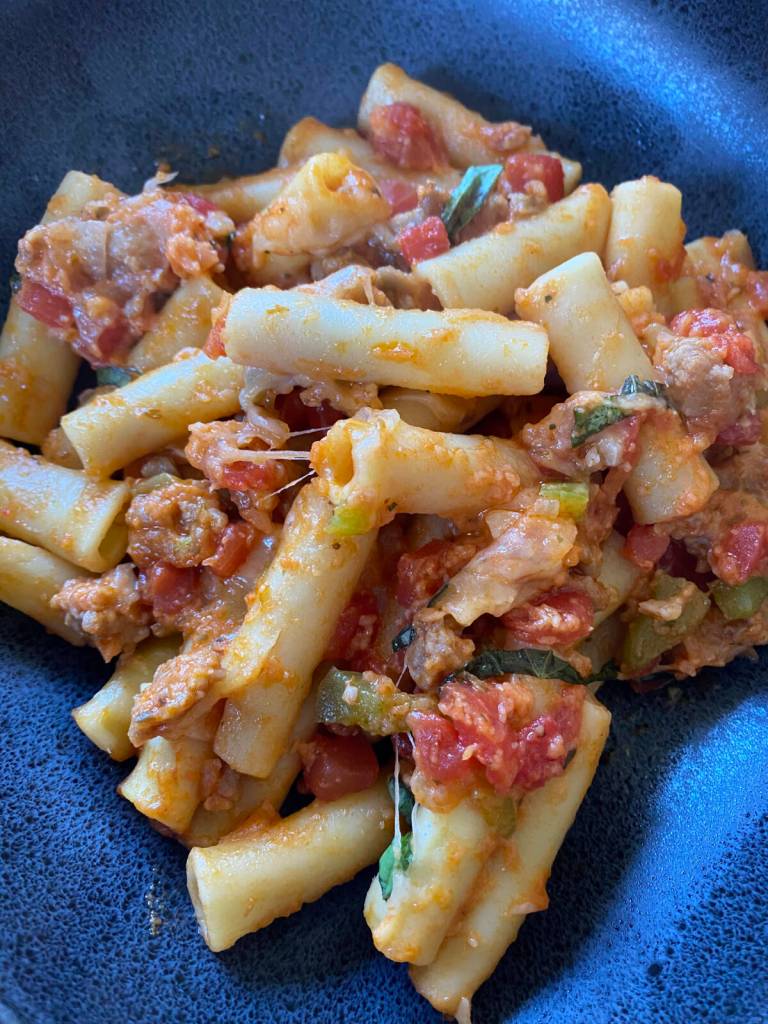
I don’t remember where I heard the phrase “anger casserole,” but I have learned it’s not good to make them. Offenses, small and large, are stored in your heart until someone sets a timer, and you serve up a steaming plate to a usually blindsided diner. Better to consider each offense as a short order… order fire. This baked ziti casserole is savory, not bitter, and the recipe makes plenty for leftovers.
Ingredients:
1 box ziti noodles
1 pound mild Italian sausage
1 large yellow onion, diced
1 green bell pepper, diced
8 oz mushrooms, diced
6-8 cloves garlic, minced
2 cans petite diced tomatoes in tomato sauce
2 Tbsp tomato paste
16 oz shredded mozzarella
1 cup shredded parmesan
1 Tbsp Italian seasoning
Salt and white pepper to taste
¼ cup fresh basil, cut in ribbons
Directions:
Cook the pasta al dente, strain and set aside.
Brown the sausage in a large skillet, then add the onion, garlic, pepper, mushrooms, the dry herbs, and a little salt, and cook until the onions are translucent and the mushrooms have browned slightly.
Add the tomato paste and stir fry for a couple minutes before adding the canned tomatoes.
Simmer for 5 minutes then turn off the heat.
Add the cooked pasta and parmesan and mix well. Taste and season with more salt and pepper.
Transfer to a large casserole dish and top with mozzarella.
Bake at 350 degrees until the cheese is melted and beginning to brown.
Garnish with the ribbons of fresh basil.
Serve with salad and a slice of humble pie.