Winter rescue: Saving the teacher’s life — Part 1
Published 4:30 am Thursday, June 11, 2026


AUTHOR’S NOTE: Many of the “facts” in this century-old story have been buried beneath a stratum of misinformation, making it a challenge at times to craft a continuously accurate narrative. A handful of the details, I have been unable to confirm at all. Along the way in this multi-part piece, I will admit the gaps and the variances in viewpoints whenever doing so will improve the clarity.
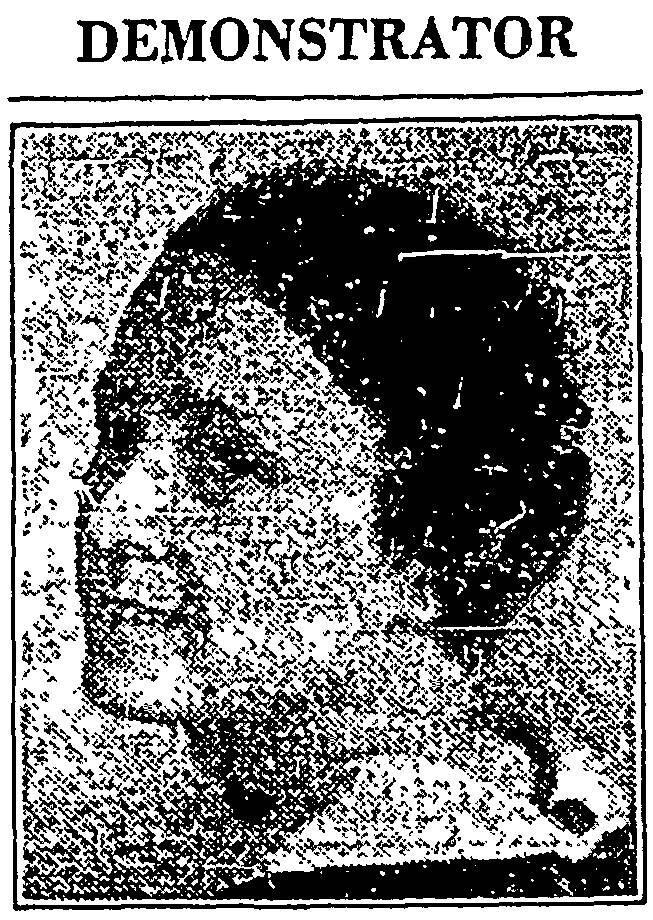
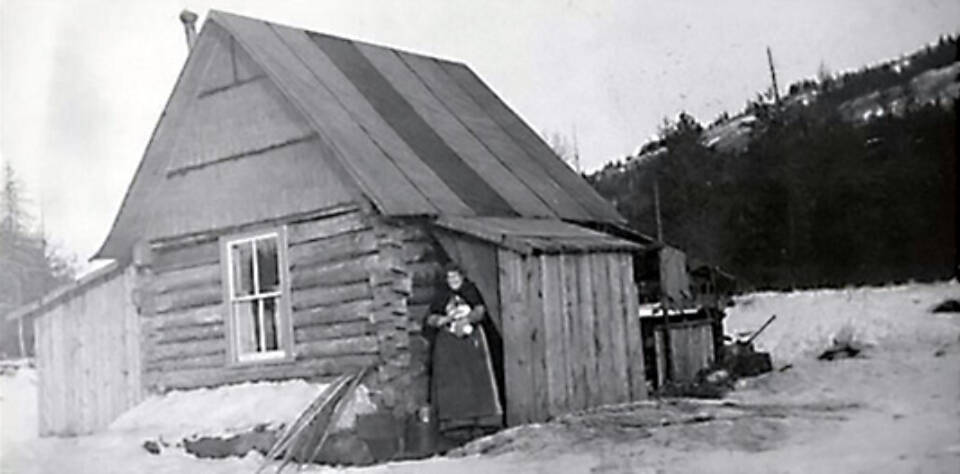
On Aug. 15, 1927, a 21-year-old Texan named John Bess Howe—often referred to as “Bessie”—left her Seymour home, in Baylor County, and began the journey to Ninilchik, Alaska, for what she must have anticipated would be a string of exciting months as a government schoolteacher in the mostly roadless northcountry.
Education in the village had been primarily in Russian until 1911, when the first outsider, Alyce Anderson, arrived to begin teaching classes in English. At first, Anderson taught in the one-room log building that had been the Russian School.
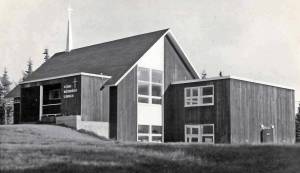
In 1913, a new schoolhouse was constructed atop the same rise as the Transfiguration of Our Lord Russian Orthodox Church.
Howe was slated to become the seventh different educator to work in this new schoolhouse, considered to be a territorial facility.
In Ninilchik, Howe did find excitement, to be sure. Her adventure of a lifetime was, however, like nothing she had expected.
In retrospect, she could easily be considered fortunate to have escaped Alaska alive.
By mid-winter, newspapers from Alaska to Texas and beyond would be throwing out phrases such as “race against death,” “Homeric struggle” and “the fighting tenacity of the Frozen North” to describe aspects of her experience and of those who assisted in her survival.
Kotoff’s journey
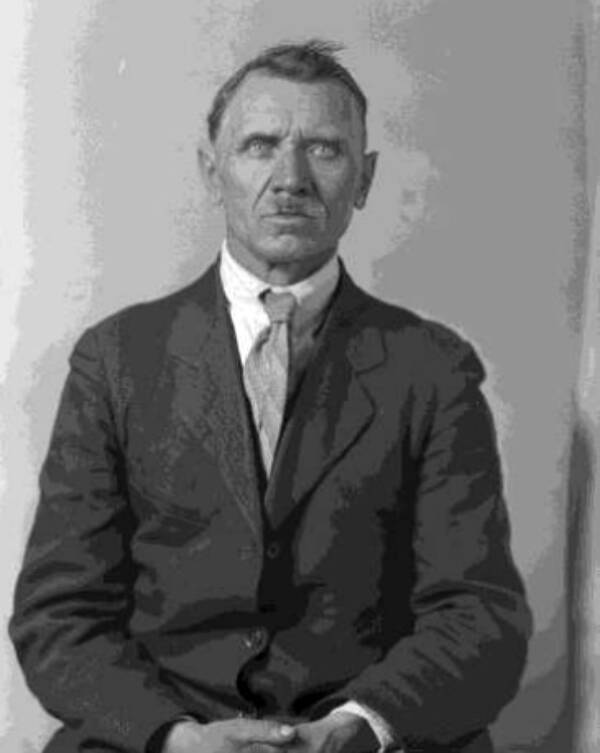
At about 7 p.m. on Nov. 20, 1927, 44-year-old Vladimir “Walter” Kotoff and 19-year-old Victor Kelly stepped into the teeth of a winter storm and began the long, cold slog in the dark from their home village of Ninilchik to a fox farm in Kasilof. They pushed themselves to maintain a swift and steady pace, for they believed that the life of a government schoolteacher might hang in the balance.
Although it may be apocryphal, Kotoff, before departing for Kasilof, is said to have told those gathered around the ailing teacher, “I’m going for help no matter what happens to me!”
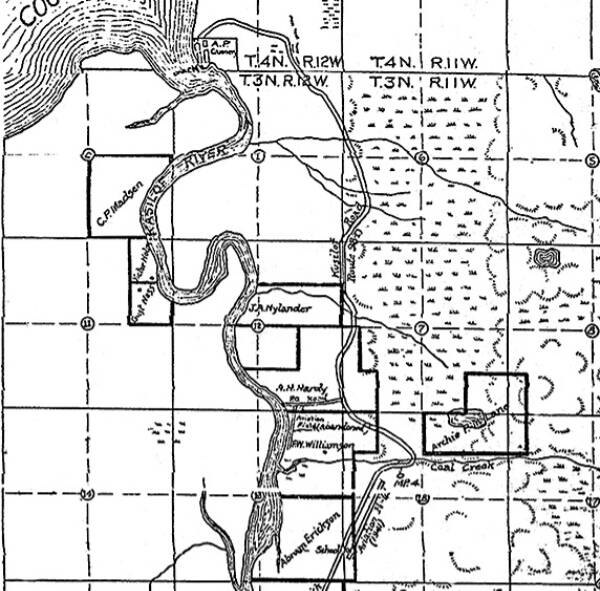
The distance was nearly 30 miles. The highly successful Silver-Black Fox Ranch was owned and operated by Featherstone Wilson Williamson and his wife Harriett, known to friends as “Billy” and “Mickey.” It was known that the Williamsons had the antenna and the equipment for an amateur radio unit, and Kotoff hoped that the Williamsons’ radio operator would be able to telegraph a distress call to Anchorage and Seldovia.
Kotoff and Kelly arrived around dawn the following day, only to learn that the Williamsons’ radio operator had left several weeks earlier, that the radio antenna had been taken down and dismantled for the winter, and that Billy Williamson himself had no idea how to operate the radio.
Fortunately for all concerned, Kotoff did—or at least he had once known.
A Russian immigrant who came to the United States in about 1906, Kotoff had learned telegraphy when he worked as a civil engineer on a Russian railroad. By the time he reached the Williamson ranch, however, he had not sent a telegraph message for nearly a quarter-century, and that had been in Russian.
Still, he knew that he had to at least try.
Billy Williamson helped Kotoff and Kelly reassemble and erect the radio antenna and reestablish power to the device—by battery or hand-crank, most likely. More than a month later, a Seattle Daily Times reporter would describe Kotoff’s attempt: “From his memory, he summoned the dots and dashes of the code he prayed would enable him to call aid.”
Kotoff sent his basic message several times but was unsure whether anyone had received it.
Having done all he could at the moment, Kotoff, once again accompanied by Kelly, left the fox farm for the return walk to Ninilchik.
It is difficult, based on contemporaneous accounts, to be certain of the exact timing of what followed. Perhaps it was sometime on Nov. 22 that he and Kelly once again reached the village. There, Kotoff was dismayed to find Miss Howe, still without medical care, still suffering. He knew that he must determine, somehow, whether his message had gotten through.
He decided to leave for Seldovia.
Medical emergency
On Nov. 20, about an hour before Walter Kotoff and Victor Kelly had begun their trek to Kasilof, John Bess Howe had been cleaning a gun.
News reports from this time varied widely concerning what kind of gun she was cleaning. Some said it was a pistol, while others specified a revolver. Quite frequently, it was said to have been a rifle, and, on a few occasions, a shotgun.
Whatever the firearm may have been, it was loaded while Howe was cleaning it. And it discharged.
Howe was struck in the abdomen. Although she did not know the extent of her injuries at the time, she learned later that her intestines had received five perforations.
A long wait meant that infection would set in. The pain would intensify. Although she was—in Kotoff’s absence—ministered to by former Ninilchik teacher Bertha Stryker, she was in bad shape. Without medical attention, she would almost certainly die.
Howe’s students at Ninilchik’s territorial school had included, among many others, nine-year-old Nick Leman (who would one day be the father of an Alaskan lieutenant governor) and the 44-year-old Kotoff, who had been trying to polish his English skills prior to becoming fully naturalized.
After Kotoff returned from Kasilof to Ninilchik and saw Howe’s continued suffering, he knew he could not simply hope that his telegraphed message had been received. With almost no rest, he reentered the storm and began the long walk to Homer, where he hoped to find someone with a boat who was willing to transport him across Kachemak Bay.
How long it took him to cover the distance to Homer is uncertain. What does seem clear is that marine conditions were nasty enough that he was compelled to wait in Homer an additional day before some boat owner agreed to make the crossing. It seems most likely that he arrived in Seldovia on Nov. 25, perhaps Nov. 26.
There, he learned that Adam Lipke, the local radio operator, had received what was described as a “feeble” distress call at about 9 a.m. on Nov. 21, the time Lipke typically opened for business. Lipke had quickly relayed the call to the hospital towns of Anchorage and Seward.
Help, he told Kotoff, had arrived in Ninilchik on Nov. 24, Thanksgiving Day. Miss Howe, he said, had been flown to Anchorage and hospitalized. She seemed likely to survive.
News reports sometime later claimed that Kotoff broke down in tears after learning that his teacher was safe.
TO BE CONTINUED….