Brick by Brick: Kenai’s Russian Kiln — Part 2
Published 4:30 am Thursday, July 30, 2026


AUTHOR’S NOTE: Other than some raw numbers, the history of brick making in colonial Alaska is poorly understood. Nevertheless, the Russian government in Alaska considered the manufacture of bricks highly important. During the 19th century, the Russian-American Company had kilns in at least nine different locations, including Kenai from 1841 to 1866.
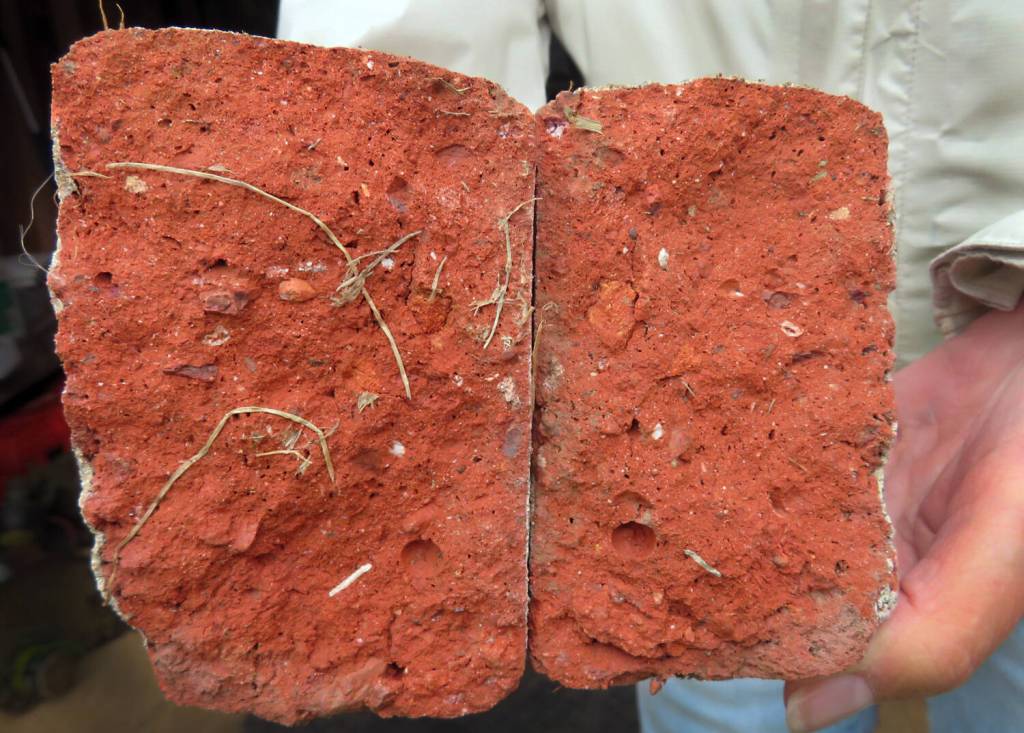
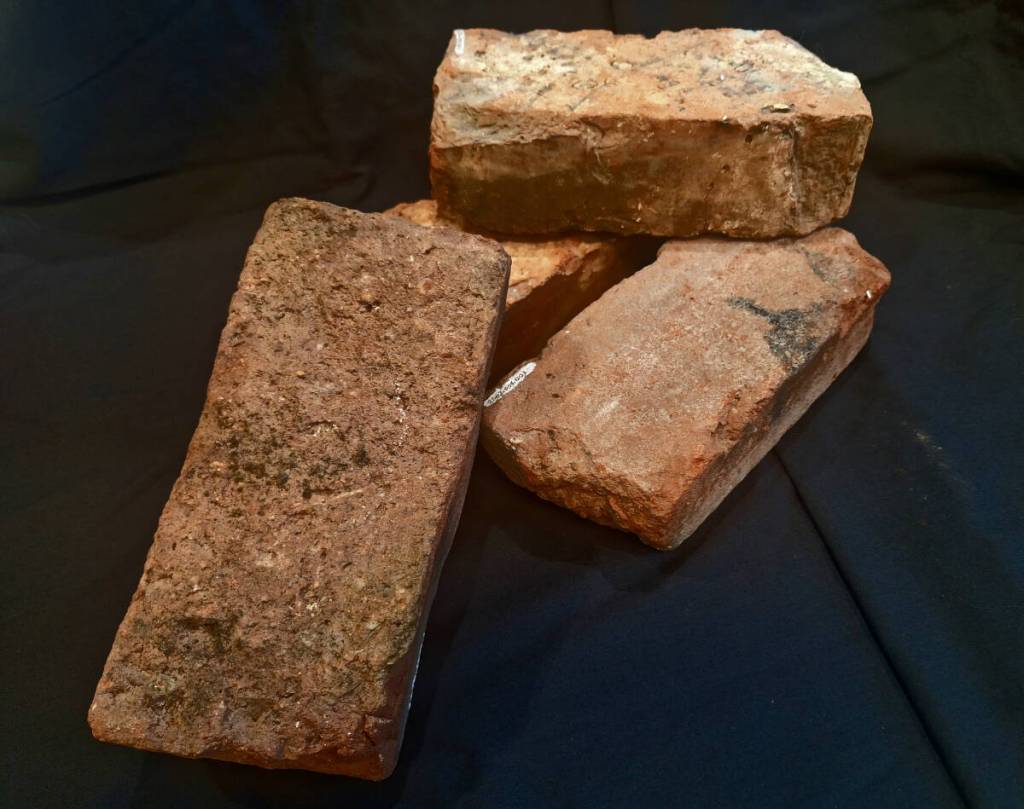
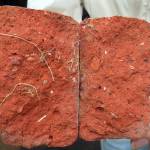
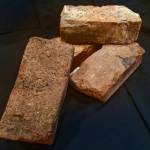
In the collection of historically significant items in the Kenai Visitors & Cultural Center are four bricks manufactured in the Kenai brickworks of the Russian-American Company between 1841 and 1866.
Orangish-red and chipped on some of the corners, these four bricks are some of the only relics of Kenai’s quarter-century-long brick-making past.
The Russian Orthodox Church also has a small stash of the bricks that were saved when the rectory was restored in 1998.
They had been used to create the galanka (traditional Russian stove) for the rectory when it was built in 1881, about 15 years after the Kenai brickworks was shuttered.
It can be assumed that some bricks remained after the kiln’s closure.
Perhaps the bricks were leftovers from shipments never delivered to the capital city of Sitka after the United States purchased Alaska from Russia in 1867.
Perhaps the kiln and its supporting structures were disassembled and the bricks were scavenged by local residents.
On Oct. 18, 1898, during a U.S. Army exploratory expedition in Cook Inlet, Capt. Edwin Forbes Glenn and his crew were anchored at Kenai to wait out bad weather.
In his journal on that day, Glenn described a steam bath featuring a banya using fire and bricks as a heat source.
A couple of years later he wrote of the experience in more detail: “(The banya) consisted of a small log cabin, about 10 by 12, divided into two compartments, one of which was very narrow and was used as a dressing room.
“The other, 8 by 10, contained a brick furnace, over which was a large iron pot filled with water.
“Alongside of this, and heated by a fire built in the furnace,” he continued, “was a pile of brick in an open oven. The method of taking a bath consists of providing oneself with a tub of reasonably hot water. The water from the pot is then thrown on the heated bricks in the open oven until the steam produced raises the temperature to the desired point.”
This banya layout somewhat resembles a brick kiln, in which a fire below heats the bricks above. It seems likely that this setup enjoyed by Glenn and other officers had been fashioned from bricks produced in the original Kenai factory.
In 1905, when Prof. Charles Christian Georgeson penned his annual report on Alaska’s agricultural experiment stations for the U.S. Department of Agriculture, he mentioned the improvements he had noticed while touring the grounds of the Kenai Station: “A road was made to the beach, and over this gravel was hauled to make walks from the house to the outbuildings. Old bricks were used as border for the walks.”
In 1996, a townsite survey conducted for the City of Kenai mentioned the existence of the former brick factory — but did not specify its location — and stated that one unidentified homeowner in 1995 had claimed that the bricks in the chimney of his home had been manufactured at the Nikolaevsk redoubt kiln.
The bricks in the collection of the Kenai Visitors & Cultural Center were donated in 2002 by longtime Kenai resident Marion Nelson, who had received the bricks sometime earlier from Peggy Gill Thompson, a former history teacher at Kenai Central High School. It is unclear where Thompson acquired the bricks.
Nelson was surprised to learn that the bricks had been part of a long-term brick-production system in Kenai. A longtime area artist, she considers Kenai-area clay to be of poor quality.
Those familiar with Kenai’s clay know that it is naturally a flat gray. To create red bricks, this clay, mixed with water, was formed into brick shapes of a specific dimension and then was fired at high temperatures.
The reddish color came from iron oxide in the clay, and the intense heat from firing rendered them durable.
Starting the Process
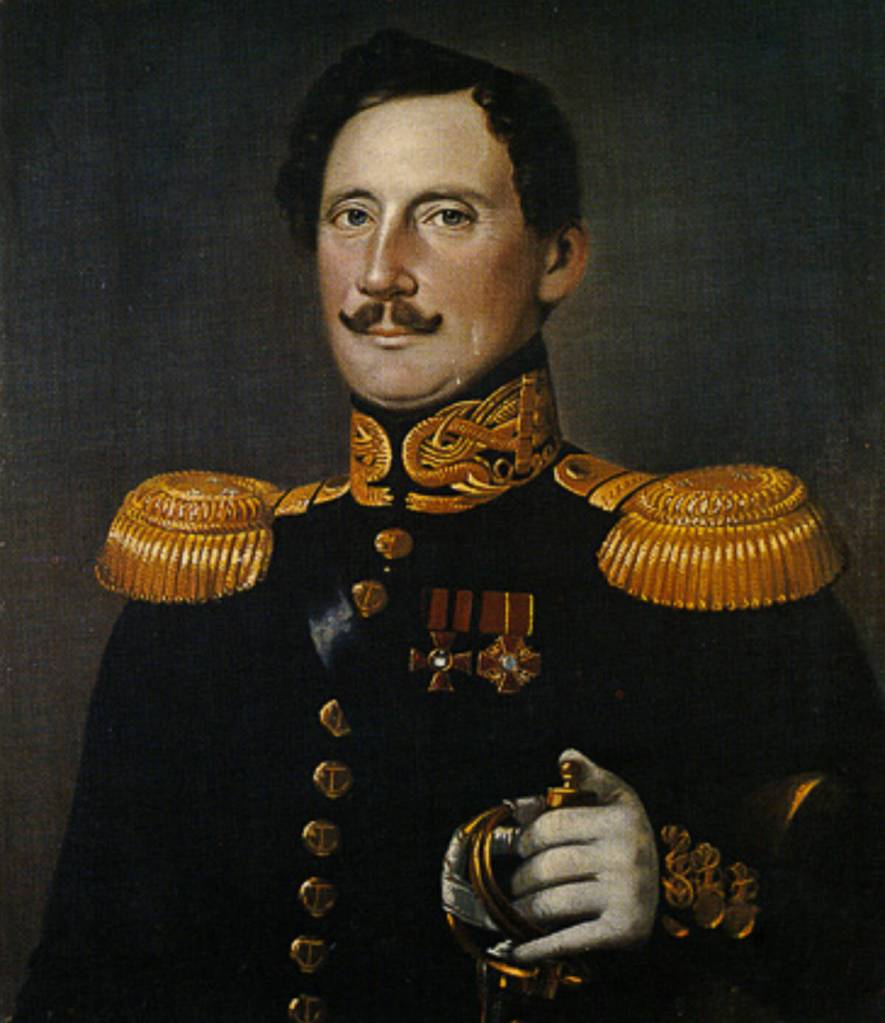
On Feb. 25, 1841, Arvid Adolf Etolin, chief manager of the Russian-American Company (and de facto governor of the colony), sent a letter from the growing capital city of Novo-Arkhangel’sk (known today as Sitka) to the manager of the RAC’s Kodiak office inquiring about the initial construction of a brick-making facility for the settlement in Kenai Bay.
Kenai Bay, now known as Cook Inlet, had had a permanent Russian presence in what became Nikolaevsk redoubt (today’s Kenai) since the Lebedev-Lastochkin Company established Fort St. Nicholas at the mouth of the Kenai River in 1791.
There were earlier fur-trading incursions by the Russians at Nanwalek (Alexander Redoubt) and Kasilof (St. George Redoubt), but they did not last.
By May 1841, brick production was under way, and Etolin made it clear by October — after having received a first shipment of 6,000 bricks from the Kenai brickworks — that he was expecting 20,000 Kenai bricks to be shipped to Sitka during the following year.
He ordered this number above any Kenai bricks that Kodiak might retain for its own use.
He also hoped to receive at least this number annually from Kenai.
By mid-February 1842, Etolin, who was planning a visit to Kodiak in June, was also arranging for a shipment of Kenai bricks and clay, some of which he expected to be stockpiled for him in Kodiak and waiting there when he arrived.
The clay, he said, should be “dug out in advance, dried out and cleaned of pebbles.”
Furthermore, Etolin directed specific vessels to transport the goods within certain windows of time, and he emphasized the necessity of making these deliveries as planned.
Katherine Arndt, coauthor of “Construction History of Sitka, Alaska” and the bibliographer and curator of rare books at the Rasmuson Library at the University of Alaska Fairbanks, paraphrased Etolin’s emphasis: “There is an extreme need for these items in Novo-Arkangel’sk.”
Etolin spoke of using the brig Okhotsk to pick up the Kenai bricks because that ship would draw little water when loaded and thus could enter the Kenai River during the lading process.
“This (Kenai) factory now,” Etolin told the Kodiak manager in May 1842, “is of the greatest importance for the colonies, when…we have no other sources but it from which to receive bricks, because there is almost no hope for their delivery from Aleksandrovskii redoubt (Nushagak) due to their low number and very poor quality.”
TO BE CONTINUED….