The Killey mystery — Part 2
Published 1:30 am Thursday, May 14, 2026
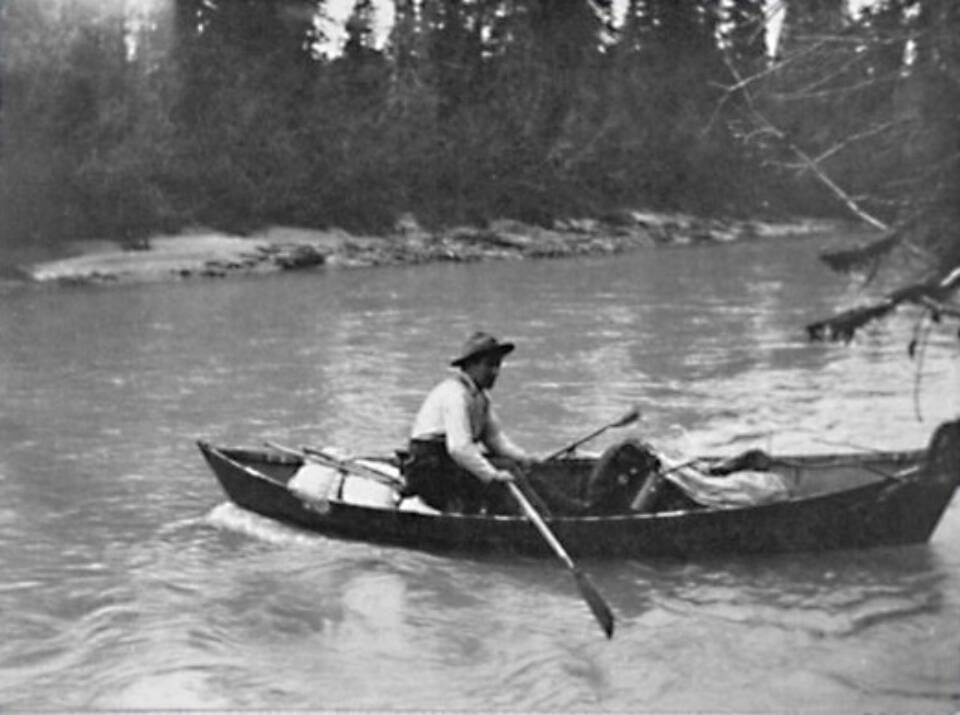
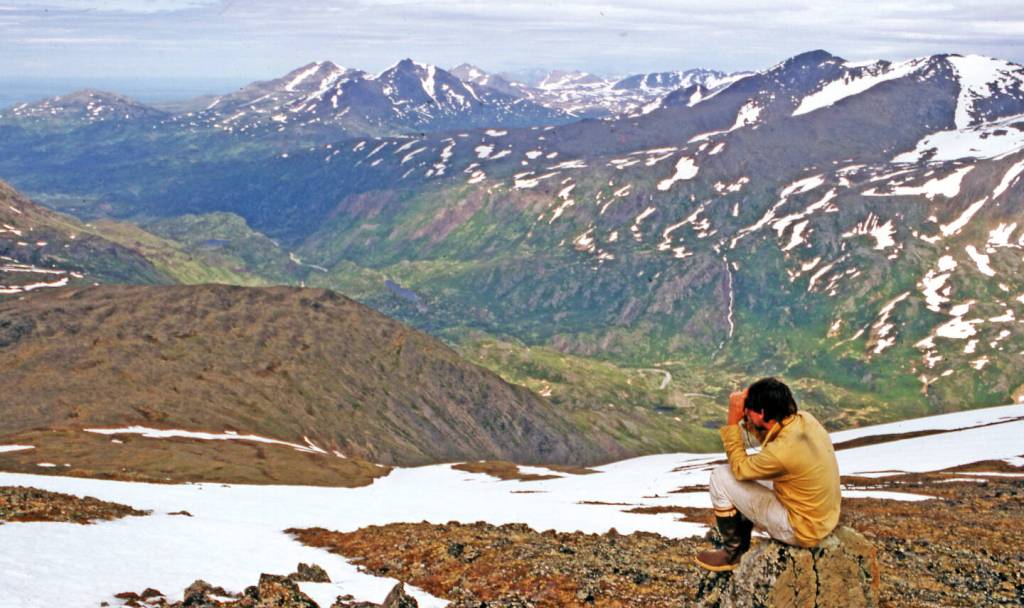

The name “Killey River”—spelled exactly as it is today—first appeared in print, as far as I can tell, in an Illinois newspaper in September 1898. Prior to this date, the stream had appeared in 1897 mining documents as “Kiley River” and “Kiley Creek.” The Dena’ina people, according to elder Peter Kalifornsky, seemed to link the river’s name to a white man, probably named Kili, who had lived in the area.
Mining records from 1895 place a miner named A.M. Killey in the Hope area, with placer claims on Palmer and Resurrection creeks.
Was A.M. Killey the source of the river’s name? I believe he was. And I believe the evidence supports that conclusion but fails to completely prove it. I am hoping that, by sharing the history I have managed to gather, I can find a reader who will either help me confirm my conclusions or show me the error of my ways.
Finding Mister Killey
I believe that A.M. Killey—the man who came to Alaska in the 1890s to prospect for gold—was Alvin Morrison Killey.
Among the obstacles involved in proving this are: (1) I have found his first name listed several times as “Alvan” and also at least once as “Olivar.” (2)
He mined in California at least as late as November 1893, and he died in California in 1897, leaving only a small window of time in which he could mine along Turnagain Arm in 1895 and establish himself in the stream drainage that would later bear his name before returning to California to die.
Although “Alvan” is used frequently enough to make me suspect that that may have been the proper spelling of his name, I will use “Alvin” here for consistency’s sake and because it is the more common spelling.
Alvin Morrison Killey was born in Johnston, Providence County, Rhode Island, on June 24, 1827, to farming parents Jonathan Smith Killey and Eleanor Bertine Paulding. According to ancestry.com, the Killeys produced 10 children—the eldest born 11 years before Alvin, the youngest 10 years afterward.
When he was almost 18, Alvin Killey entered the Merchants Service as a light-complected seaman who stood 5-foot-7½ and was scheduled to earn six-and-a-quarter cents per month. In 1849, he sailed, under Master Samuel R. Eddy, from the Port of Warren, Rhode Island, bound for San Francisco. It seems likely that this taste of the West influenced his move away from the East Coast just a few years later.
During 1852, Plumas County, California, experienced a gold rush. Among the key mining locations in the county—locales that would soon be very familiar to Killey—were Hungarian Hill, the Genesee Copper Mining District and the Reward Mine (also known as the Cosmopolitan Mine). The town of Quincy seemed to be a hub of much of this area’s mining activity.
By at least 1867, Killey was listed as a registered voter in Plumas County. He was also listed as a miner and a resident of Quincy. During that same year—or perhaps as early as 1866—Killey and two other men announced their intention to apply for a patent for the ore vein known as the Cosmopolitan Mining Company’s copper claim.
In March 1875, when he was appointed as superintendent of the Hungarian Hill mining claims, Killey was nearing his 50th birthday.
In the Feather River (California) Bulletin on Christmas Day 1875, a summary of mining progress at Hungarian Hill called it “decidedly encouraging.” The paper said Killey was a “thorough, practical miner … well acquainted with the ground. He will certainly make it pay as well as anyone can.”
By 1877, one of the important mining prospects on Hungarian Hill was called the Killey & Co. Claim.
When Killey’s father died in 1883, his will bequeathed to Alvin $3,000—equivalent to more than $100,000 in today’s money, providing him with greater investment material. He would have little money left to his name by the time he died.
In the early 1890s, Alvin, entering his mid-60s, appears to have become more of a mining consultant than an active miner.
At Thanksgiving time in 1893, he was mentioned in the Blue Lake (Humboldt County, California) Advocate as a San Francisco resident who had traveled into the northern part of the state to assist miners in the Trinity/Klamath river area to determine the best way to divert water for their efforts.
After his death in Plumas County in June 1897—within days of the first placer-mining claims being located on the Killey River, just downstream of the Skilak Lake outlet, and being recorded officially in the Lake Mining District—the San Francisco Chronicle ran an obituary that said that Killey “had recently returned from Alaska.”
Aftermath
Sixty-nine-year-old Alvin Morrison Killey’s death was the result of suicide. After an inquest, the coroner reported the cause of death matter-of-factly: “He died from a pistol shot in his head, fired by his own hand.” The Feather River Bulletin added that Killey’s body had been found on the storehouse porch at a Plumas County mining area known as Buck’s Ranch.
The press also speculated a motive: The Chronicle blamed the death on Killey’s inability to find any new paying ground since returning to the area. The Bulletin blamed “despondency,” adding that Killey had been “an honest, industrious and useful citizen, a man of good standing, and he had many friends, all of whom regret to learn of his tragic end.”
But it was Killey himself who had the final word. As reported by the Oroville (California) Daily Register, the coroner’s inquest had disclosed that Killey, in failing health, had left a suicide note: “As I am liable to have dizzy spells and fall and kill myself at any time, or end my own life, which I should, I would not be responsible,” he wrote.
“I would like to be buried at Quincy near Hugo L. Atkinson or Col. Wyatt,” he continued. “I have at present twenty dollars and fifty cents in my pocket, and some clothing and blankets that could be sold. My niece, Mrs. Thomas H.B. Varney, of 33 Julian Avenue, San Francisco, if notified, I think, will furnish what money is lacking to see that my old body is decently buried. Good-bye, everybody; this may be my last. [Signed] A.M. Killey’”
The cost of the inquest had been $17.50.
So, what do we know for sure? Alvin Morrison Killey traveled to Alaska sometime after Thanksgiving 1893 and returned to California sometime prior to June 2, 1897, when he placed the barrel of his pistol in his mouth and pulled the trigger. He filed two mining claims on the Kenai Peninsula in the spring of 1895. At about the same time that Killey was returning to California, the name “Killey River,” on the Kenai Peninsula, was beginning to come into regular parlance.
Beyond those facts, many questions remain: Did, in fact, Alvin Morrison Killey actually prospect on the river that now bears his surname? If so, when and for how long?
Did Killey reach this area through mountain passes from Turnagain Arm, or had he been in the lower Skilak area before he tried his luck at Hope? Had Killey traveled up the Kenai River, instead of through the mountain passes, from Cook Inlet?
If he had been in Kenai before he traveled to Hope, had he explored the stream that the Dena’ina came to know as Kili Betnu? That stream’s current name, Ryan’s Creek, came from its association with the controversial Alex Ryan, who carried the winter mail between Kenai and Homer from about 1902 to 1907.
If Alvin Killey lived or worked in Kenai, did he encounter the area Dena’ina at this time? The Dena’ina also had a small village, possibly seasonal, across the river and just downstream from the Killey-Kenai confluence, and perhaps they named the stream after the old white man they watched working the gravels—and may have seen performing similar activities in Kenai.
Peter Kalifornsky believed there was a connection. Was he correct?
Conversely, how likely is it that Alvin Morrison Killey had nothing to do with the naming of the river (and the Kenai-area creek)?
With any luck, someone, someday, will find the answers to these questions and close the book on the mystery of this Kenai Peninsula place name.