Brick by Brick: Kenai’s Russian Kiln — Part 1
Published 4:30 am Thursday, July 23, 2026

AUTHOR’S NOTE: A number of people (Dorothy Gray, Marion Nelson and Danielle Stamm, for example) have assisted me in gathering information for this article, but I want to single out one individual for special acknowledgement. Without the Russian-language translations and summaries provided by Katherine Arndt, the bibliographer and curator of rare books at the Rasmuson Library at the University of Alaska Fairbanks, I would have been without at least two-thirds of my material.
By the mid-1860s in Alaska, change was in the air.
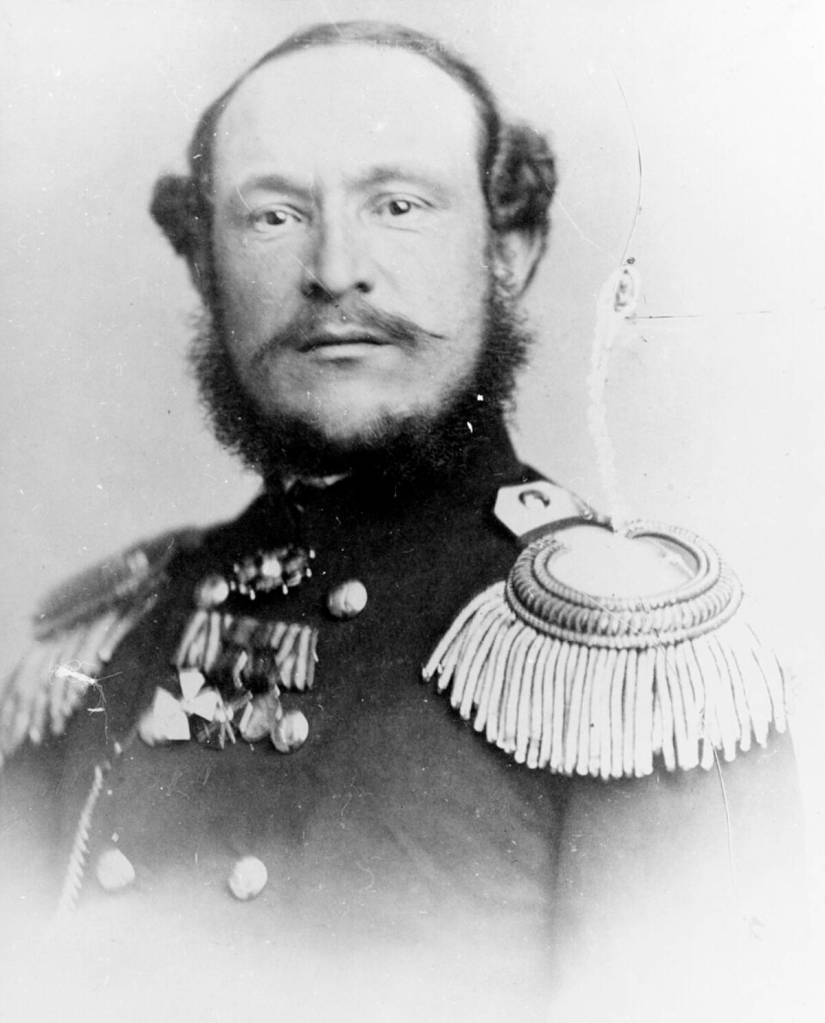
Dimitry Petrovich Maksutov, Alaska’s 14th and final Russian governor, had decided that a militarized fortification (redut or redoubt) was no longer necessary in Kenai.
He believed that an unfortified outpost (odinochka) would suffice, especially given his understanding that the “surrounding tribes of Kenaitsy and others” were lovers of peace.
Furthermore, he stated in a report dated Nov. 5, 1865, it was time to strengthen the colony’s fishing efforts in Kenai and to bring to an end there a quarter-century’s focus on brickmaking.
*****
It would be unusual now, in the 2020s, to associate Kenai with brick making, but in the middle of the 19th century, it was considered a vitally important enterprise.
A brick factory had been constructed in Kenai (Nikolaevskii redoubt) in May 1841 and had operated continuously for 25 years, producing tens of thousands of bricks, nearly all of which had been shipped to the capital city of Novo-Arkangel’sk (Sitka).
Although nearly every Russian-American company director (and de facto Alaska governor) had praised the quality of the bricks made during that time period, Maksutov was unimpressed. He declared the quality of Kenai bricks poor (because the quality of the area’s clay was poor) and their production expensive.
The colony could do better, he said.
Bricks manufactured in Victoria, on Vancouver Island (British Columbia), were significantly cheaper, according to Maksutov’s calculations, and “of excellent quality.” It was true, he acknowledged, that purchasing bricks manufactured outside of Alaska demanded the use of ready money, but those funds, he believed, could be generated by a healthy Kenai fishery that replaced the brickworks.
Buoyed by news of an “unusually abundant” salmon harvest in 1866, Maksutov, in a report from September of that year, summed up his plan for change this way: “Two years’ experience has convinced me that the manufacture of poor brick is extremely unprofitable and incompatible with development of a fishing industry since it takes away a significant number of hands at the best fishing time, and so I decided to discontinue it, and instead I ordered that a shed for salting fish and storing barrels, bins for salt and other such economic structures be built.
“I proposed to leave four people at Nikolaevskii redoubt,” he concluded, “and to remove the remainder to Kodiak. All the structures for fishing will be completed by voluntarily hired creoles and Natives and will be charged to the account for preparation of fish.…”
Six months later, Maksutov’s big plan seemed moot. Russia and the United States, on March 30, 1867, signed a treaty allowing the United States to purchase Alaska from Russia. The official transfer of power occurred in Sitka seven months later, on Oct. 18.
Brickmaking in Russian America
“Documentary research has shown that brick making in the Russian colonies was not regarded lightly,” stated a page-one article in the January 1983 issue of Heritage, the monthly newsletter of the Alaska Office of History and Archaeology. “Bricks were in demand for the building of house stoves and ovens. [In February 1823], an order was actually penned by one of the colonial governors, [Matvey Ivanovich] Muraviev, to have unfired ‘but well dried’ bricks shipped from an unspecified kiln site on Kodiak.”
In December of that same year, Muraviev wrote, “Our need for bricks in Sitka is very great. Presently, we received from Kodiak 3,500 bricks, but in view of extensive construction going on here, this quantity is far from sufficient. I hope to receive the same or even greater quantity with the next transport out of Kodiak.”
Despite the pressing need for bricks expressed by Muraviev — according to a 1981 paper by Timothy L. “Ty” Dilliplane, of the Alaska Office of History and Archaeology — Russian colonists “did not put any major emphasis on constructing brick buildings. Almost all of their structures were primarily built with wood.”
Wood construction was easier and faster, especially in areas where lime for mortar was scarce or unavailable. In addition, few colonists possessed brick making and masonry skills.
Therefore, the use of bricks in Russian America was concentrated on chimneys, ovens, stoves and building foundations.
At various times within Russian America, bricks were produced at Fort Ross (California), Kodiak Island, Long Island (in the Alexander Archipelago in Southeast Alaska), Unalaska, Atka, Nushagak (Bristol Bay), St. Michael (southeast of Nome across Norton Sound) and on the Kenai Peninsula.
The kiln at Fort Ross was a major producer of bricks for the colony until 1841, when the Russian-American Company sold its land there to John Sutter, a Mexican citizen of Swiss origin who soon became renowned for the discovery of gold at his lumber mill.
According to RAC records, 10,000 bricks were made on Kodiak Island in 1831. It has been speculated that the Kodiak kiln might have manufactured even more if more lime had been available. Lime on Kodiak was often produced by burning seashells.
Ultimately, the bricks produced in Kodiak were considered lousy — blamed on “insufficient” and “poor quality” clay — and a more suitable site was sought.
Kodiak bricks, RAC director Alexander Baranov had contended, were made from stone-filled clay, half of which he believed was simply mud.
Although there is some indication that bricks, in small quantities, may have been manufactured in Kenai prior to 1841, its high-production kiln was constructed and began operating during that year.
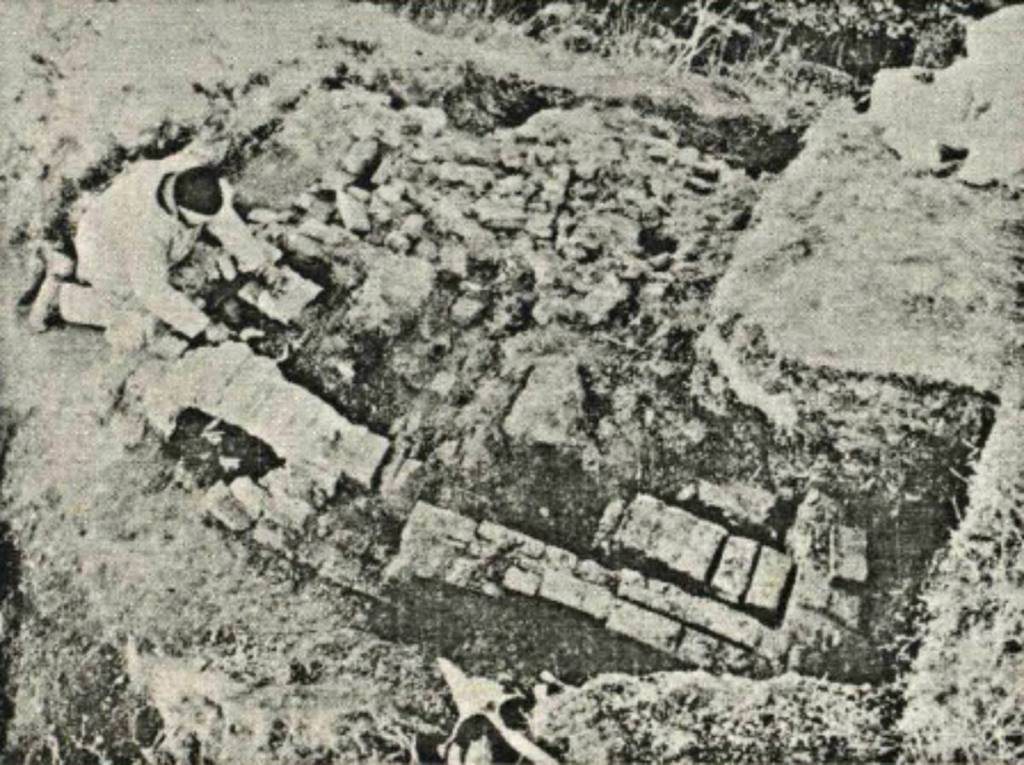
The exact configuration of the Kenai brick factory (operating under the authority of the Kodiak office) is not known, but it was probably based on a classic model that featured one or two underground, ventilated ovens that heated a floored chamber.
Heat for the kiln was generated by wood fires that had to be continuously stoked and monitored until the bricks had been properly fired. Then the kiln was allowed to cool to the point that the bricks could be removed and stored prior to shipping.
The exact location of the Kenai brickworks is also unknown, but it seems likely to have been somewhere near today’s Kenai boatyard or perhaps somewhat farther inland. Such a location would place the kiln adjacent to the raw materials needed for production and close enough to the river mouth to allow for easier loading of finished bricks.
From the beginning, the bricks produced at Kenai were considered far superior to those that had been produced at Kodiak. The Kenai brickworks was being operated by master brickmaker Efim Abyshev, who had been transferred to Kenai from Fort Ross after that facility had shut down and been sold.
Abyshev, who likely conscripted local Natives to toil in the brickworks, probably also had Russian employees. The exact numbers of workers needed is unclear and probably varied throughout the years.
In 1841, Russian-American Company director Arvid Adolf Etolin expected a first shipment from Kenai to Sitka of at least 4,000 to 5,000 bricks. In fact, he directed the Kodiak office to order Capt. G. Lindenberg, skipper of the brig Polifem, carrying a crew out hunting sea otters, to sail to Kenai and pick up that first order of bricks — if the Kodiak office had received word that a sufficient number of bricks was ready.
By mid-October 1841, Etolin announced in company correspondence, he had received that first shipment and pronounced the several thousand bricks in it “of very good quality.”
Etolin directed that the Kenai kiln to produce 20,000 bricks in 1842.
Five years later, Gov. Mikhail Dmitriyevich Tebenkov personally examined the Kenai area’s available timber, clay, sand and water and declared the Kenai brickworks the best in all the colonies.
TO BE CONTINUED….