Alchemizing nature into art
Published 9:30 pm Tuesday, October 28, 2025
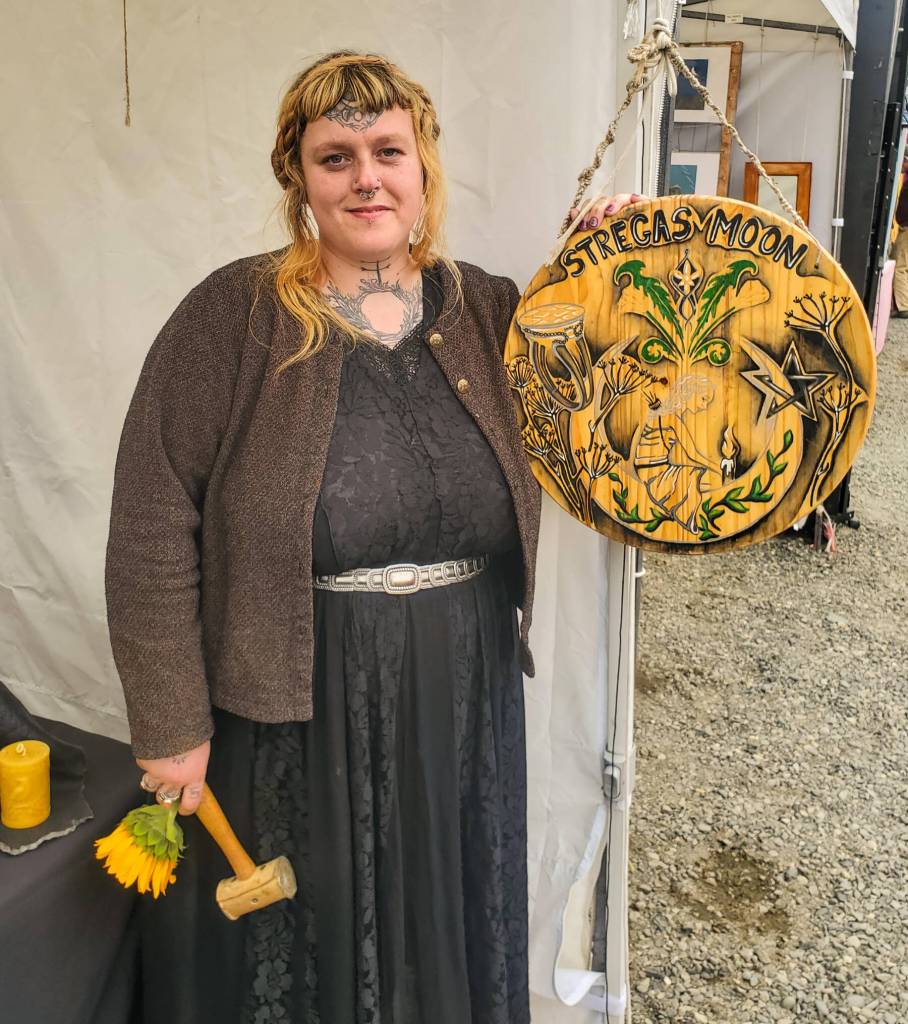


Homer metalsmith Carley Conemac is the creative force behind Stregas Moon Metal. Her latest body of work, “Kachemak Bay in Metal Clay: A Coastal Alchemy of Object and Wearable Arts” is currently on display at Homer Council on the Arts and showcases ocean-inspired silver adornments, natural items preserved in metal clay and transformed into jewelry.
“The title of my show reflects how I use metal clay to preserve natural treasures — shells, leaves, stones — transforming them into wearable pieces of silver art,” Conemac said. “It’s about celebrating the biodiversity of Kachemak Bay while showcasing metal clay as a legitimate fine-arts medium within metalsmithing. Through a blend of craft and alchemy, these earthly findings are reborn as heirlooms meant to last for generations.”
On display in Conemac’s exhibit are 18 necklaces, three bolo ties, five sets of collar pins, 10 pairs of earrings, five brooches, five rings and three mixed-metal hairpins. The pieces feature rocks, cones, shells, sea glass, barnacles, precious stones and more.
“I’ve always been deeply inspired by my surroundings, especially the ocean and the quiet joys it brings us, and for this exhibit, I really wanted to bring that sense of appreciation and wonder into focus,” she said. “Every piece was created specifically for this show and the process unfolded quite organically.”
Conemac’s work comes from a deeply personal place where creativity, trauma, resilience and love intersect.
“Every artist has that hidden inner landscape, and mine finds its way into metal,” she said. “These pieces are physical expressions of transformation — taking fragile, fleeting things from nature and preserving them in something enduring. That mirrors my own life, turning challenges into strength and beauty.”
Conemac said that in order to understand her pieces, one must understand the process.
“Metalsmithing is much like woodworking in that you start with raw materials like silver sheet and wire and measure precisely, cut and connect them through soldering,” she said. “Unlike soldering electronics, metalsmiths use high-heat torches to melt solder and form solid joints. It’s both technical and artistic, requiring patience, math and craftsmanship.
“Metal clay, on the other hand, is made of microscopic silver particles bound in clay. It can be molded, sculpted or pressed into silicone molds to create detailed 2D and 3D replicas of natural objects. Once fired, the binder burns away, leaving pure silver behind. This process allows me to preserve organic materials like shells, barnacles and leaves in solid silver.”
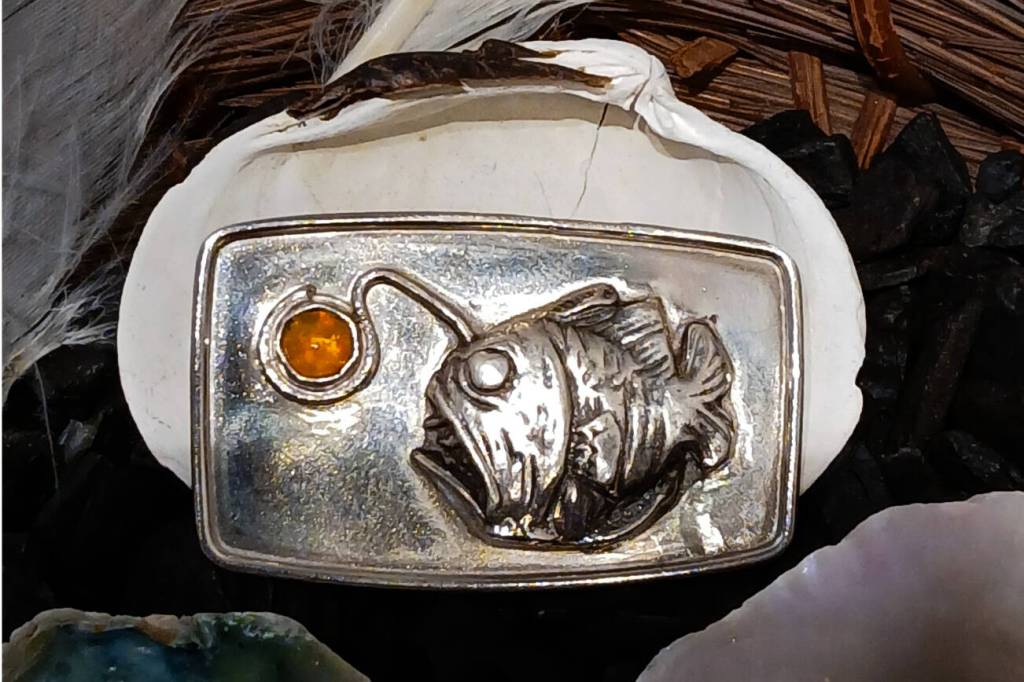
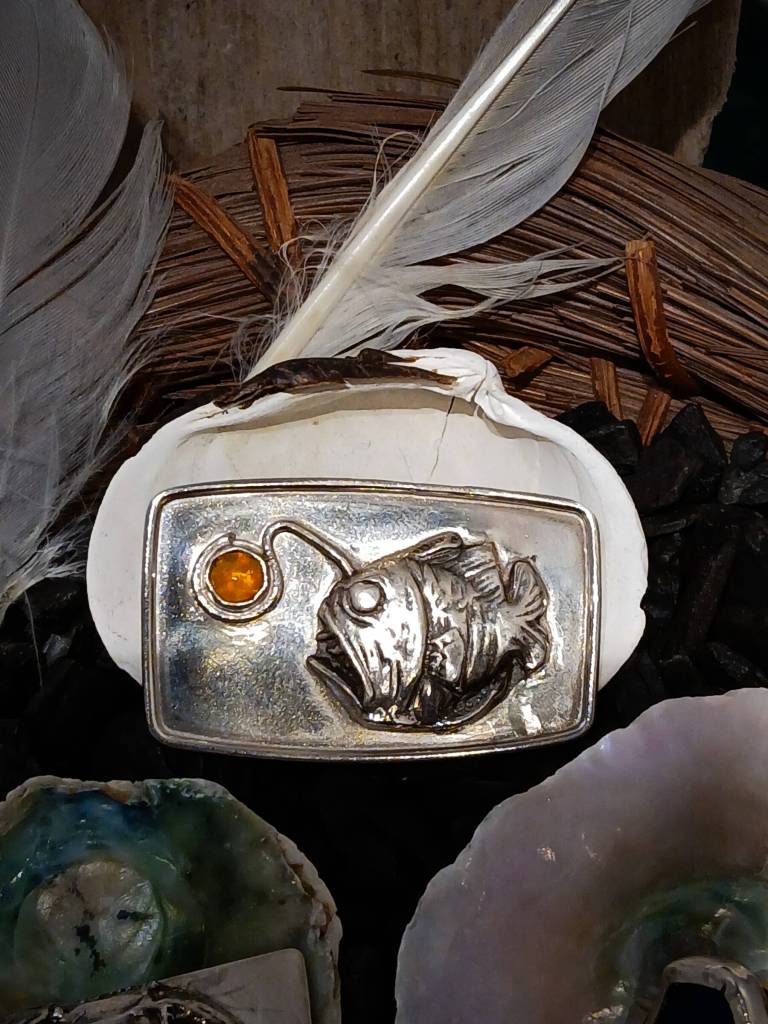
The artist’s first major success working with silver clay resulted in a brooch she titled “The Angler Fish,” created alongside her friend, Syd Paulino.
“The fish sat on my bench for over a year before I transformed it into a brooch with silver sheet and wire, adding a silver antenna and a fiery Mexican opal,” she said. “This piece represents the beginning of my journey into metal clay and collaboration.”
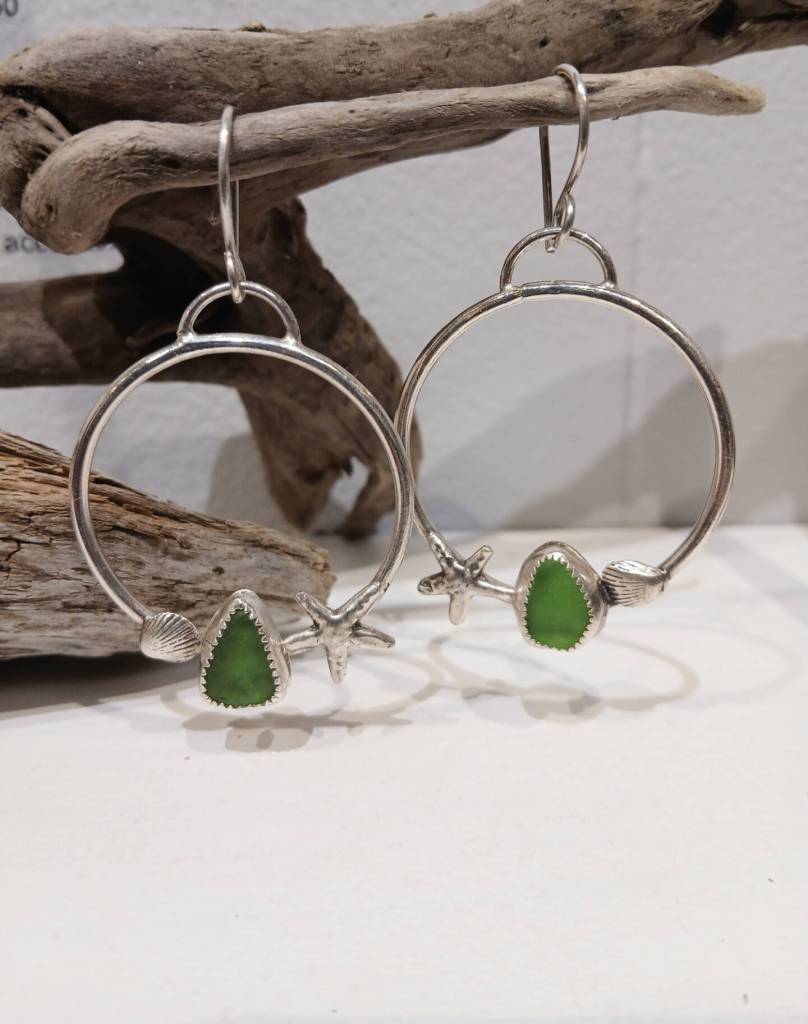
Conemac’s “Homer Seaglass Hoops” are large hoop earrings crafted from thick silver wire that feature two pieces of green sea glass she found on local beaches, with silver-clay shells and starfish added, each molded from real specimens found along Kachemak Bay beaches.
“These are a joyful, wearable tribute to the Bay’s shores,” she said.
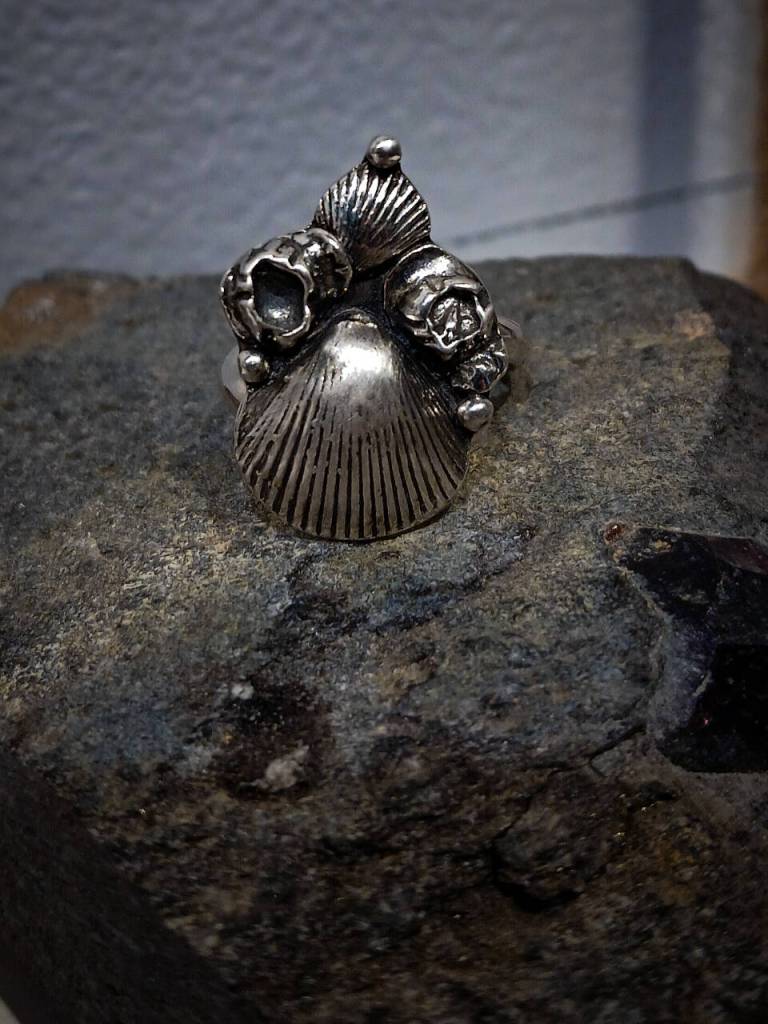
Made from silver clay barnacles and shells cast directly from beach finds is her “Barnacle Ring.”
“This ring combines texture and form in a way that feels alive,” she said. “It’s built on a sturdy, hand-forged silver band, an elegant nod to the rugged beauty of our coastline.”
In addition to the process of creating each of the pieces of jewelry themselves, Conemac chose to showcase the work with unique display elements — necklaces, collar pins and earrings are set within photo frames, and a ring, a brooch and a pair of earrings rest atop natural driftwood and shells.
“At first, I wondered how I was going to fill an entire gallery with such small and intricate pieces, and that challenge sparked the idea to create elaborate displays that could elevate the jewelry into larger works of art,” she said. “The display concepts themselves pushed me creatively and became a core part of the exhibit’s identity.”
Born in California and raised in Virginia and West Virginia, Conemac grew up immersed in music, playing fiddle, guitar, banjo, piano, mandolin, the accordion and drums. She left home as a teenager and began traveling, hitchhiking around the country and hopping freight trains, making her way from town to town to do farming jobs and busking. For nearly a decade, she continued to live this way, traveling to 49 states before she was 21 years old.
In 2018, feeling like she wanted to settle down somewhere, she and a friend bought tickets and flew to Alaska on a whim. After hearing about Homer, Conemac bought a car, drove down and was soon renting a cabin out East End Road and immersing herself into the community. She also began collecting art supplies. When a friend introduced her to metalsmithing, she bought a soldering kit and began teaching herself to make jewelry as a hobby, spending her summer months working at sea and doing various jobs around town in the winter.
This hobby became a passion when, in 2019, she broke one of her feet, had surgery and had to take a year off from work. Confined to her space, she spent most of her time teaching herself to make jewelry.
“I started with mixed metals and then moved to silver and gemstones, teaching myself each new technique through trial and error,” she said. “My first piece was a copper pendant with resin and small silver balls, a simple design, but an enormous personal victory. I’m entirely self-taught as a metalsmith, learning through research, experimentation and a lot of mistakes. Teaching myself new skills has always come naturally and that independence is part of my creative identity.”
At the end of the winter, she posted some of her work on social media, sold her first pieces and built a following. Through her networking, she was also gifted silversmithing supplies that had belonged to a silversmith who passed away the year prior.
“That silversmith was very talented and a special part of the Homer community. Having their books and tools changed everything for me as I was able to use those supplies to fabricate pieces on a larger scale,” she said.
Even before she got into silversmithing, Conemac had been drawn to metal.
“Part of me thinks that my background of traveling on giant metal trains and growing up calling myself a rust punk had a lot to do with my love for metal,” she said. “I’ve worked with other mediums, but metal is the first one I’ve found where I can truly express myself. I’ll be learning this medium for the rest of my life because there’s so much knowledge around it, so I’m constantly challenged and learning.”
In 2021, Conemac started her business Stregas Moon Metal. “Strega” translating as “witch” in Italian, so the name translates to “Witch’s Moon”, intended to reflect the deep, ethereal and slightly mystical aesthetic that runs through all of her work. Previously working as a full-time artist, making metal jewelry and teaching classes, she is currently moving into a new space and plans to resume classes once she is settled. Today she divides her time between creating art and working as the Lead Advocate at South Peninsula Haven House where she supports survivors of domestic violence.
With this new body of work, Conemac strives to introduce viewers to the medium of metal clay and inspire an appreciation for the natural world.
“I hope visitors leave with a deeper appreciation for the natural world and how much inspiration can come from a simple shell or stone found on the beach,” she said. “I also want to introduce people to metal clay, which is a fascinating and underused medium that lets us preserve our local biodiversity in a tangible, lasting way. There’s something profoundly magical about that.”
Find Conemac’s work online on Instagram at @stregas_moon_metal and on Facebook at Strega’s Moon Metal. During the summer season, she sells her work at the Homer Farmers Market and this December, she will have a booth at the Nutcracker Faire where she will debut a brand new collection of wearable art.
“Kachemak Bay in Metal Clay: A Coastal Alchemy of Object and Wearable Arts” is on display at Homer Council on the Arts at 355 W. Pioneer Avenue through Nov. 3.