City hosts zoning code community meeting
Published 4:30 am Tuesday, November 11, 2025

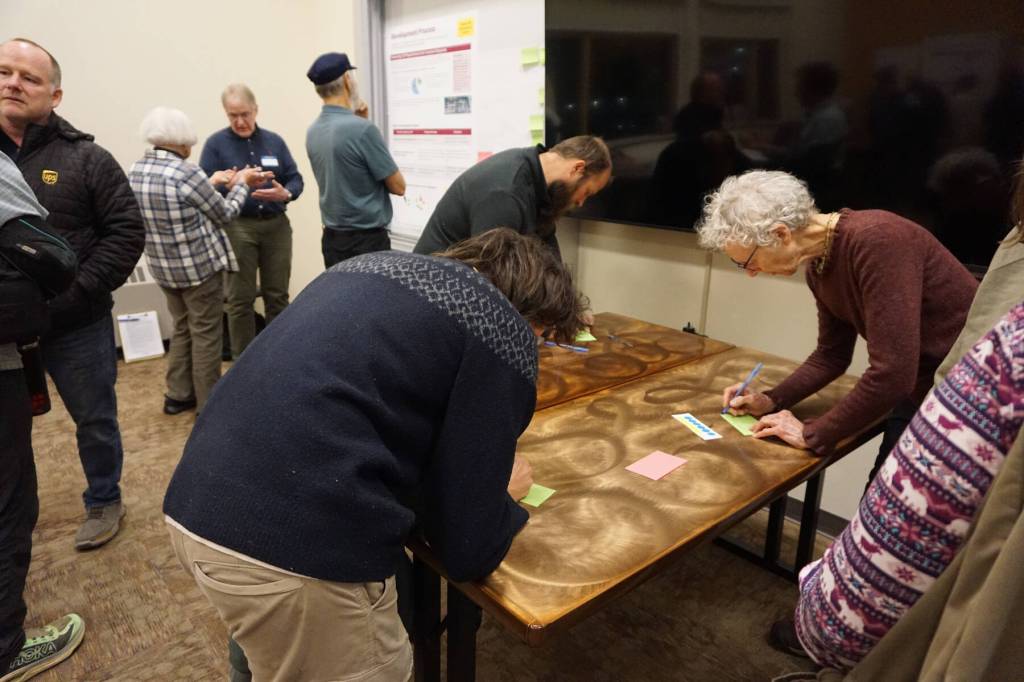
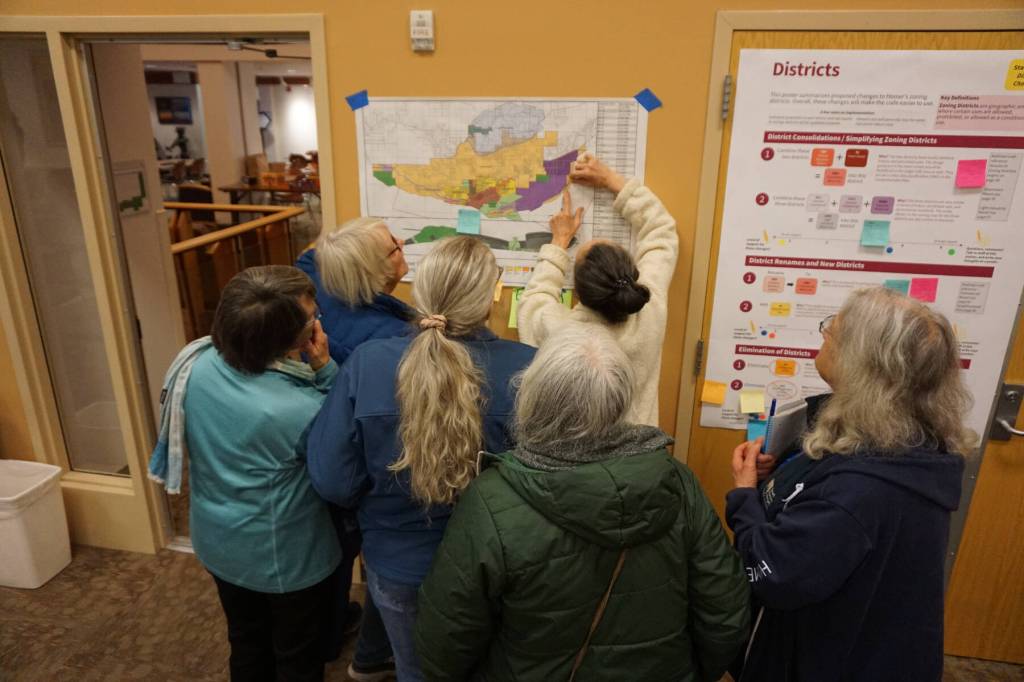
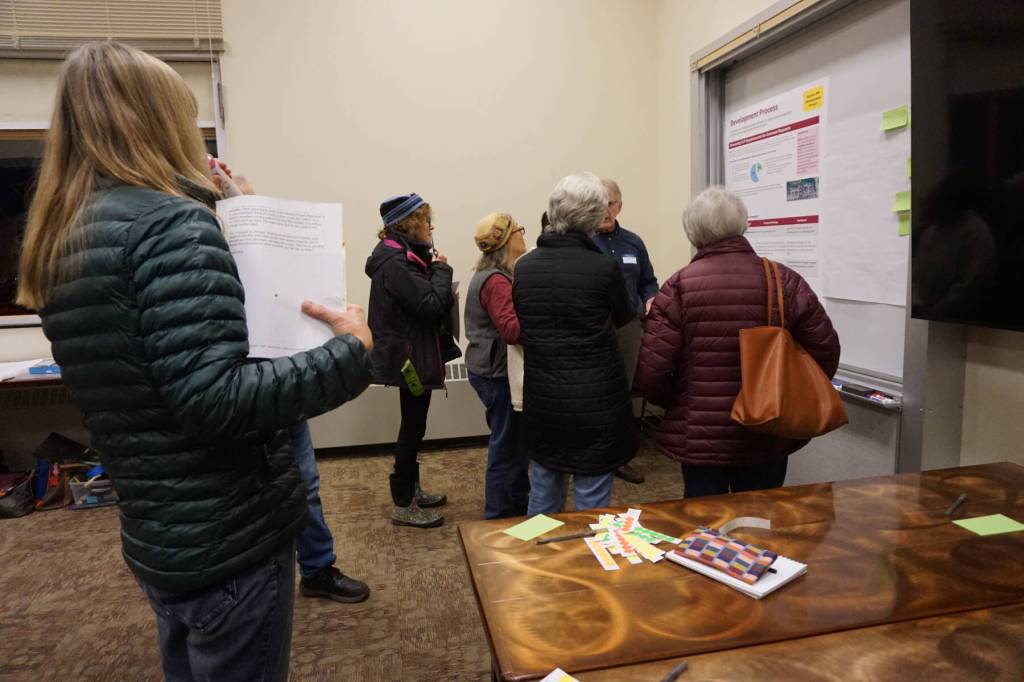
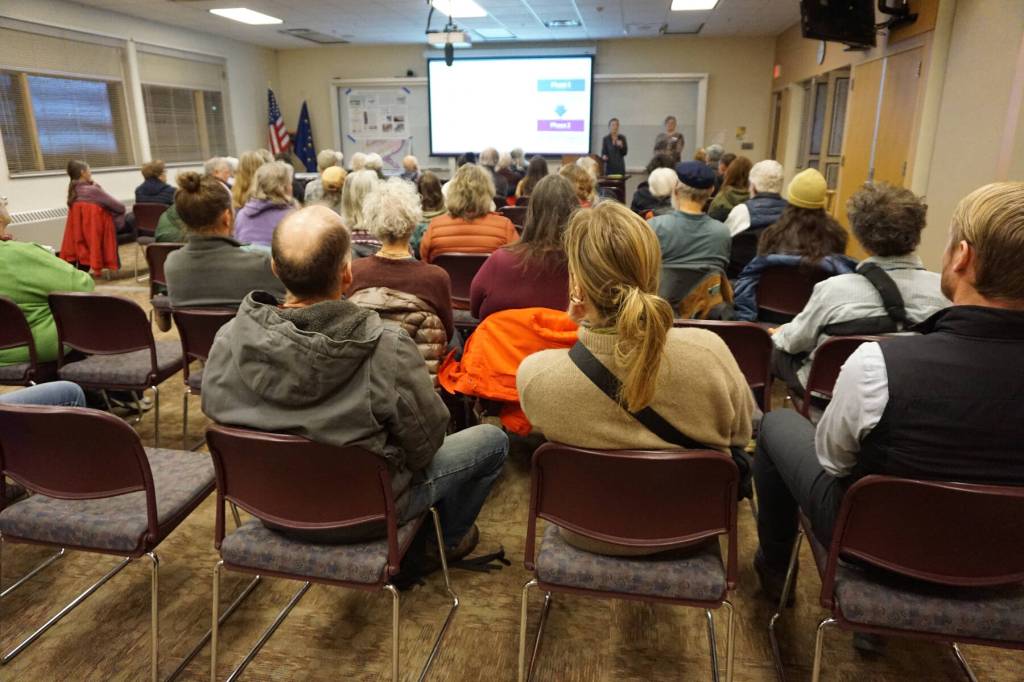



The City of Homer and project leaders from consulting firm Agnew::Beck held a community open house at Kachemak Bay Campus last week to review and discuss ongoing updates to Title 21, Homer’s zoning and planning code.
The Title 21 revisions mark the second phase in the two-part “community development effort” to update both the city’s comprehensive plan and zoning and planning code. Phase 2 was launched in January, and to date project leaders working alongside city staff and the Homer Planning Commission have reviewed the existing Title 21 code, identified needed updates and gathered community input.
On Monday, Agnew::Beck consultant Shelly Wade said that the open house held last Thursday, Nov. 6, saw “a great turnout” of over 50 attendees who heard a presentation on work completed thus far on the Title 21 rewrite. Attendees also visited several stations where they could engage with project team members and weigh in on proposed changes and ideas.
“We’re excited to have this level of interest and engagement from the community, and excited for our next steps,” Wade said.
The open house featured five stations focused on different topics, including an introduction to zoning and Title 21’s relationship with the comprehensive plan; potential for consolidating and/or creating new zoning districts; facilitating more housing in more places; simplifying the development process and addressing natural hazards and preserving natural features.
“Out of the process so far … there are some preliminary ideas for consolidating and simplifying different zoning districts, because really the goals of this project are to help streamline the development processes and increase the predictability of the code,” Wade said.
Other project goals include increasing code clarity and flexibility, better aligning city code with community plans, considering natural hazards, and simplifying and reorganizing the code to make it more user friendly.
On consolidating or simplifying zoning districts, Wade said that potential avenues currently being discussed included district renaming, the creation of new districts, and elimination of redundant districts.
“We’re still in the really early stages,” Wade said. “Some of the initial conversations about the districts and the combination or consolidation of districts very well may change because of some of the conversations we’re having about the future land use map and the comp plan.”
Some preliminary ideas, though, included consolidating Homer’s Central Business District and Town Center into one “downtown mixed use” district or combining General Commercial 1, General Commercial 2 and East End Mixed Use districts into on “light industrial mixed use” district.
“A lot of these are very redundant … they’re very close and similar in terms of what they’re trying to regulate, in terms of their intent and permitted uses and dimensional standards,” Wade said. “It’s really confusing for the planners that are trying to apply and enforce these codes, and also for anybody that’s trying to apply for these permits.”
The station centered on facilitating additional housing in Homer tied back, Wade said, to the comprehensive plan goal to implement zoning reforms that support sustainable growth and attainable housing development for young people, families, seniors and seasonal workers.
“(At) that station, we had things like townhouses, multi-unit dwellings, mixed-use buildings, tiny houses, worker housings,” she said. “We were proposing new ideas for putting those types of housing in different locations and different zones throughout Homer, and then we asked people to weigh in — are we doing enough with those changes? Is it not enough? Is it just right?”
Wade said that the scale provided for attendees on zoning reform asked how well the proposed changes addressed Homer’s housing needs — do they go far enough? Are they just right? Do they go too far?
She said that, during the open house, it felt like people thought the proposed changes still weren’t going far enough.
“This is a really driving topic in Homer, and I feel like there’s still desire for us to maybe push a little bit further, reexamine this,” she said. “I feel like people were liking what they were seeing in terms of expansion of where different housing types could go, but I think there’s definitely this desire for more — again, the attainability.”
Wade said she didn’t have an exact answer Monday as to the reasons, whether due to locations or the housing type, that some people said the proposed changes didn’t go far enough.
“This will be a really important topic for the planning commission to deep dive and think about … It’ll be interesting to look back at what the community has said and what are the possibilities, especially given what we know about what’s possible within the constraints of what’s developable,” she said.
One of the requirements some developers currently face when seeking approval for projects from the city planning department is to apply for a conditional use permit. Conditional use permit applications are reviewed by city staff before undergoing a Planning Commission public hearing. The planning commission has 45 days following the public hearing’s close to issue a decision, usually with conditions and findings, on the permit application. Some recent CUP applications, such as one submitted by Doyon, Limited that was finally approved last November, have appeared controversial to members of the public and received feedback that the proposed project does not follow current city code.
At Thursday’s open house, a third station focused on the development process asked attendees what the threshold should be for applying for a conditional use permit. Wade said that there are some “different ideas” and rationales being discussed for proposed changes to CUPs.
The station focused on slopes and natural hazards included information on how Homer code currently defines slopes and how that compares to other Alaska and similar Lower 48 communities. Attendees were also asked to weigh in on how Homer should address these issues moving forward and what they thought the right approach would be for zoning and development on slopes.
According to Wade, the Homer Planning Commission will hold three special work sessions in December and early January for further “deep dive” review of proposed changes to Title 21 and station topics discussed during last week’s open house. A public review draft is currently slated to be released after the holidays, likely by the end of January.
“We’ll spend a lot more time with the planning commission so they feel comfortable, they get a good handle and they’re really weighing in on their perspective, because, of course, all of this comes before them to make ultimate decisions on these permits,” Wade said. “After the work sessions, after the holidays, then we’ll take all of that input collectively, including what we learned at the open house from the community, and begin to create this public review draft.”
Learn more about the ongoing updates to Title 21, share feedback or contact project leaders through the project website at homert21codeupdate.com/.