Homer Electric Association talks strategy, energy diversification
Published 4:30 am Thursday, October 30, 2025
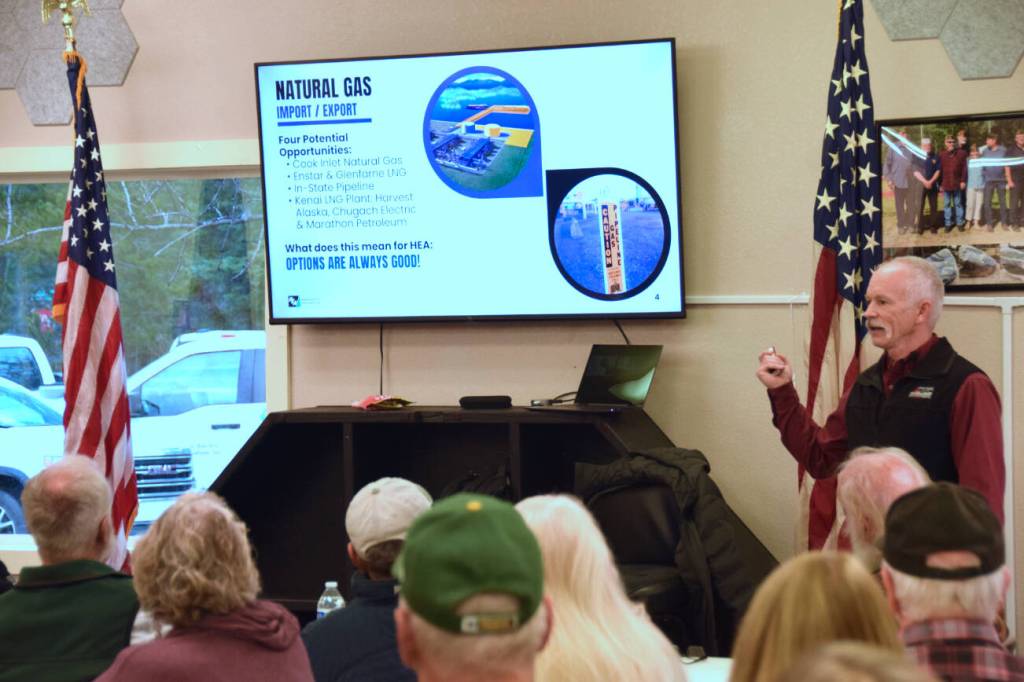
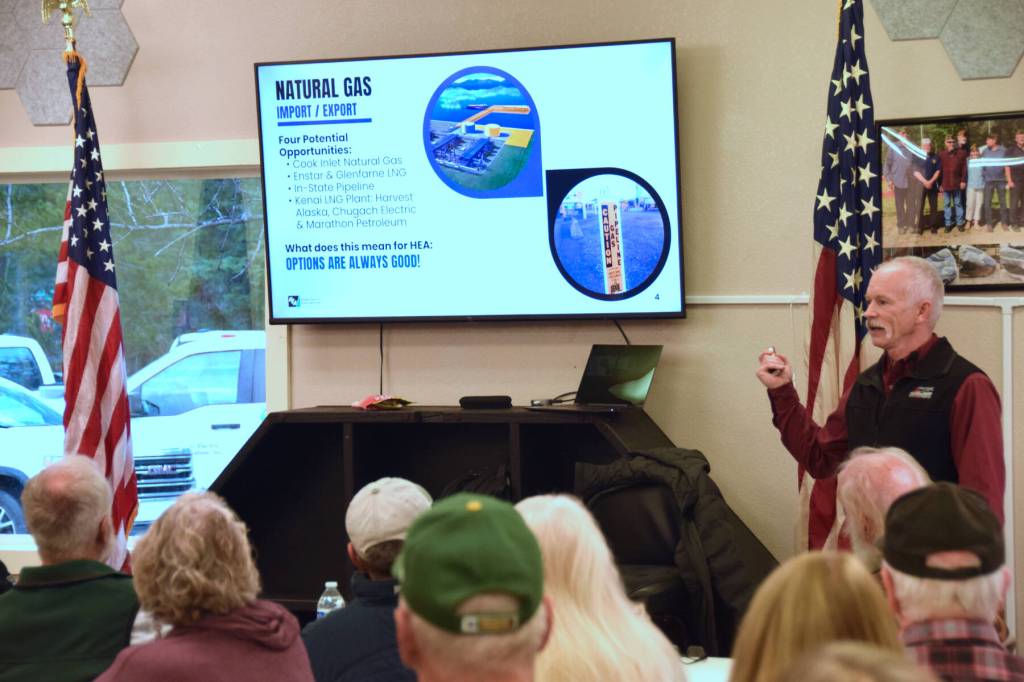
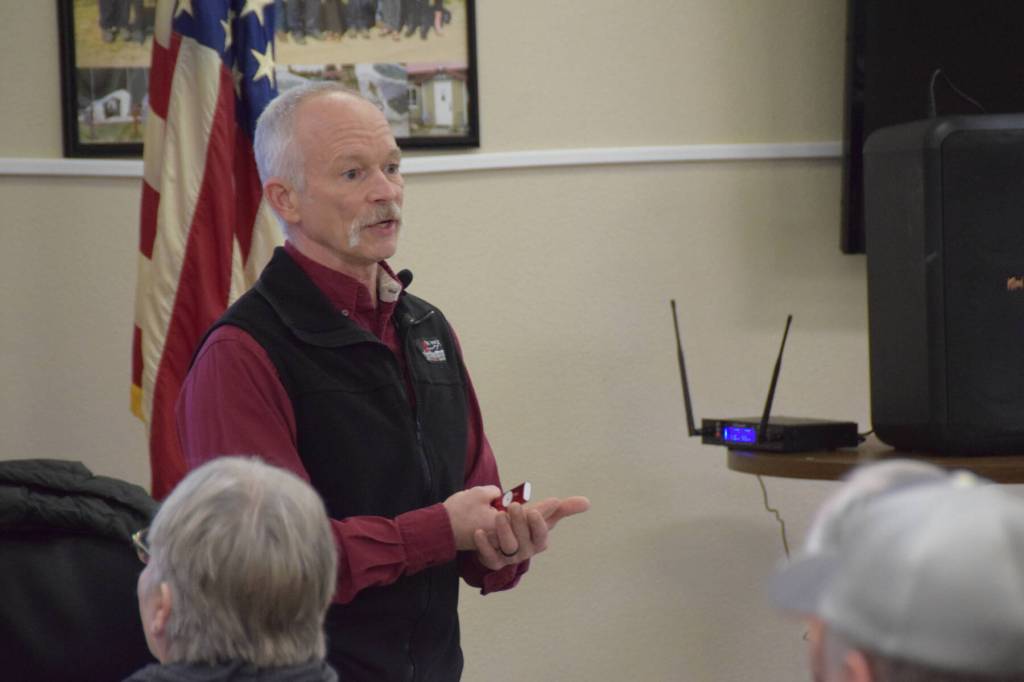
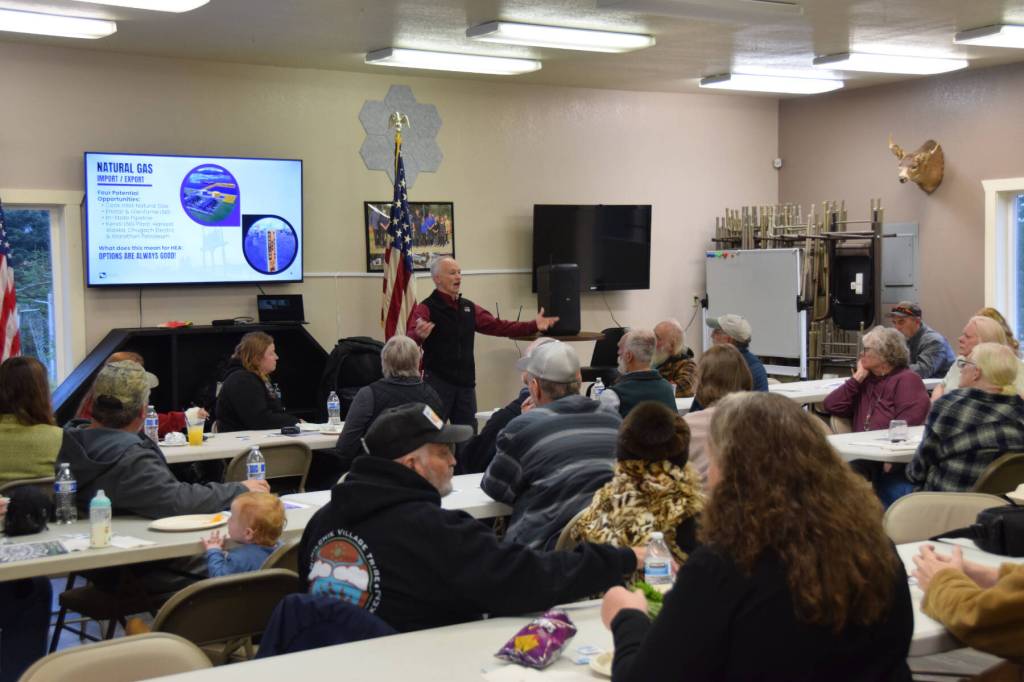


Representatives from the Homer Electric Association hosted a gathering with Anchor Point residents last Thursday, Oct. 23, as part of their annual schedule of meetings held with communities across the central and southern Kenai Peninsula.
At the Anchor Point VFW Post 10221, HEA General Manager and CEO Brad Janorschke presented on a number of the electric co-op’s strategic priorities, including energy resource diversification.
Currently, 90% of the electricity that HEA produces is fueled by natural gas through Enstar, the co-op’s singular natural gas provider. The other 10% comes from hydropower.
Janorschke outlined four options for continued sourcing of natural gas, including Cook Inlet natural gas; liquid natural gas imported to Nikiski via a partnership between Enstar and Glenfarne, a private developer that is also investigating the Alaska LNG pipeline project; Alaska LNG itself, the proposed in-state pipeline out of the North Slope; and the Kenai LNG import/export terminal acquired earlier this year by Harvest Alaska.
“So we’ve got four options — it’s three more than we’ve had historically,” he said. “Options are always good … (but) none of these are going to happen tonight or tomorrow.”
According to Janorschke, in February the HEA board also approved the Nikiski Repower Project, which is intended to replace an existing combustion turbine generator with one that uses 20% less fuel.
“The board decided that when we burn fuel, we’ll convert it more efficiently,” he said. “We’re going to replace our existing large-frame unit with a much more energy-efficient unit in the summer of 2028, is when it’s planned for, and it’ll use 19-20% less fuel for the same amount of electric energy.”
Janorschke also said that HEA is looking to repurpose $100 million in federal loan funding awarded last year through the Inflation Reduction Act’s Powering Affordable Clean Energy program. The PACE program is a $1 billion initiative to provide partially forgivable loans for renewable power, storage and other clean energy projects serving rural areas.
According to Janorschke, the co-op had intended to use the funds for a large solar project, for which he said 60% of the cost would be forgiven. However, that project fell through, and HEA is now “looking at other opportunities to repurpose” the funding “for the best benefit” of their members.
“Our goal is to find a way to produce electricity without using natural gas,” Janorschke said. “We are looking at that now — we’ve got a couple options, so stand by until we get formal approval.”
He said that HEA has also conducted wind and hydro assessments and is currently looking at four sites for wind platforms, including three on-shore sites and one offshore in the Cook Inlet.
“One of the things we’ve learned … in looking at the maintenance cost of on-shore versus offshore, the on-shore substation has almost got the same wind resource as offshore, but you can drive to that one (year-round,) whereas in the inlet, sometimes the (Cook Inlet) gets pretty nasty,” he said.
Janorschke also briefly discussed the Dixon Diversion Project, which involves diverting glacier melt from the Dixon Glacier to Bradley Lake, which houses an existing hydroelectric plant.
On consumer costs, Janorschke said that HEA residential rates and the cost of power adjustment, or COPA, have been “relatively flat.”
“We’re looking for (other) ways to produce electricity, and when we use gas, use it more efficiently,” he said. “I expect over the next few years, (COPA) will start to climb, because the cost of gas is rising. It’s been rising for some time, and we’ve been finding other ways to squeeze how much we use.”
In addition to the price of natural gas and new avenues of energy diversification, Janorschke urged residents to pay attention to ongoing legislative impacts.
“You’ve got to pay attention to what’s happening in Juneau and weigh in,” he said. “If you wait till you see it on your electric bill, it’s too late. If you see something coming and you don’t understand it, call us and we’ll explain it.”
Learn more about HEA’s 2024-2026 strategic plan and current or proposed power generation projects at www.homerelectric.com/my-cooperative/.