Trio of well-digging women a part of Soldotna history
Published 4:30 am Monday, July 20, 2026


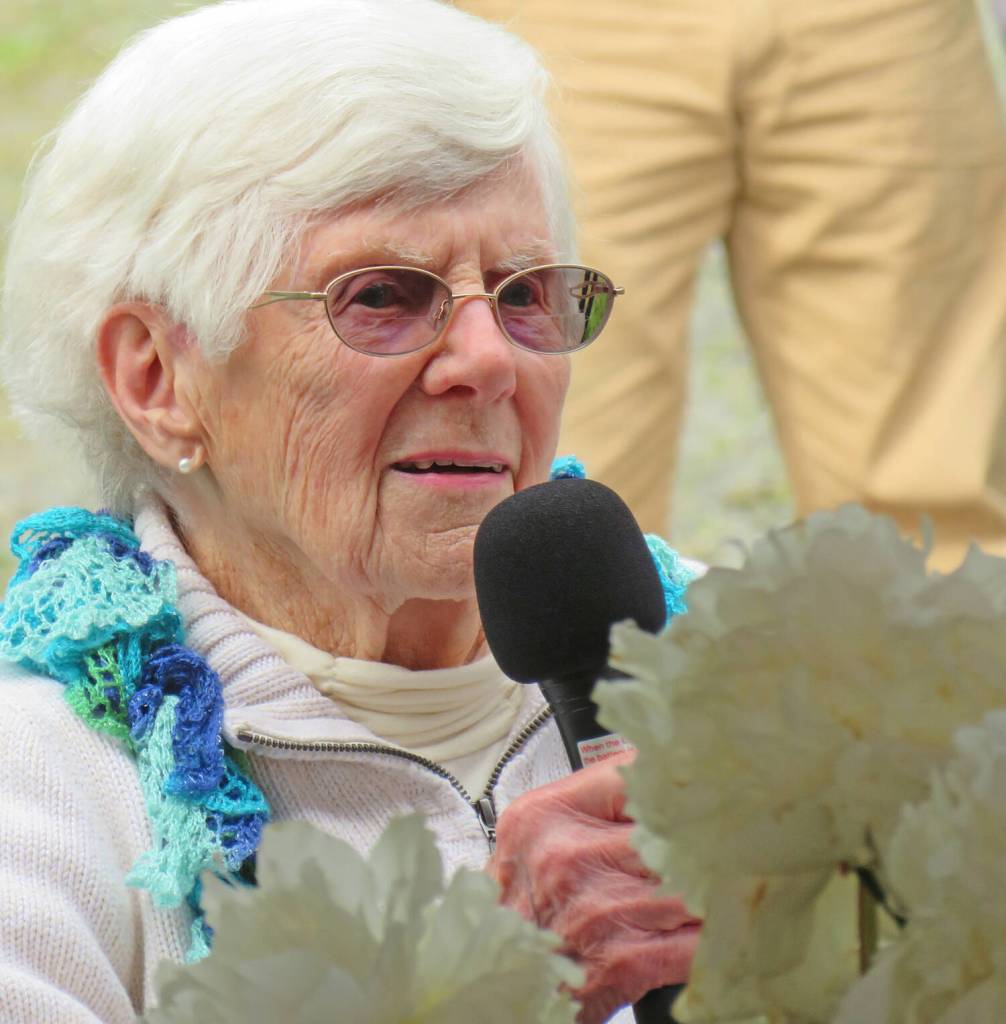



AUTHOR’S NOTE: The recent passing of my friend Marge Mullen reminded me that the first history piece I ever wrote for the Redoubt Reporter newspaper — for its inaugural issue of Aug. 6, 2008 — focused on three remarkable Soldotna women who are all now gone, although I believe they live on in spirit and will continue to do so as long as memory persists. The three women, in order of appearance in my story, were: Dolly M. Farnsworth (born July 20, 1922, in Holland, Texas; died Dec. 8, 2014, at the age of 93); Devona C. “Dee” Stock (born Sept. 2, 1917, in Raft River, Idaho; died April 14, 2013, at the age of 95); and Margaret T. “Marge” Mullen (born June 25, 1920, in Chicago; died June 7, 2026, at the age of 105). Except for the verb tense in a few places, the story that follows is mostly unchanged from its first appearance 18 years ago.
Dolly Farnsworth was at least 10 feet deep in a four-by-four-foot hole when company arrived. Her husband, Jack, said, “I’ll go out and talk to them. I don’t want them to see you down there.”
Jack ambled out to greet the visitor, careful not to acknowledge that his wife was standing, short-handled miner’s pick in hand and a small shovel and galvanized bucket at her feet, at the bottom of the well she was digging.
In those days, it was considered unmanly to allow a woman to do such work, but some men recruited their wives because the women tended to be slimmer. A smaller digger could mean a smaller hole, which meant that less material had to be removed. Also, according to Dolly, she had difficulty hoisting the heavy bucket, so it made more sense for her to be in the hole.
But because he was worried about the ribbing he might receive, Dolly said that Jack tried to keep her presence a secret. He hoped to avoid any shame by keeping the company — a B&C Auto representative from Anchorage — from entering the frame house they were building.
But this was 1950, and frame houses were uncommon in Soldotna’s pioneering days — log homes being the standard accommodations — so Jack could keep his visitor outside for only 10 to 15 minutes before curiosity won out.
Meanwhile, Dolly cooled her heels in the hole, leaning against the cribbed sides of the well, which had been carved bucket-by-bucket through tough gravel. Eventually, Dolly looked up to see two faces peering down. Jack’s secret was out. “He was very embarrassed,” Dolly said.
That was the end of the digging days for Dolly, who was still living on the original Farnsworth homestead at the time she was interviewed for this story.
With help from another man, the Farnsworths hit good water at 32 feet, and with a hand-pump they were able to supply their basic water needs. When power came to the area, an electric pump was installed and kept the family in good water until they hooked up to city services in the 1970s.
Devona “Dee” Stock told a similar water-seeking tale: She said that, like the Farnsworths, she and her husband, Bill, were digging their well indoors while they were completing their home. About eight to 10 feet down, she was using a shovel and a crowbar to pound away at the exposed strata below her when Bill announced, “I think someone’s at the door.” He disappeared from the portal of light above her and walked to the other end of the house to see who the company was.
At that time, Bill was the foreman for the local Alaska Road Commission office, and at his door were “two of the Anchorage bigwigs,” Pete Bagoy and Ben Peterson. “They brought some beers,” said Dee, who was age 90 and living in Utah at the time she was interviewed, “and they sat and visited for two to three hours drinking and talking.”
Meanwhile, she said, “I was cold and damp and getting madder all the time. I yelled and screamed and hollered, and they didn’t even hear me.” At one point, she said, she began to plot revenge. “I was plotting anything I could think of.”
When the company finally departed, Bill returned to the top of the well. “He was sorry,” Dee said, “and he just apologized and apologized. We had a few words.”
In the end, the well was complete at about 20 feet, but Dee never returned to the hole. “I helped,” she said, “but I didn’t get down in that well again.” Bill hired someone else to finish the job.
On the north side of Soldotna Creek, a third woman was also digging for water around this time. Marge Mullen, age 88 at the time she was interviewed, was excavating with a sawed-off clam shovel and an old coffee can and sending up buckets of till to her husband, Frank. Unlike Dee Stock and Dolly Farnsworth, however, Marge eventually completed all of the digging herself — down the narrow cribbed shaft to a depth of 25 feet.
“I couldn’t do this all day every day,” she said, “because I had a family to take care of, you know. Meanwhile, I had Soldotna Creek to get water from.”
For two or three years, the Mullens hauled buckets of water directly from the creek, while most early Soldotna residents drew their water year-round from a community spring on the south side of the creek, at the end of an ARC road in what is now Soldotna Creek Park.
The few residents who owned vehicles could drive to the spring, while others had to tote water by hand or on their backs. And everyone conserved in some way: outhouses, infrequent bathing, communal laundry days.
The work on the well, Marge said, was “kind of forbidding when I first started out, but then I got braver on the whole thing, knowing the final results would be a great help for me.”
The view up the shaft could be daunting. “I could see the sky and tree tops,” Marge said. “But it was a great day when I got out of there and saw a little bit of liquid in the bottom, and it was on the sand layer. So that was pretty exciting, and then to go back the next time and find that it had filled up a little bit further.”
By the mid-1950s, well drillers, such as Kenny Carver and Jess Shelman, were appearing in the area, and the era of hand-dug wells quickly faded. Frank and Betty Kraxberger arrived in the early ‘60s, and began finding water for local folks for decades afterward.
The Mullens eventually replaced their hand-dug well with a drilled one. In 2008, from her home along the Kenai River, Marge drew fresh water from a well 157 feet deep. And she didn’t need a coffee can or truncated clam shovel to do it.