Life-changing moments in the Hawley Sterling story — Part 1
Published 1:30 am Thursday, April 2, 2026


Single moments alter lives. A man leaves for work five minutes late and fails to avoid a serious accident on the highway. A woman walking through a park tries a new path and meets someone who becomes a life-long friend. We make decisions every day with myriad outcomes, some of which include dire consequences. We decide yes or no, stop or go, left or right, quit or stay the course.
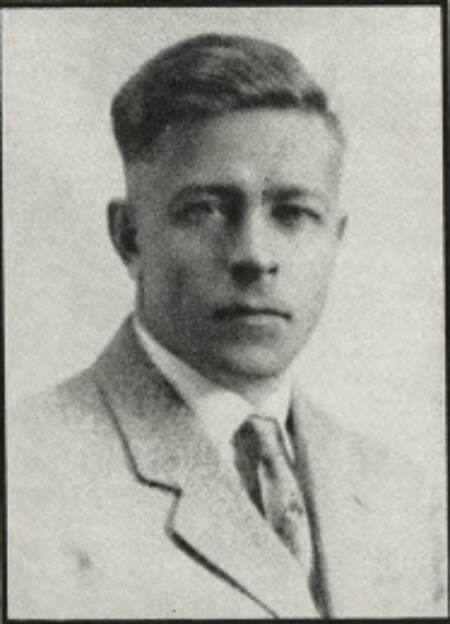
It is impossible to know how the life of Hawley Winchell Sterling might have been different if not for the events of Friday, Oct. 4, 1918. Clearly, those events altered the course of his life – but who knows, in the grand scheme of things, how much? He might still have become the namesake of the Sterling Highway and the community of Sterling, Alaska.
All we can be sure of is this: Life changed dramatically for Hawley Sterling on Oct. 4, 1918. And, given the impact his life and career had on Alaska in general and the Kenai Peninsula in particular, it’s worth considering what might have been….
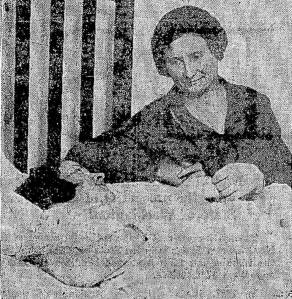
Margaret
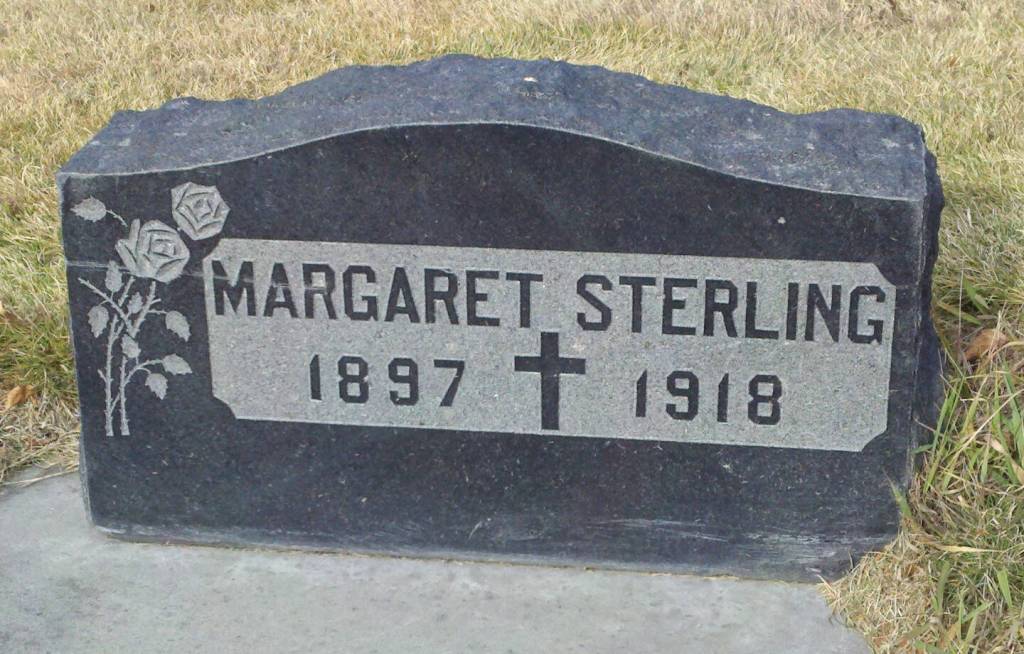
In Nenana, at the beginning of October 1918, Margaret Young Sterling learned that her father, Frank Young, Sr., had been taken to the hospital in Fairbanks, suffering from what one newspaper termed “a hemorrhage of the stomach.” Worried that her father might be dying, Margaret Sterling booked passage on a river launch that would transport her the next day up the Tanana River to its confluence with the Chena River and from there upstream into Fairbanks.
Before the boat’s 6 a.m. departure, Margaret left her 10-month-old son, Joseph, with her husband, Alaska Engineering Commission employee Hawley Sterling. Joseph, according to a Homer News interview with him in July 2000, had been born in mid-February in a tent at Mile 456 of the Alaska Railroad, where Hawley had been working.
Hawley and Margaret had been married for only a year and a half. They had been wed without fanfare or publicity in Fairbanks on April 7, 1917. In fact, one month later, a Fairbanks newspaper called the Weekly Alaska Citizen claimed that the young couple had been “secretly married” during one of Hawley’s periodic business trips to the city.
The pair had met during the previous summer, shortly after Margaret had returned from some time in the States. Their nuptials took place in the Presbyterian church in Fairbanks and were presided over by the Rev. Wallace S. Marple.
Margaret was three days away from her 20th birthday. Hawley was two months shy of turning 28.
What did not seem to be widely known, despite some modest news coverage about it, was that Margaret had been previously, albeit briefly, married before. In 1914, when she was 17, her parents had sent her to Los Angeles to continue her education. There she met a former Fairbanksan named Charles F. Rhind and fell in love with him. Rhind was 52.
They married in Santa Ana, California, in May, three weeks after their initial meeting.
Rhind had been married once before and had a daughter about the same age as Margaret. In divorce court two years later, Margaret accused her husband of cruelty, of treating her like a child—once even humiliating her by spanking her with a hairbrush.
After chastising Margaret in court, the male judge granted her a divorce on the condition that she pack her bags and return to Fairbanks.
“You ought to be home with your parents instead of in the divorce court at this age,” said the judge. “The spanking you got…should have been applied by your parents for marrying a man 52 years old on three weeks’ acquaintance.”
Disaster
The launch that morning was called the Flyer and was piloted by Austral “The Hungry Kid” Vernon, son of the craft’s owner, George Vernon. The boat, which the younger Vernon controlled from a wheel just behind the engine, had been canopied with canvas to keep out much of the early-winter cold and make its eight passengers more comfortable during the long upriver trek.
One of the passengers, a prospector named Peter Jenkins, disembarked at an intermediary location along the route. According to Jenkins, when he was interviewed more than a week later, Margaret Sterling and a 51-year-old passenger named George Alfred Coleman, manager of the Northern Commercial Company store in Fairbanks, were seated in the stern.
Anna Craig and her two-year-old son Robert were seated directly behind the pilot, while her husband, Charles, lay, perhaps napping, on the floor of the launch. Two other passengers, Helen Moulton and Dick Richardson, were seated between Mrs. Craig and the stern.
Contemporaneous news reports supplied little personal information about most of those on board, besides Sterling and Coleman. The Craigs had been in Interior Alaska for at least two years, with Charles working as a miner. Austral Vernon was known mostly for his nickname, although no article seemed to explain its meaning.
Almost nothing was offered about Richardson, and Moulton appears to have had an alias or two: Sarah Coffey or Sarah Myers.
An article in the Iditarod Pioneer in March indicated that Moulton had been serving jail time for the illegal sale of whiskey in Marshall, on the lower Yukon River.
After dropping off Jenkins, the launch continued upstream. Norman Hadley, who had a cabin about 12 miles downstream of the village of Chena, noticed the boat passing his place “in the forenoon at a good rate of speed.” The craft proceeded upriver about three miles farther, and the sound of its motor was heard by other people living along the river.
Then everyone within earshot noticed that the launch could no longer be heard. A short time later, Hadley testified, he saw the boat floating back downstream. According to one newspaper, the craft was partially filled with water; the same paper, one week later, said the boat was “entirely submerged and standing upright in the water with the stern down. It disappeared beneath the water and reappeared again.”
Hadley, upon seeing the foundering Flyer, leaped into his poling boat and attempted to catch up. When he drifted close enough, he managed to hook a line from his boat to the launch and he attempted to reel it in and control it. But the downstream drift continued, and after about three-quarters of a mile, Hadley was forced to cut his line in order to protect himself. The Flyer sank out of sight in a horseshoe bend about a mile below Hadley’s home and did not reappear.
Searching for survivors
About two hours after the Flyer left Nenana early that morning, Fred Douse, on the launch Victory, also took off for Fairbanks. When he reached the village of Chena and learned that the Flyer has not been seen, he traveled on to Fairbanks and reported the no-show.
Joe Johnson, on the launch Peerless, left Nenana for Fairbanks the following morning. When he arrived in Fairbanks, he learned of the Flyer’s disappearance and telegraphed Nenana with the news: “Yesterday Hungry Kid passed Twelve-mile bar, up-bound. Shortly after, boat drifted down full of water; no people; expected all drowned, no trace.”
Twelve-mile Bar, according to sources at the time, was located in the 3- to 4-mile stretch above Norman Hadley’s place. Some news sources later referred to Hartwig’s Bar, but it seems likely that the two names refer to the same, similar or nearby gravel bars.
At least one news source later stated that, back in Nenana, Hawley Sterling was “awash in sorrow” at the news of the almost certain loss of his wife. He left his infant son with a rail-camp cook and departed as soon as possible to join the search for survivors or for bodies.
Winter in the northcountry was rapidly closing in.
TO BE CONTINUED….