Life-changing moments in the Hawley Sterling story — Part 4
Published 1:30 pm Thursday, April 23, 2026

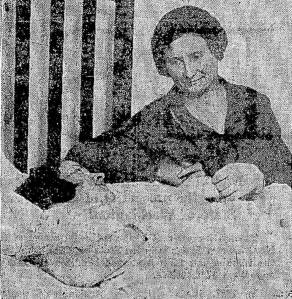
AUTHOR’S NOTE: On Oct. 4, 1918, a young mother named Margaret Sterling left her Nenana home to ride a launch up the Tanana and Chena rivers to Fairbanks to be with her ailing and hospitalized father. The boat never arrived. An accident on the Tanana claimed the lives of everyone aboard. Margaret’s husband was left to care for their young son and reassemble the pieces of his shattered life. Hawley W. Sterling, namesake of the Sterling Highway and the community of Sterling, would manage to make his mark, despite the difficulties.
Improved access
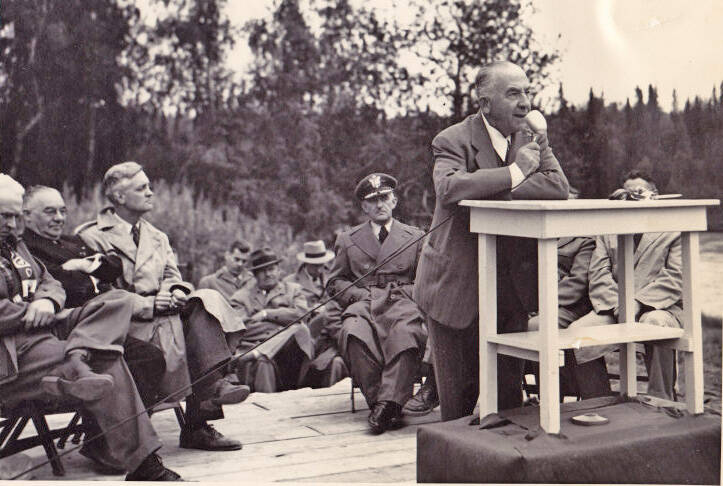
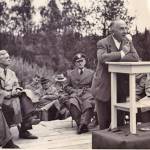
On Sept. 6, 1950, near the Soldotna bridge over the Kenai River, the Alaska Road Commission hosted an official ribbon-cutting ceremony to dedicate the recently completed highway tying together Seward and the central Kenai Peninsula to Homer and Kachemak Bay. In another year, the Seward Highway would connect the Kenai to Anchorage and points north.
Dignitaries at the event included Alaska’s territorial governor Ernest Gruening and military leaders, the head of the ARC and individuals who were influential in Kenai Peninsula politics and business. The dedication also featured an official naming of the new road—the Sterling Highway, in honor of Hawley Winchell Sterling, who had died about a year and a half earlier.
The name of the highway had been announced in Juneau about 10 months ago. Newspapers at the time had lauded Sterling’s many accomplishments during his more than 30 years of work for the Alaska Engineering Commission and the Alaska Road Commission. He had served as the ARC’s assistant chief engineer for the 16 years prior to his death.
In addition to surveying and starting the construction of the highway named after him, he had supervised the creation of the Steese Highway out of Fairbanks and the Glenn Highway connecting Anchorage to the Alaska Highway and, via Canada, to the Lower 48.
The Anchorage Daily Times called the new road “a great achievement in the penetration of barriers that have kept Alaska’s development confined to shoreline establishments dependent upon marine transportation.”
The newspaper emphasized the improved access for peninsula agriculture, commercial fishermen and a burgeoning population of new homesteaders. The highway, it wrote, “opens up the great potential tourist and sportsmen developments by making the fishing lakes and streams readily accessible by automobile.”
The newspaper recognized, of course, the potential recreational and financial benefits that the highway offered to residents of Anchorage and the Matanuska Valley once the Turnagain Arm section of the Seward Highway was completed the following year, allowing a free flow of traffic to the Kenai Peninsula.
In its hyperbolic wrap-up of the dedication ceremony story, the Times stated that the ribbon-cutting had “marked the formal opening of a new era of economic, cultural, social and spiritual growth in one of the finest areas of Alaska.”
A backward glance
Although Hawley Sterling did not live to see the completion and formal dedication of this highway project, he had been extraordinarily productive during his long career, both before and after the tragedy that altered the course of his life.
Thirty years before his own death, his wife, Margaret, had drowned in the Tanana River while on her way to Fairbanks from their home in Nenana. A year and a half later, he had remarried to Edna, a Nenana prostitute, and two years later he had gone to court to gain custody of Joseph, his young son, from his first wife’s parents.
Even during his period of mourning and his legal struggles, Hawley Sterling remained busily dedicated to his job.
In August 1920, Col. James G. Steese hired Sterling to investigate several possible wagon-road routes from the end of the rail system in Nenana to what was then known as Mt. McKinley National Park, via the Kantishna gold country.
By January of the following year, he had switched from the Alaska Engineering Commission to the Alaska Road Commission as a field engineer. When the ARC superintendent in Fairbanks retired in March, Sterling was promoted to fill the position.
In 1928, Sterling made a dramatic move: He resigned from the ARC. Then—for reasons that seem unclear—Sterling and his family left Alaska; in fact, they left the United States, as Hawley accepted a job with South American Gulf Oil as its chief engineer in Colombia.
There, while Hawley worked, Edna homeschooled Joe, who skipped from fifth to seventh grade under her tutelage. They sailed back to the United States in October 1930, arriving in the Port of New York. In 1931, Sterlings returned to Alaska and Hawley to the ARC.
Sterling, as assistant chief engineer in 1935, was integral in the construction of the Knik River Bridge and the completion of the highway between Anchorage and the Matanuska Valley. Prior to the construction of the Glenn Highway, which allowed Southcentral residents road access to Fairbanks, Sterling, in the early 1940s, hiked the nearly 150-mile route from Glennallen to Sutton in 13 days, taking prodigious notes along the way.
In 1945, he turned his attention to the Kenai. In May, he sent veteran road-builder Ralph Soberg to Homer to rebuild the road to the Homer Spit. The road, which allowed local residents to gain access to the deeper water at the end of the sandy spit, had been washed out by high tides in the area known as Mud Bay.
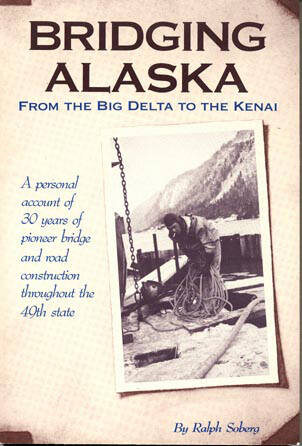
“Sterling said they had decided that a foundation of 500 to 1,000 feet of log cribbing would have to be built and filled with mud to support a new section of road,” wrote Soberg in his road-building memoir, Bridging Alaska. They decided to hire loggers to fell timber near Halibut Cove across Kachemak Bay, then to hire a large fishing boat to tow the logs to the construction site, where they would have to fill their log cribs with mud in order to prevent high tides from carrying them away.
Despite careful planning, however, problems arose: Equipment bogged down and sank in the mud, requiring hurried rescue efforts before it succumbed to incoming tides. The mud’s weight failed to prevent the log cribbing from being uprooted, necessitating the construction of dikes to keep the ocean at a distance. When the cribbed road was finished, crews struggled to find enough good local gravel to haul in to create the road.
While this project was concluding, Hawley Sterling was scheming further. He had mapped out and twice walked a route for a proposed highway to connect the Seward Highway near Tern Lake (then called Mud Lake) with the rest of the western peninsula all the way to Homer.
At the end of World War II, the federal government was preparing to make homesteading land available. The new highway would help open up this new land, and a survey of three townships for the highway and new homestead lands had been done during the late 1930s.
Construction of the new highway began in 1946, and a rough road—despite the devastating 300,000-acre Kenai Burn in 1947—was completed south to the Kenai River by 1948.
Unfortunately, Hawley Winchell Sterling never witnessed the completion of this project. An ARC administrator in Juneau in 1948, he announced his retirement in April. By September, he was in a Seattle hospital, where he succumbed to complications from stomach cancer at age 59.
His wife Edna died from colon cancer four years later. She was 64.
Who knows how Hawley Sterling’s life might have gone if his young first wife had not drowned, if he had not remarried to a lady of The Line, if he had not had to fight a custody battle to raise his own son, if cancer had not eroded his hardy constitution?
Would our primary byway through the Kenai Peninsula still have been named in his honor? Would Sterling, Alaska, still be known as Naptowne? Although the past cannot be changed, examining how an individual dealt with the obstacles in his or her life helps us to form a narrative that we call history.