Alaska researchers part of study looking into ancient humans’ preference for female mammoths
Published 1:30 pm Friday, August 7, 2026
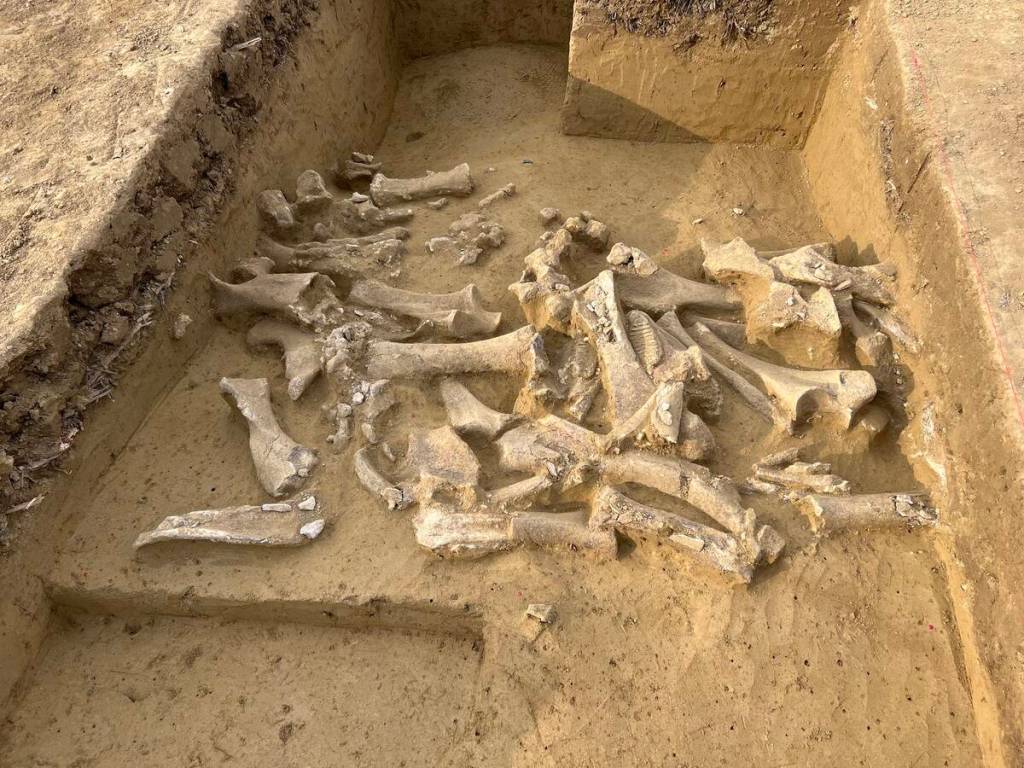
An international research team including members from the University of Alaska has determined that ice age humans disproportionately killed female woolly mammoths.
The newly published study in the journal “Current Biology” analyzed the DNA in over 500 mammoth bone accumulations, and those associated with ancient activity were dominated by females.
Matthew Wooller, co-author of the study and paleoecologist at the University of Alaska Fairbanks (UAF), helped access mammoth specimens from the University of Alaska Museum of the North as part of the Adopt-A-Mammoth project.
Seventy percent of specimens were determined to be from females in those sites, while remains found in natural settings were just 34 percent female.
The findings raised questions about how ice age hunter-gatherers pursued and interacted with woolly mammoths.
“While it is tempting to assume that hunters would have targeted females because they were smaller than adult males, the reality may have been more complex,” said Hannah Moots, a postdoctoral researcher at the Centre for Palaeogenetics in Stockholm, Sweden, and lead author of the study.
Female-led herds may have moved across the landscape more predictably than males, or humans may have encountered them more frequently while hunting and gathering, according to Moots. She added that solitary males may have been more vulnerable to natural traps such as sinkholes or landslides, which explains the higher prevalence of their remains in natural settings.
According to Stockholm University, mammoths were a vital resource for ice age human populations, providing meat, fat, hide, and bones for building structures, as well as ivory for tools, art, and ornaments.
The bone accumulations from the study span 11 key ice age archaeological sites, dating from about 30,000 to 20,000 years ago. The team analyzed a large dataset of woolly mammoths across Eurasia and North America by combining 100 individuals from the human-associated site accumulations with 421 mammoths from natural depositional settings.
The unprecedented scale provided insight into how ancient humans and woolly mammoths interacted across the Late Pleistocene.
“By scaling up sample sizes, ancient DNA can go beyond evolutionary history to teach us about animal behavior and human culture tens of thousands of years ago,” said Love Dalén, a professor in evolutionary genomics at Stockholm University and a co-author of the study.
Wooller added that the findings and recent data add to a building case that shows the importance of mammoths and other megafuana as food sources to hunter-gatherers that shared the landscape.
UAF archaeologist Ben Potter was not involved in the study, but agreed that the selective focus on females also has “profound implications” for potential hunting pressure and ultimate extinction of the species.