Bjorkman prefiles 2 bills ahead of session
Published 9:30 pm Thursday, January 15, 2026
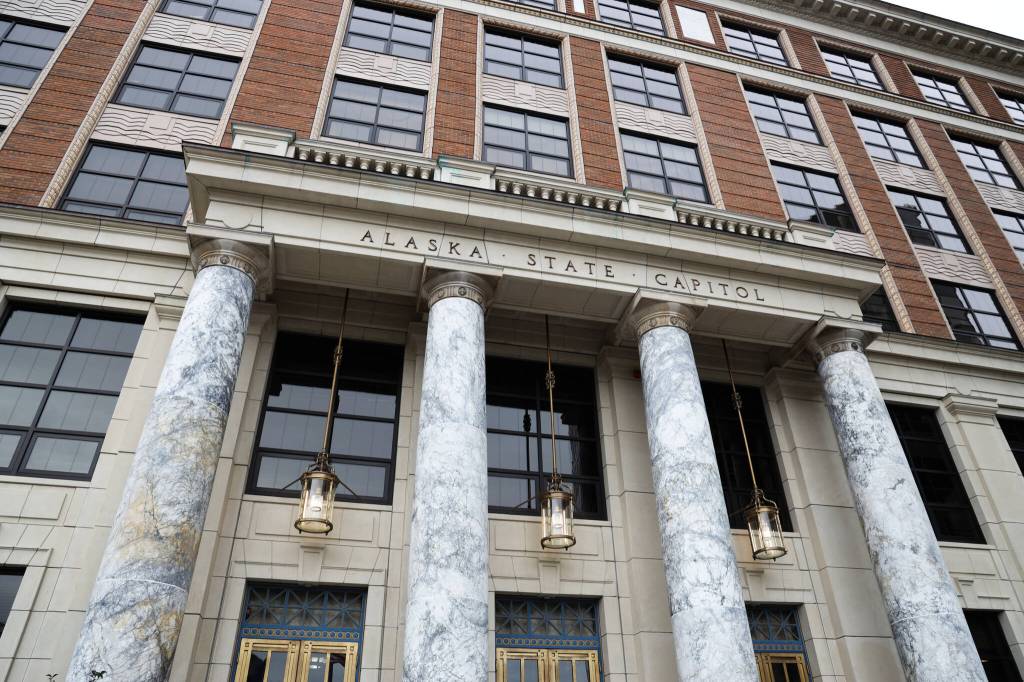
Sen. Jesse Bjorkman, R-Nikiski, prefiled two bills ahead of the upcoming legislative session, which starts Jan. 20. The first round of prefiled legislation was published last Friday.
The list includes 17 prefiled state House bills and nine Senate bills. Those sponsored by Bjorkman — SB 200 and SB 207 — aim to “promote and protect Alaska’s farmers from taxes and red tape” and “stand up for private property rights,” according to a Jan. 10 issue of Bjorkman’s weekly legislative update, “On the Kenai.”
Laura Achee, a staffer in Sen. Bjorkman’s office, explained in an email to Homer News Tuesday that SB 200 would make improvements to existing state statutes to “better support” Alaska’s agriculture industry. The bill clarifies that farms operating as S corporations are eligible for existing municipal property tax deferment in state law, which they were inadvertently excluded from under a change made two years ago that was meant to streamline the eligibility process.
“Current state law limits eligible agricultural operations to those producing food for human consumption or for livestock that produce food. The bill would expand the eligibility to agriculture operations that produce products that are not for human consumption, such as peonies and hay for horses,” Achee wrote.
Currently, Alaska Statute 29.45.060 defines “farm use” as use of land for the production of crops, fruits or other agricultural products for human or animal consumption or for the sustenance or grazing of livestock. The definition for livestock includes cattle, hogs, sheep, goats, chickens, turkeys, pigeons and other poultry raised to provide meat or other products for human consumption.
The amendments proposed in the bill add flowers and livestock to the definition of “farm use” and horses to the definition for livestock. It also removes the phrases “for human or animal consumption or for the sustenance or grazing of livestock” and “raised to provide meat or other products for human consumption.” The bill also would add new text stating that “farm use” does not include the use of land for the production of marijuana.
“Alaska relies on Outside supply chains for most of its food, so the focus on supporting operation that provide food for in-state consumption makes sense,” Achee wrote. “It has become apparent that non-food operations are an integral part of the agriculture industry and are necessary to ensure supply chains and other components of the industry can remain in operation and support food-producing agriculture.”
SB 207 “better addresses the problem” of unlawful occupants of residential properties by allowing for more rapid removal. It would also criminalize fraudulent sales or renting or properties that belong to someone else.
“The bill was prompted by multiple incidents in which property owners struggled to remove squatters who refused to leave and, in some cases, caused damage to home or vacant land,” Achee wrote. “SB 207 increases penalties and makes it very clear that squatters would need to leave, and it they cause damage, the criminal penalties for that damage increase.”
The bill would add a new section to AS 09.45, titled “Removal of unauthorized occupant from residential real property,” which would provide guidance for residential property owners to request law enforcement immediately remove unlawful occupants without an eviction notice if no rental agreement existed and other conditions are met. The bill also provides guidance to law enforcement in serving notices to and removing unlawful occupants, and creates a new section in state law to allow occupants who were wrongfully removed from a dwelling unit to recover attorney costs and other damages.
Additionally, the bill would amend sections of AS 11.46 relating to criminal trespass, forgery and deceptive business practices. Provisions in SB 207 would amend state law to make it a Class B felony if a person occupies a residential property illegally and causes more than $1,000 in damages. It would also increase criminal trespass in the first degree to a Class B felony.
According to Achee, the bill also responds to real cases where individuals falsely represented themselves as having authority to sell property, often online or over the phone, leading to fraudulent transactions involving land or homes without the owner’s knowledge.
SB 207 would amend state law to classify offering a rental agreement for a property that an individual doesn’t have the right to rent as a forgery crime in the second degree, which is a Class C felony. It would also amend state law to make selling, leasing or advertising a residential property, when the person does not have the right to do so, a deceptive business practice and a Class C felony.
The bill also proposed to amend Rule 82 and 85(a) of the Alaska Rules of Civil Procedure to expedite eviction proceedings.
Find SB 200 and 207, as well as the other bills from the first round of prefiled legislation, at www.akleg.gov/basis/Bill/Prefile/34.