Art has no bounds
Published 9:30 pm Tuesday, January 6, 2026
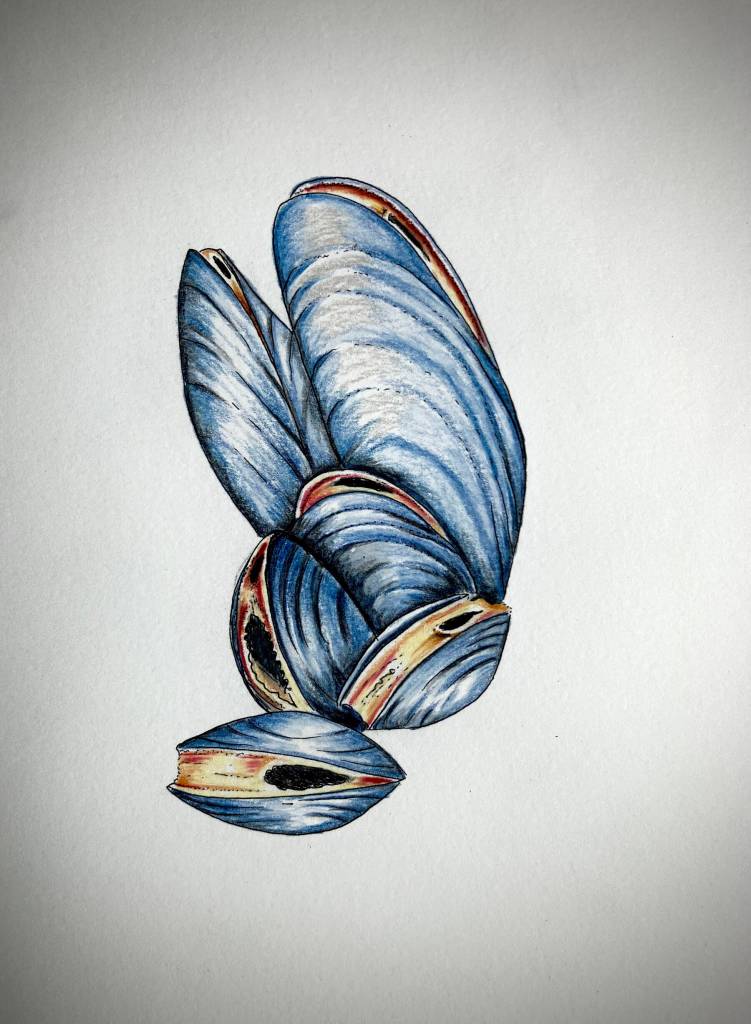






A biologist, botanist, naturalist, environmental educator and artist, Conrad Field’s passion for the natural world is matched only by his passion for sharing it with others. This commitment to education, preservation and creativity manifests in his guiding local tours, lecturing on ships around the world, working as a seasonal biologist with the Kachemak Bay National Estuarine Research Reserve, illustrating books and beach guides, and teaching art classes.
Creatively, Field has been sketching and painting since his college days in Wisconsin, at first sketching for his biology classes and later doing biological illustrations for grad student papers as a side job. He painted acrylic designs on the back of fishermen’s canvas jackets in Maine, then, after moving to the community in the 1980s, began painting signs and designs for Homer charter boats, bed-and-breakfasts and others. One example of his local work is the octopus featured in the Center for Alaskan Coastal Studies logo.
“CACS had a mug design contest to win a guided tour across the bay with a naturalist,” Field said. “My octopus won the contest and the naturalist was me, so I walked myself around.”
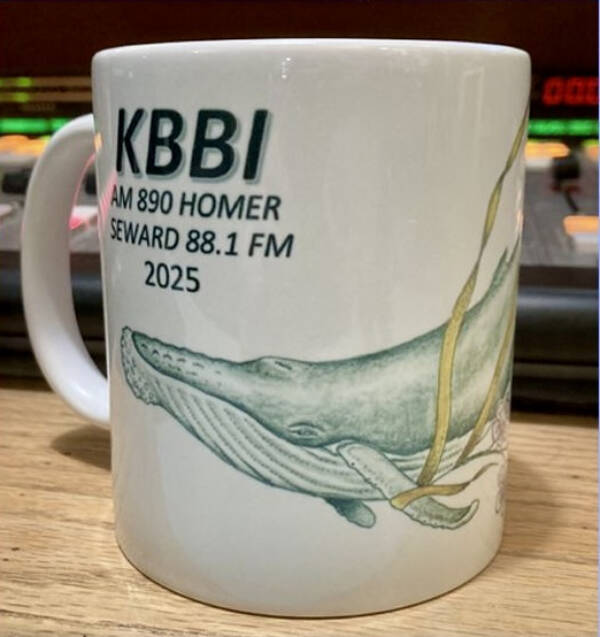
His sketches have also been featured on KBBI mugs, including last year’s humpback whale design, and previous designs that included an orca, an eagle with a mountain background, several marine mammals, a school of salmon, shorebirds and, in 1992, an otter with a Walkman.
“I’ll paint or sketch pretty much anything with wildlife on it,” he said.
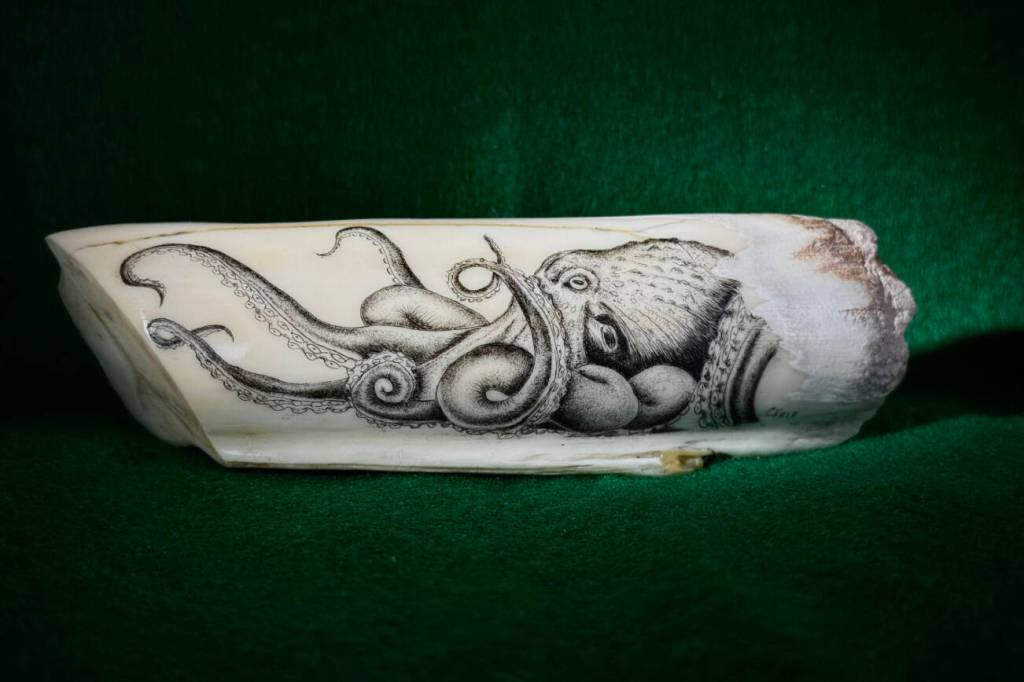
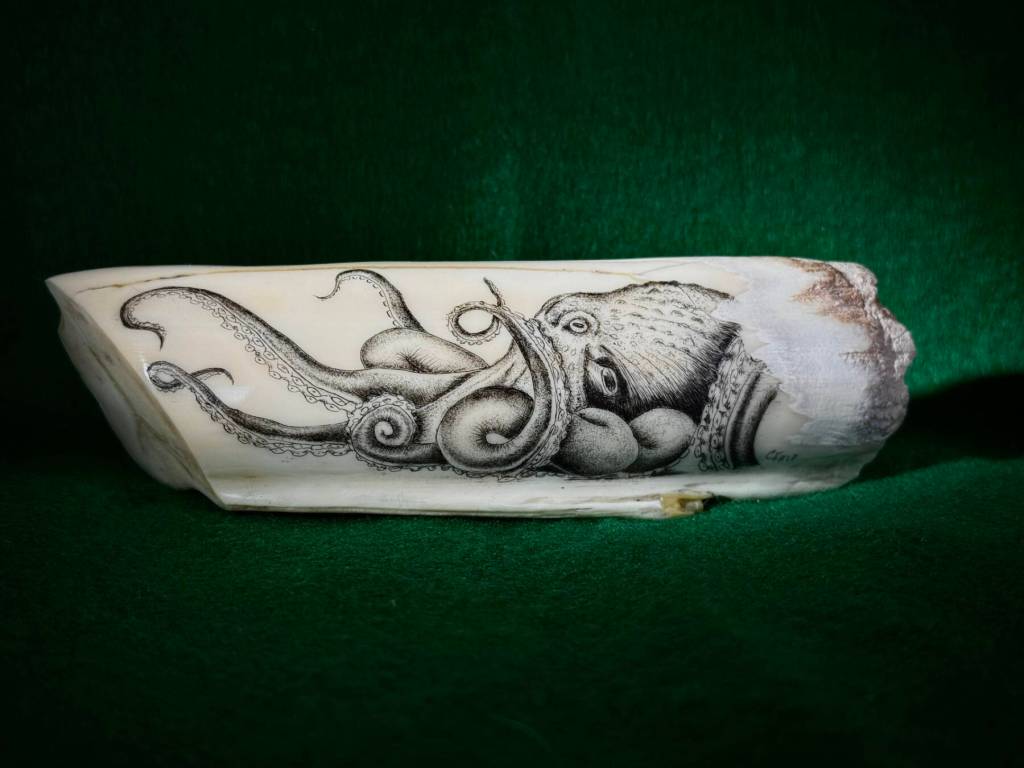
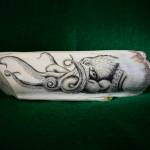
Drawing inspiration from his passion for biology, Field’s commission work has included everything from scrimshawing a sword fish bill to book illustration, all approached from his experience as a self-taught artist. His current personal art projects include scrimshawing on a pair of boar tusks that he found in the South Pacific during one of his eco-tourism, on-ship lecture trips. Field has also carved wood and worked with inlaid tile and stained glass, though he considers those mediums less art forms and more industrial work.
“My mind is always wandering when I’m doing things,” he said. “While shoveling gravel I might look at a tree and think that I could carve that. Then I keep thinking about that until I either carve it or I don’t. I have pieces I’ve been looking at for eight or nine years. One day it’ll just pop into my head. It’s very spontaneous inspiration.”
Whether creating pieces when inspired or thinking about pieces to create, Field’s art has not been a major part of his livelihood, routinely exhibited or sold in galleries, but instead created for his own pleasure and to trade and barter. All in all, Field prefers to share his art with others by teaching them how to do it themselves.
“My artwork is relaxing to me, and I feel like I’m getting something done while relaxing at the same time,” he said.
Beginning Jan. 12, Field will be introducing students to the mariner’s art of scrimshaw through a class at Kachemak Bay Campus. During his “Discover the Art of Scrimshaw” course, he will share the history of the art form, the process of carving and etching designs and filling in with pen and ink, with participants creating their own mounted artwork on antler.
The art of engraving and carving designs on bone, ivory, antler or other materials, scrimshaw originated on 19th century whaling ships.
“Scrimshaw is a Celtic term that literally means bit or piece, and (it) was a trade item by whalers, men stuck on whaling ships for years at a time and not paid until they were back in port,” Field said. “Out of boredom and necessity, they would etch on whale teeth, polishing the teeth by hand, scratching a picture on it, fill in the scratch to give an image and then trade that as barter for tobacco and other supplies. Sperm whale teeth were the coveted currency and origin of scrimshaw and by definition, scrimshaw is no longer done.”
Field taught himself scrimshaw after moving to Homer and seeing how prevalent the art form was.
“When I got here, I saw scrimshaw work everywhere and I started playing around on different mediums, whatever I could find, including antler, bone, ivory and fossilized mammoth ivory,” he said. “I taught my first scrimshaw class while I was also lecturing about whales and whaling.”
A seasonal lecturer on ships, Field has lectured on all seven continents. He and his wife Carmen, who passed away in 2016, moved to Homer in 1988 to do graduate work studying seabirds. Prior to the move, the “gypsy biologists” would work four months at a time in one place before moving on to another, including studying puffins off the coast of Maine and Newfoundland, grasses and ducks along the Great Plains, tracking alligators with Audubon in Florida, and other opportunities. For a time, they worked apart in separate states and then reconnected in Georgia when they found work as teaching assistants for university professors. While there, they were invited to teach a youth environmental education program and were eventually hired on high-end eco-tourism ships as boat drivers and naturalists, learning from experts on the ships and doing onshore tours on ships that went all around the world.
“The ships never stopped moving and we would stay on as long as we wanted,” Field said. “We crossed the Southern Ocean more than 150 times between 1989 until Carmen died.”
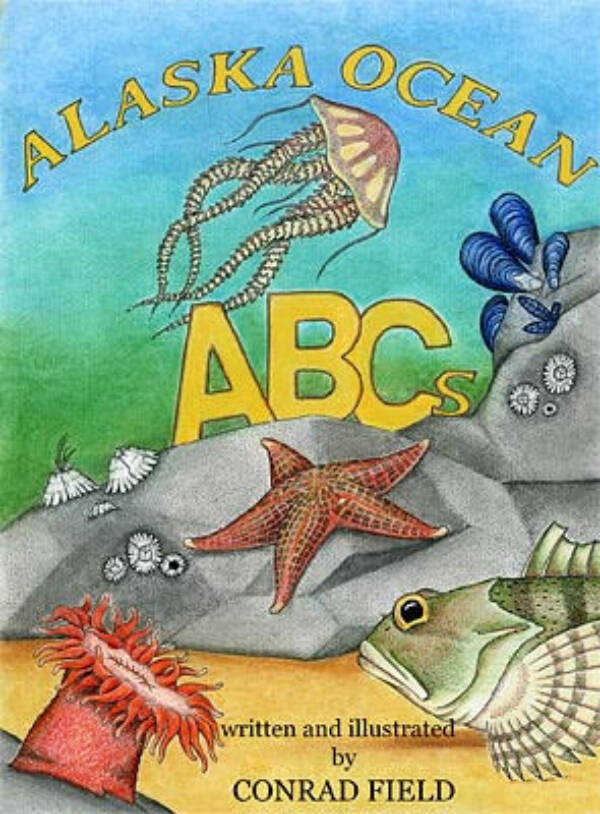
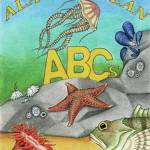
When their daughter Erin was born, she joined her parents on the ships and together, the family traveled to Antarctica four times, the Northwest Passage twice, as well as to Greenland, Russia and Australia. When many of the ship companies folded during or after the COVID-19 pandemic, the couple shifted to life in Homer more full-time, with Carmen working out of the house and Field working as a stay-at-home dad and taking on commission work. With Erin being a very active baby who would sleep for only 45 minutes at a time, Field was inspired to write and illustrate an ABCs book for kids, featuring the marine mammals of Kachemak Bay, after reading his daughter ABCs books for preschool kids.
“For those 45-minute time-frames when Erin was sleeping, I’d do sketches and then put them into pen and ink,” he said. “I wanted phrases to go with the pictures, so I got together with a bunch of friends, many who were biologists, and came up with the A-to-Z phrases, like ‘B: A brittle star breaks when they bump into blood stars.’ And so on.”
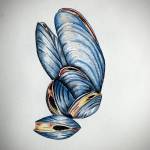
Field’s book, “Alaska Ocean ABC” was published in 2006 and is available at the Homer Bookstore. This was not his first book to be published — in 1999, the couple published “Alaska’s Seashore Creatures: A Guide to Selected Marine Invertebrates” that includes color photos and illustrations, all done by Field and Carmen, with details on more than 50 of Alaska’s marine invertebrates.
For Field, art is very much a pasttime, something he works on when he has free time.
“I can’t sit myself down and say, ‘okay I have to draw right now,’” he said. “One day I might sketch and glue things and get a bit done and then the next day I get it all done in 10 minutes if I’m in the flow, but I can’t do that all the time. It can be months before I work on something and then I’m locked in and hammering stuff out for days on end. My art is definitely my passion, but it’s not my livelihood.”
Using materials he has legally beach-combed or found through the years, like ivory and antler, and others that have been given to him, like his grandfather’s chunk of a walrus tusk from the 1930s, Field gives a lot of his scrimshaw work away as presents or trade.
One of his goals is to work through the collection of items he has found on beaches, including hippopotamus teeth, fossilized whalebone and other items.
“I have all sorts of weird chunks of bone I’ve found on beaches, and my goal is to get through the pile before my eyesight disappears,” he said. “The challenge is getting the image that’s in your head onto the item you’re working on because it doesn’t always transcribe. The joy is when you come close to that. I also like when I’m doing pen and ink and I look at a piece long enough and figure out where a chip or an edge goes within the image, like a crack might become the arch out of the water.
“Scrimshaw is all about mistakes and when you make a mistake, you don’t get rid of what you’re working on, you just work with it and create something around that. The end product doesn’t always look like what you had wanted it to, and that’s part of the creative process.”
Field currently has 30 pieces of scrimshaw completed and is working towards 50.
Field’s passion for the natural world is matched only by his passion for sharing it with others.
“Art just kind of fell onto my plate and for me, the best part is sharing it with other people by teaching them how to do it themselves,” he said. “Art is in everyone and art is important. Whenever you’re doing art, it expands your mind. There are no bounds. Nothing says that you have to do it one way. You can do it your way. I think it’s important that people express themselves and there are a million ways you can do that. There’s a freedom in artwork and it’s a great meditation too.”
Registration for Field’s scrimshaw class is available online and in person through Kachemak Bay Campus as space is available, with classes Mondays and Wednesdays, Jan. 12 through Feb. 11.