‘What’s in a Name?’: Reviving a forgotten past — Part 3
Published 1:30 am Thursday, February 26, 2026
AUTHOR’S NOTE: This is the third in a multi-part series about Kenai Peninsula places and landmarks that once had different names. A portion of this week’s article first appeared in the Peninsula Clarion in 2023.
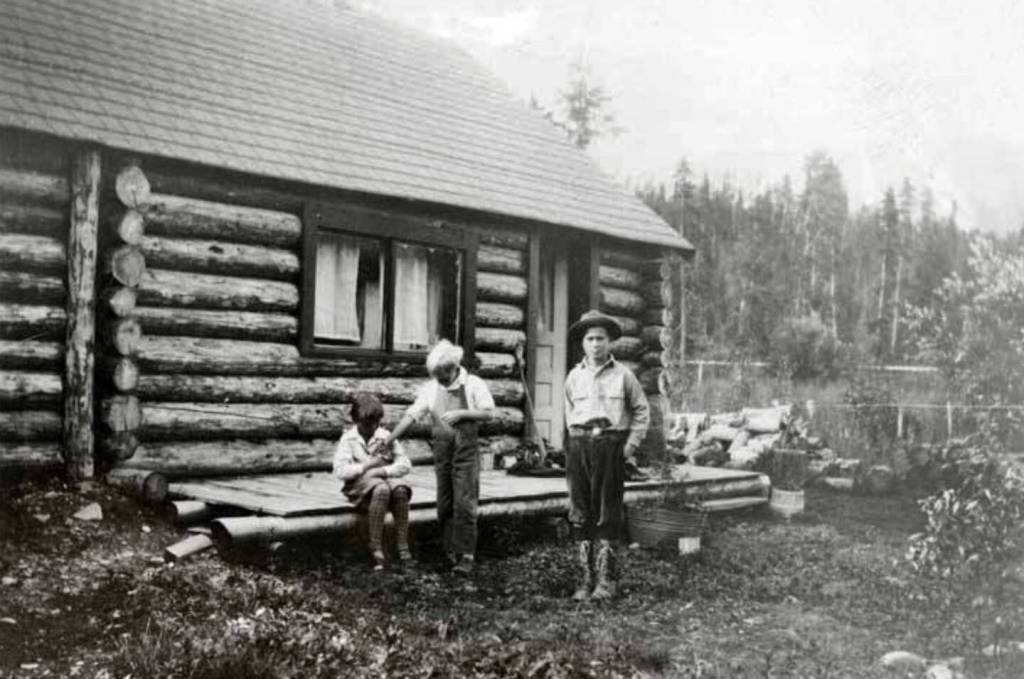
The small settlement at the Kenai Lake outlet was known initially as a stopping point for anyone traveling down the lake and then descending the Kenai River to mine, hunt or fish. Its establishment has been attributed to a miner and entrepreneur named Joseph M. Cooper, who first came to the area in the early 1880s. Cooper Lake, Cooper Creek, Cooper Mountain and Cooper Landing were all named for Joseph Cooper, who died in 1899 on the southern Kenai Peninsula.
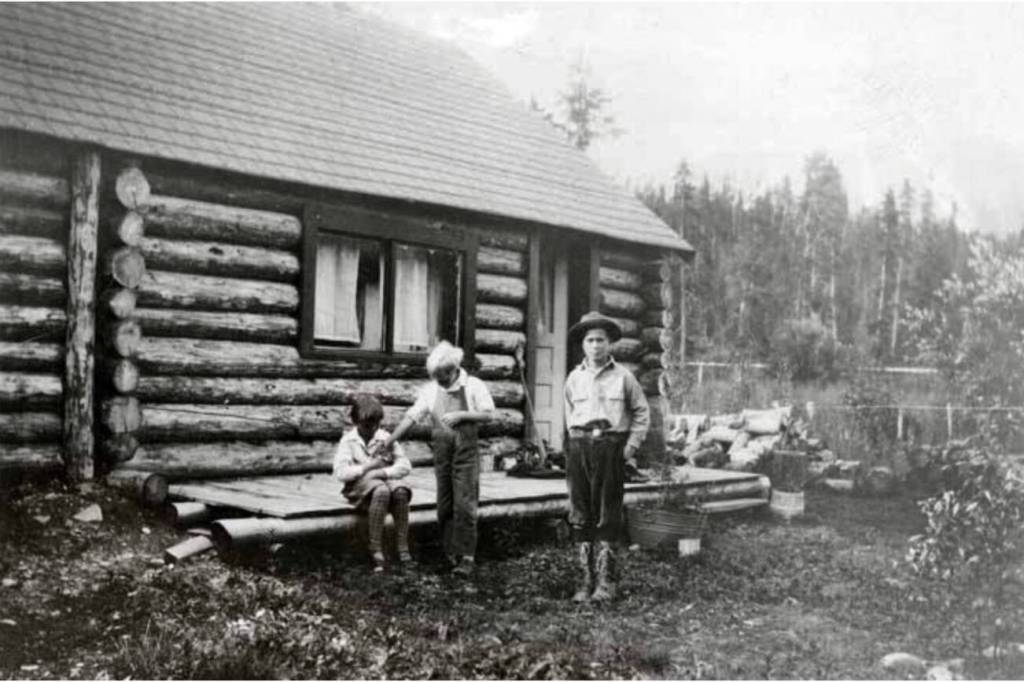
By the early 1900s, the area was known as Cooper’s Landing, mainly for the landing itself since too few people actually lived there to qualify as a town. Some of the earliest permanent settlers at the landing were Frank Towle, Lou Bell and Jack and Charles Lean, and their families.
By 1914, the community, sometimes called Cooper Creek Landing, was growing but was still a full decade away from qualifying for mail delivery. When the first post office opened there in 1924, however, it was not named for Joseph Cooper or for any other early settlers. It was named Riddiford. And when the first school opened in 1929, it, too, was named Riddiford.
Decades later, some people speculated that Riddiford had been an early prospector. But why, asked others, would the name of some forgotten prospector supplant Cooper, whose name was already firmly attached to the area’s history and geography? Some residents worried that any name attached to a post office would become the de facto name of their community.
In July 1925, a Seward Gateway article about the “residents of the Kenai Lake country” made it clear that the name wasn’t completely settled. The article spoke of Snug Harbor residents and those from Quartz Creek, Cooper’s Landing and “Rudiford,” in addition to outlying points.
Historian Craig Mishler, while crafting a nomination form in 1984 for the Cooper Landing historic district’s inclusion in the National Register of Historic Places, wrote that the post office and school had been named after “a man who donated his land for a post office.” History blogger Ray Bonnell, in 2022, echoed that belief. While modern evidence to the contrary was sketchy, evidence in support of the prospector/donor ideas relied on hearsay and broad assumptions.
The Riddiford Post Office had been abandoned in 1928, and the next mail operation in the area (in 1937) had been dubbed the Cooper Landing Post Office. That post office closed after only two years, but when it reopened, permanently, in 1947, “Cooper Landing” was again the name. “Riddiford” was no more.
Likewise, low enrollment prompted the Territorial Board of Education at the end of 1935 to close the Riddiford School. When a new facility finally opened in its place in 1952, it was named the Cooper Landing School.
Lois Allen’s 1946 book, Alaska’s Kenai Peninsula contained a section on Cooper Landing but made no mention of Riddiford. As subsequent decades passed and new histories were written, the Riddiford name mostly faded from the record or became little more than a footnote.
Finding Riddiford
At some point during her 30-year tenure as postmaster for Cooper Landing, Betty Fuller told local historian Mona Painter that she’d heard Riddiford had been some sort of post office official. Painter wasn’t sure, but she included this idea in the Cooper Landing chapter of 1983’s A Larger History of the Kenai Peninsula.
As it turned out, Fuller was correct. The post office had been named for Charles Arthur Riddiford, a postal officer who had never lived in Alaska.
Alaskan places had been named for outsiders before. The highest mountain peak in North America was named for U.S. President William McKinley before it was formally renamed Denali. The city of Utqiagvik was for decades known as Barrow, after a geographer in the British Admiralty; the town of Whittier was named for an East Coast poet; the city of Fairbanks for a U.S. senator from Indiana; the community of Teller for a U.S. senator from Colorado who had helped establish a reindeer station in the area.
The Seward Peninsula, as well as the town of Seward itself, were also named for a bureaucrat, William Henry Seward, but he, as U.S. Secretary of State, had negotiated with the Russians for America’s purchase of Alaska. That connection, at least, seemed relevant.
But why would a postal employee from Outside become the namesake for a remote community in Southcentral Alaska?
Charles Riddiford worked for the United States Postal Service for more than three decades, rising quickly to the rank of postal inspector. At the peak of his career, he was one of the most famous postal employees in the entire country. His jurisdiction at one point covered what was then called the Northwest District, which encompassed all of Washington, Oregon, Idaho, Montana and the Territory of Alaska.
A British citizen by birth, Riddiford had emigrated to the United States in 1888 and was naturalized in Washington in the early 1890s. Over most of the next decade, he worked various jobs on his path to USPS employment. He was a grocer, then a deputy county auditor and an accountant—until 1897, when he became a USPS utility clerk in Spokane. Seven years later, as a postal inspector, he began establishing an identity for himself as an insightful and relentless investigator.
He also made headlines for big arrests around the country. Even in roadless Alaska, which he visited for the first time in 1917, he chased lawbreakers with great success. In December 1917, the Iditarod Pioneer reported the arrest of the Eagle postmaster, who had been charged with embezzling postal funds. Inspectors had arrived unannounced at Eagle late one night and launched an immediate inspection of the post office records, quickly determining that the postmaster’s accounts were short by $6,000.
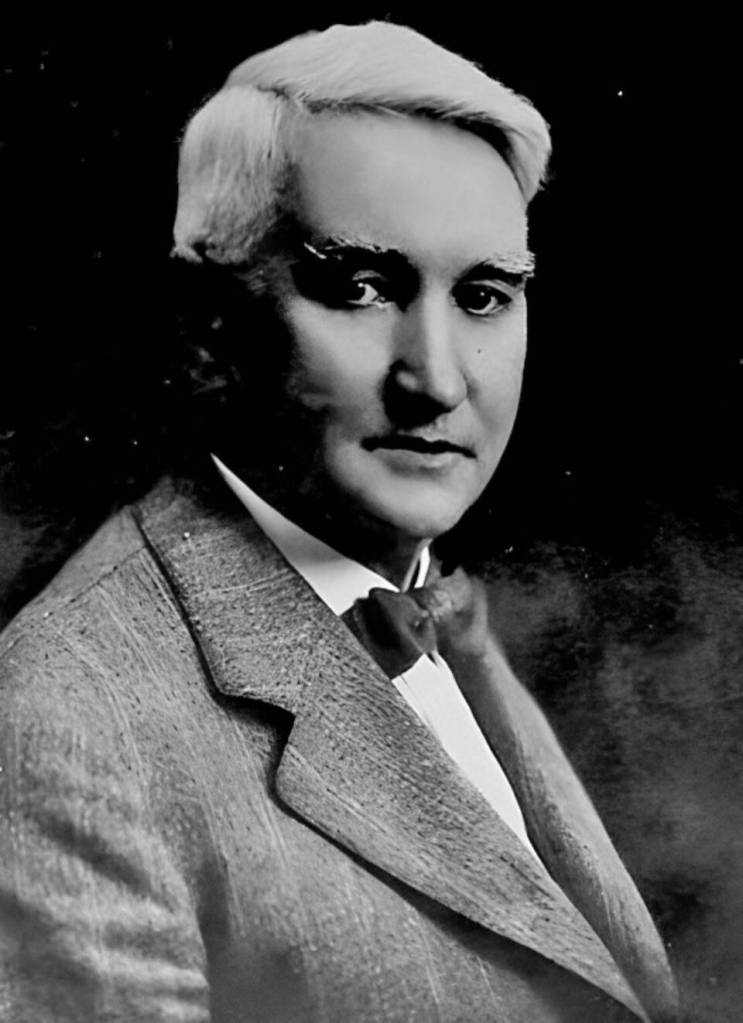
Riddiford himself did not cut an imposing figure. He stood about 5-foot-5 and was described as having a high forehead, a “regular” mouth and a round chin, with a ruddy complexion, gray hair and blue eyes. When he was 53, his passport photo showed an older-looking man who appeared dapper and distinguished in a dark suit, white shirt and dark bowtie.
But Riddiford’s mild looks veiled his tenacity. Defense attorneys referred to him as “that white-haired, wire-haired terrier” and “that gray-haired, sly old fox.” In obituaries after his death at age 63, he was called the “dreaded inquisitor of the Pacific northwest” and the “nemesis of violators of the postal laws.”
On July 5, 1924, the Seward Daily Gateway reported, “C. Riddiford, who has been in Anchorage for some time, left for Cordova on one of the last boats, presumably in connection with the recent post office robbery there.”
During this same year, the Riddiford Post Office, at Cooper’s Landing, opened its doors, with Frances I. Brown as postmaster. It isn’t difficult to imagine that offering to name a brand-new post office in a tiny, upstart community after someone famous and influential within the U.S. Postal Service might lend legitimacy to the application.
This notion may have seemed particularly apt in 1925 when the U.S. Postmaster General ordered Riddiford and his team to return to Alaska and make a survey of all its 168 post offices. The Alaska tour began in mid-June, concluded in mid-August, and attracted the attention of the Alaska Daily Empire (Juneau) and the Anchorage Daily Times.
Riddiford told the press that they had inspected 155 of the Territory’s post offices but had been unable to reach the remaining 13, all of which were located in western and northern Alaska. He said that the weather in the Bering Sea had been so bad in July that his vessel had been forced to hole up for 10 days just north of Nome, before retreating.
Back at Cooper’s Landing, meanwhile, with a post office name in place and residents receiving letters and packages addressed to Riddiford, it made further sense for the community’s first school to follow suit.
The problem for residents who favored the Riddiford name was two-fold: Many people in the area refused to shed their “Cooper’s Landing” identity. In fact, some said that the Riddiford post office and school were at Cooper’s Landing.
But memories can be short. Seven years after Riddiford’s death in 1931, a new post in Cooper’s Landing opened, and identifying it with a dead bureaucrat from the Lower 48 likely seemed less important than identifying it with a history that its residents were more a part of.
NEXT TIME: STERLING’S ORIGINAL NAME AND WHY IT CHANGED.