Planning commission kicks off comp plan public hearings
Published 9:30 pm Tuesday, August 26, 2025
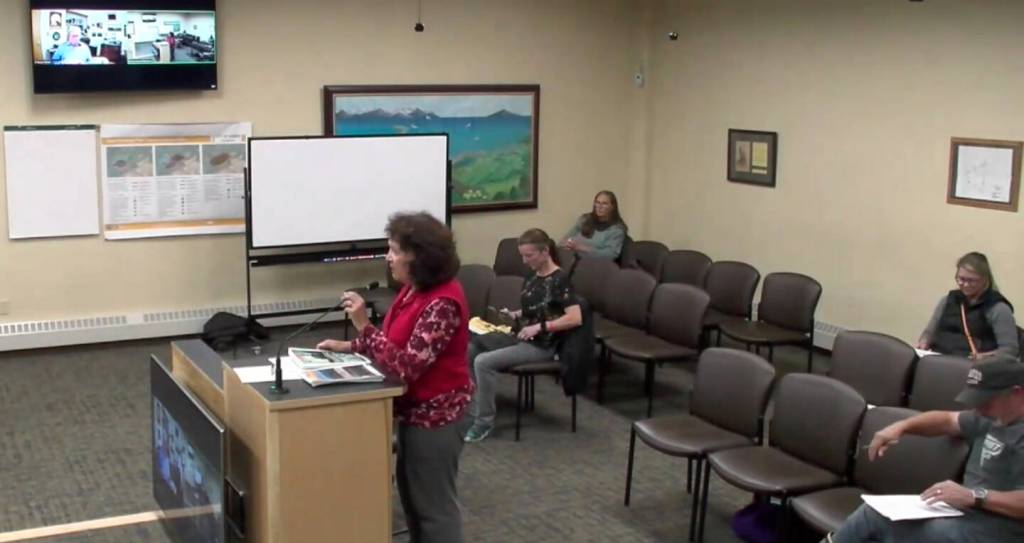
The Homer Planning Commission hosted the first of potentially several public hearings on the latest draft of the 2045 Homer Comprehensive Plan last Wednesday, Aug. 20. Only a handful of community members provided public testimony, though commission members said the received feedback was helpful as they conduct their own review of the Public Hearing Draft before deciding whether to recommend approval to the Homer City Council.
Additional written public comments were submitted to the commission and can be found in the Aug. 20 supplemental packet and laydowns on the City of Homer website.
Commission members voted to continue their consideration of the draft plan to their next scheduled meeting on Sept. 3. A second public hearing will not be conducted by the planning commission.
If the commission does recommend that the council approve and adopt the plan, the council will introduce a comprehensive plan ordinance and hold two additional public hearings on the draft plan later this fall, dates to be determined.
If the plan is adopted by the city council, it will also go through the borough adoption process.
Prior to the public hearing, Agnew::Beck consultant and project leader Shelly Wade gave a presentation on the progress to date for both the comprehensive plan update and Title 21 zoning code rewrite. She highlighted the amount of public engagement with the project and noted that the public review draft, which preceded the public hearing draft currently undergoing Planning Commission review, received 66 sets of comments. She also updated the commission on changes that had been made to the draft plan in response to feedback given on the public review draft.
“Ultimately, you’re deciding whether to recommend any changes … and any potential amendments to the draft, and recommending a potential adoption to the City Council,” she reminded commissioners.
Wade also proposed an amendment to add “Increase access to recreational opportunities for visitors and residents” to the list of top priorities and projects for Homer to focus on for the next 10-20 years. The full list is included in the executive summary of the plan.
Former City of Homer Public Works Director Jan Keiser said she compared the public review draft and public hearing draft side by side to see what had changed between the iterations.
“I noticed that there were a number of changes in just language,” she said. “The ideas didn’t generally change, and I don’t have any objection to the ideas, but some of the language changed. And in some cases, I liked the language of the public review draft better.”
Keiser told the commission that she’d submitted a list of said changes as written comments to save them the trouble of comparing the two drafts page by page and looking for the differences. She also shared a few highlights from her written comments about the public hearing draft, such as an action item to “support the harbor expansion project.”
“There’s no qualification to that,” she said, adding that city council members expressed concern during their last meeting that they did not yet have enough information to make an informed decision about the environmental and financial implications of the project. “I suggest that rather than just an unqualified support of the project, we say something like, ‘continue to explore the financial, operational, and environmental consequences of the harbor project,’ so it leaves it a little open to further investigation.”
Keiser also pointed to a sentence on a different page that suggests Homer should invest in infrastructure that supports growth in key sectors but only related, she said, to spurring actions out on the Spit.
“That kind of (denigrates) support for other important industries in Homer, such as health care, small-scale agriculture, the arts, sports, and even home-based businesses. I think the language should manifest Homer’s commitment to support entrepreneurship generally, not just businesses out on the Spit,” she said.
Hal Shepherd, representing the Kachemak Bay Watershed Council, said the organization thought the current draft plan “is much improved.” Shepherd said he also submitted written comments to the commission.
“Our once-highly productive Kachemak Bay Watershed has been somewhat degraded in past years, and now it’s being impacted severely by climate change,” he said. “We really need to focus on land development issues … that can exacerbate the impacts of climate change on habitat and fish and wildlife species.”
Homer City Council candidate Michael Jones suggested that the commission review the plan for instances where language is “creating obligations” and should be softened. He also noted that his written comments included recommendations about climate change, resilience and sustainability definitions and use.
Devony Lehner, a Homer resident since the late 1980s, said that Homer “is not an island” and has “lots of possibilities” for roles in food security, wellness, and other concepts included in the comp plan.
Recently-established Homer resident Tracy Nordstrom encouraged the commission to recommend the plan’s approval to the city council and asked how the city will “court and then support” potential partners for future projects.
“I would like to be a partner in helping Homer flesh out many of the great things that are in this document, so if we could spell that out, some of us can help court more partners,” she said.
On the other hand, former Homer and Kenai Peninsula Borough planning commissioner Rick Foster said he wasn’t sure the plan was “really ready for adoption at this time” and said his primary concern was the draft plan’s “failure to acknowledge access to potable water as a limiting factor to the growth in the region.”
“In fact, it could be a key factor in managing growth by treating water as a controlled commodity,” he said. “Access to Homer city water has been a driving force behind population growth outside the city limits, particularly to the east, where well water is often non-potable, and these areas rely heavily on Homer’s water supply.”
He suggested that the plan should acknowledge the role of city water in regional growth and that the city could begin collecting and analyzing data on current water delivery locations inside and outside the city limits, explore water policy as a growth management tool, and prioritize water and sewer extension within the city limits.
“As an ecologist who moved to Homer 35 years ago from drought-afflicted California, I understand first hand that water availability as a limiting factor can shape a community’s growth. I hope the final plan will address this reality more directly and comprehensively,” he said.
Find the Aug. 20 meeting recording in full at www.cityofhomer-ak.gov/hapc/planning-commission-regular-meeting-196.
Find the Public Hearing Draft of the 2045 Homer Comprehensive Plan and much more information about the project at homercompplanupdate.com.