Christmas Bird Count sees nearly 70 species on count day
Published 9:30 pm Wednesday, December 31, 2025
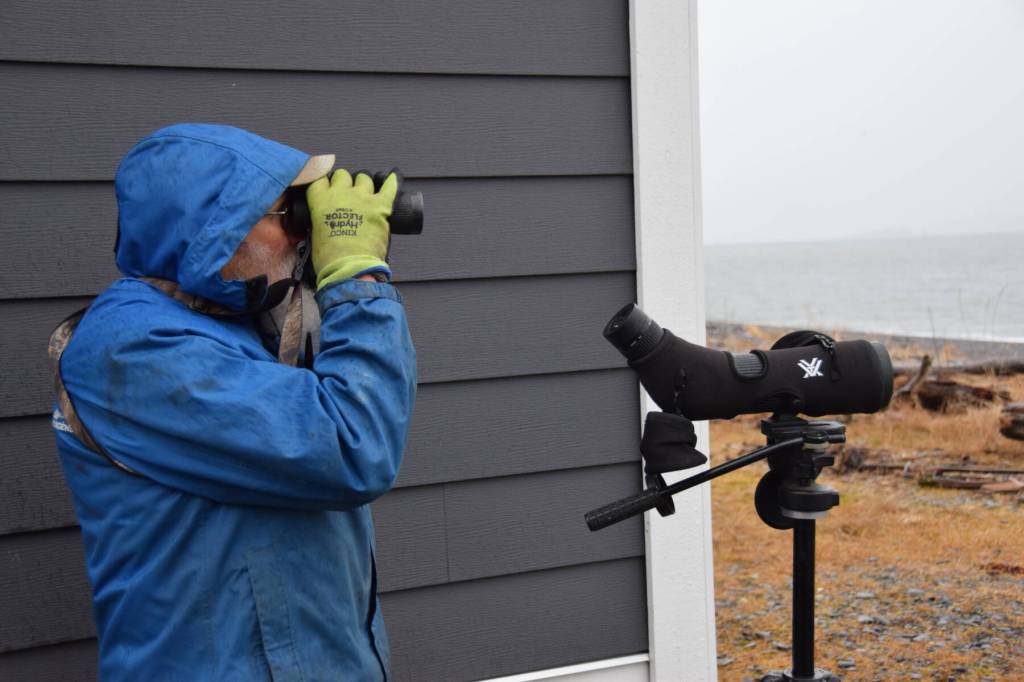
The 126th Homer Christmas Bird Count was conducted on Saturday, Dec. 20, after a month-long cold spell, which resulted in extensive sea ice buildup along the northern shoreline of Kachemak Bay and the eastern side of the Homer Spit. The weather on Count Day was below freezing temperatures, clear skies and little wind. Viewing conditions were good to excellent.
On morning of count day, 31 volunteers gathered at the Alaska Maritime National Wildlife Refuge Visitor Center at 8:30 a.m. to divide into teams. After an organizational meeting, each team then departed to identify and count all birds within their assigned count areas within the Homer Count Circle, a 15-mile diameter circle centered at the base of the Homer Spit. The teams met back at the Visitor Center at 4:30 p.m. to add up the results of the all-day count. An additional 12 other volunteers, referred to as feeder-watchers, stayed at home to monitor their bird feeders and recorded the maximum number of each species that visited their bird feeders throughout the day. Two volunteers from Eagle River and two from Palmer came down specifically to help with our bird count.
The total number of species for Count Day was 69, above the average (65) for the last twenty years. Key highlights for the count included the first record of a Wilson’s snipe, the third occurrence of a fork-tailed storm-petrel, five species of woodpeckers, and four species of owls.
Four additional species were recorded during Count Week, the three days before and after Count Day. Total individual birds totaled 4,144 — half of the number seen last year. Numbers of individual birds on count day can vary among years depending on the weather and presence or absence of key species, such as waterfowl or shorebirds.
Heavy sea ice conditions in the inner bay were a large factor in the relatively low number of birds for the count. Mallard and greater scaup, typically some of the most abundant birds on the count, were largely absent, due to sea ice covering much of their prime foraging habitat. We found no greater scaup and only one mallard during Count Week on this year’s count. Overall, bird numbers in upland areas around Homer were also low in comparison to previous years. Twelve species on Count Day were represented by only one individual bird.
The most abundant species was the American crow (875), quite common throughout town, followed by the rock sandpiper (562), which typically roosts in the Homer Harbor during high water. The relatively low number of rock sandpipers in comparison to previous years is likely due to the tidal stage during the count and sea ice cover of their typical roosting areas. Black scoters (407) were the most abundant waterfowl.
White-winged crossbill numbers (20) are still low after a major influx two years ago. No red crossbills were found this year. Pine siskins (109) were dispersed in small flocks throughout the count area, but numbers were low.
A big thanks go out to all the volunteers, both in the field and at feeders, who contributed to the success of this year’s count. Special thanks also goes out to Carol Harding who coordinated the Feeder Watchers, the Alaska Maritime National Wildlife Refuge Headquarters and staff, and especially Lora Haller, for providing the meeting place and cosponsoring the event. Other sponsors include the National Audubon Society and the Kachemak Bay Birders.
The final checklist is on the Kachemak Bay Birders’ website, kachemakbaybirders.org.
Dave Erikson is an experienced environmental biologist, a member of Kachemak Bay Birders and the coordinator/compiler for the annual Christmas Bird Count in Homer.