King Thurman: An abbreviated life — Part 2
Published 9:30 pm Wednesday, October 8, 2025
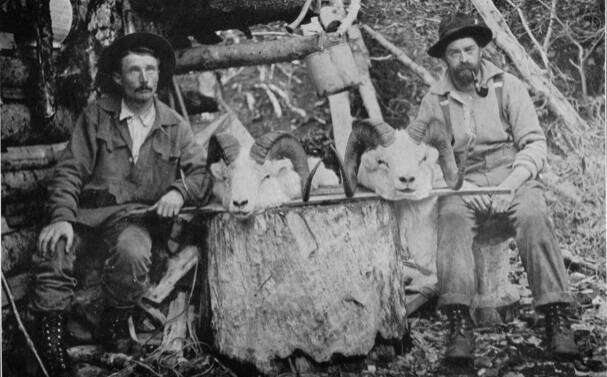
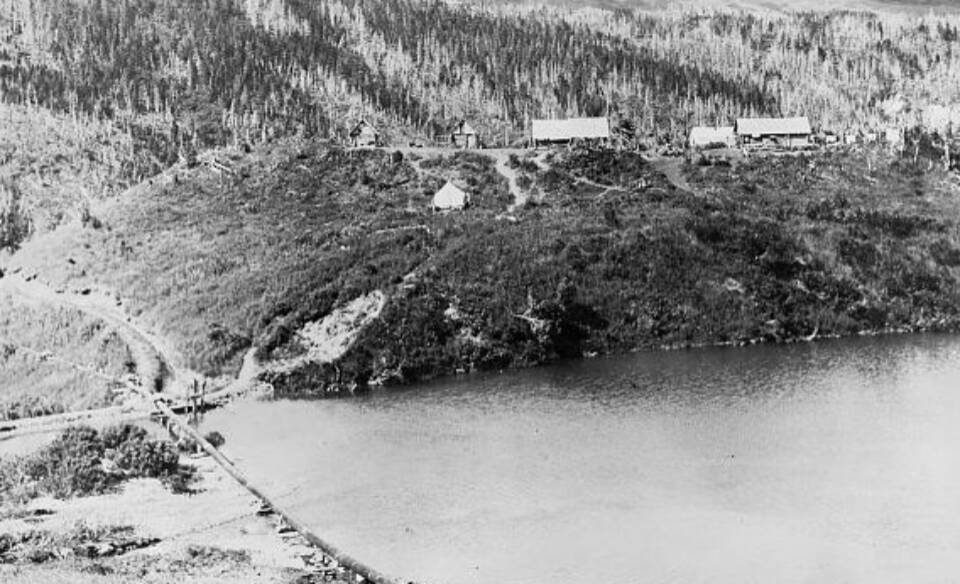


AUTHOR’S NOTE: King David Thurman came to Alaska seeking gold. One of the earliest specific records of his movements was described by Emmett T. Krefting, who wrote about meeting Thurman in 1907 at the Canyon Creek mining camp owned by Simon “Sam” Wible.
At some point in the summer of 1907, King David Thurman left the Sam Wible gold-mining camp, telling his six-year-old friend, Emmett Krefting, and Emmett’s mother, the camp cook, that he would be gone for a while but would be back. In his memoir about his childhood, Krefting noted his own disappointment at Thurman’s departure because he had been enjoying the miner’s company and especially relished the luck they had shared in “sniping” gold from the gravels and boulders of Canyon Creek.
When Thurman reappeared, as promised — in Chapter 12, entitled “The King Returns” — Emmett was initially excited and then further disappointed when he saw that Thurman was stinking drunk. The camp foreman sneaked Thurman to Krefting and his mother, avoiding the boss because, even though Wible liked Thurman, he allowed no drunkenness or fighting in his camp. Both were considered firing offenses.
“If Sam finds out, then King won’t be welcome here anymore,” the foreman told them. “None of the crew likes King. They’d report him in a minute.” They agreed to keep Thurman out of sight until he had sobered up, and, until he passed out, Thurman apologized repeatedly for his pathetic state and for putting them at risk.
Krefting had already been well aware that the other miners disliked Thurman, and that Thurman, in turn, had little use for the other men. In the previous chapter, Krefting had written, “King didn’t much like the workers and wanted them far from his (sniping) business…. For reasons that were a mystery to me, most of the miners were … openly hostile toward … King.”
With the foreman’s help, Emmett and his mother gave Thurman a bath and put him to bed. While Thurman slept, Emmett’s mom cleaned and mended Thurman’s ragged, filthy clothing. Emmett noted Thurman’s “scruffy beard” and referred him at this point as a “crusty old man,” although Thurman was not quite 30 years old.
A few days later, Thurman and Krefting supplied the whole camp with fresh trout for dinner, but few of the other miners appreciated the offering. One of the men, according to Krefting’s memoir, harangued Thurman: “Dang, Thurman, didn’t think you liked fish. Thot’cha only ate varmints. Don’cha prefer porcupine, polecat and weasel?”
The other men laughed, and then one of them poked fun at Thurman for a creek he claimed had been named for him—Rat Creek. (This creek, which flows out of Trout Lake and into the Chickaloon River, was later renamed posthumously for Thurman.)
Emmett expressed anger toward the other miners, glaring balefully at them for daring to display such antagonism toward his friend.
The next day, the two companions gained some measure of revenge when they supplied the camp with red meat for dinner, which the other men enjoyed and lavished praise on, completely oblivious to the fact that it had come from porcupines.
Flouting the Law
Emmett Krefting, despite his youth, realized that his friend was not much of a rule-follower. In his memoir, “Alaska’s Sourdough Kid,” Krefting wrote that Thurman had prospected in many locations but rarely filed mining claims because he was “not much into paperwork.” In other words, Thurman knew he often skirted the rules, so he typically eschewed leaving a paper trail.
Krefting added, “King Thurman was here long before there were game wardens in this district. He figured any new hunting regulations must not apply to him. ‘I was here earnin’ off the land and huntin’ to feed myself befer any of ’em. I’ll be danged if some Johnny-come-lately is gonna tell me what to do.’”
This attitude accounts, in part, for the jail time Thurman would serve in the years to come.
In January 1911, Seward-based game warden Christopher Shea wrote to Territorial Gov. Walter E. Clark that he had information from a prospector “of very good reputation” that two unidentified men had killed two moose a month earlier in the vicinity of Trout Lake (now part of the Resurrection Pass Trail system). The men had poisoned the carcasses and left them in the woods to attract fur-bearing scavengers, thus simplifying their trapping business.
By autumn, law enforcement officials had identified at least one of the culprits: King David Thurman.
Shea, following up on new information from a registered area hunting guide, left his home base in Seward and began pursuing Thurman. In another letter to the governor, he wrote: “Upon arriving at a place called Bean Creek [near Cooper Landing], I found several men, who were prospecting in this part of the country, and who informed me that they had seen Thurman hunting with his dogs on several occasions, and that his actions were driving all of the moose out of this part of the country.”
Although he remained in the area for three more days, Shea could not locate Thurman, so he returned to Seward to knit together the strands of his investigation. He had five witnesses who said they had seen Thurman hunting moose with dogs, so he swore out an official complaint, thus providing him the assistance of Seward’s deputy U.S. marshal, Isaac Evans, who had the power to serve subpoenas and to force Thurman into court.
But Shea was to have only partial satisfaction.
He returned to Bean Creek, this time accompanied by Evans, and there — after what Shea told the governor was “quite a little trouble” — they found and arrested Thurman. Then they subpoenaed the witnesses and returned to Seward. At the preliminary hearing, Thurman pleaded not guilty, demanded a jury trial, and asked the court to appoint an attorney to defend him.
Jurors were selected on Nov. 6, and the trial began.
Fritz Posth, a game packer who would apply in 1912 for a guiding license, testified that he had discovered Thurman hunting with his dogs, which had a moose at bay while Thurman plugged away at it with a .22-caliber rifle until it died. Posth said he found at least 10 .22-caliber slugs in the carcass. The other witnesses provided similar testimony.
When Thurman himself testified, according to Shea’s letter to the governor, he stated that “on one or two occasions during the month of October his dogs had gotten away from him, and admitted they were hunting moose when he found them, but claimed that he did all in his power to break them of the habit, and also denied ever being with them when they were chasing moose. He also admitted having killed two moose during the month of October.”
The trial concluded just after noon. Jurors then deliberated for about two hours before returning with a “not guilty” verdict, which, said Shea, surprised even the defendant.
Shea, who was “sorely disappointed in the outcome … as I am almost positive the defendant was as guilty as could be,” said he learned privately later that the first jury vote had been seven for conviction, five for acquittal. As deliberations continued, however, the jury swung in favor of Thurman.
He broke down the jury’s reasoning this way: Some jurors felt that the moose killing had been an accident and that Thurman had tried his best to stop his dogs. Some believed that Thurman was guilty but had already suffered enough because he’d been forced to spend nearly four full days in jail. And some doubted the veracity of Posth’s testimony because Posth himself had recently been suspected of violating the game laws.
TO BE CONTINUED….