Begich and Bitcoin fly to Juneau after passage of ‘Big, Beautiful Bill’
Published 9:30 pm Tuesday, July 8, 2025

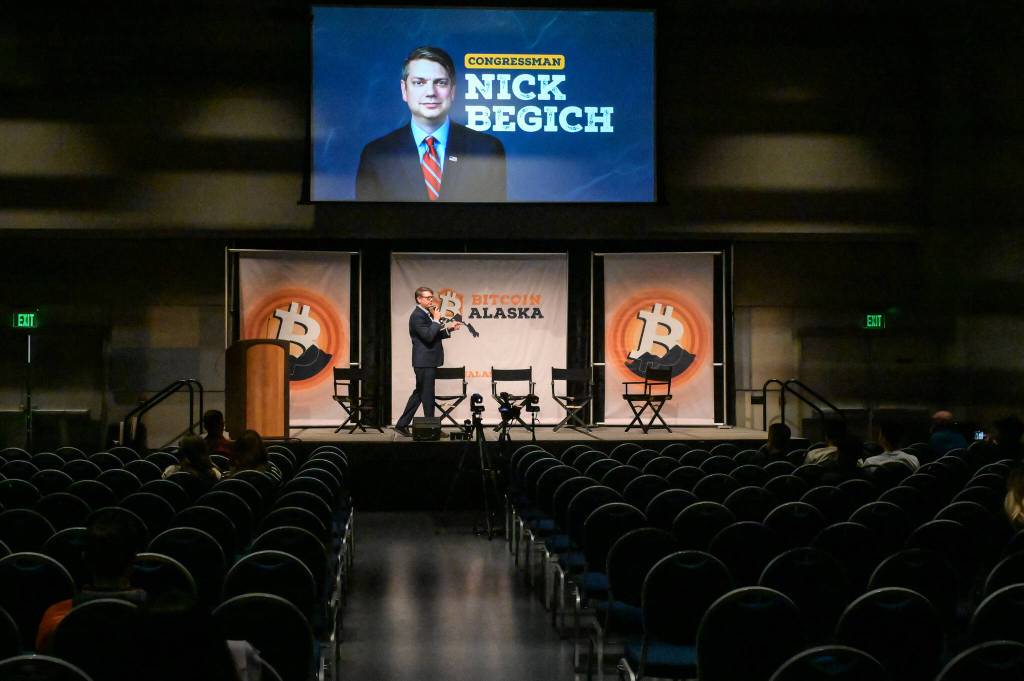
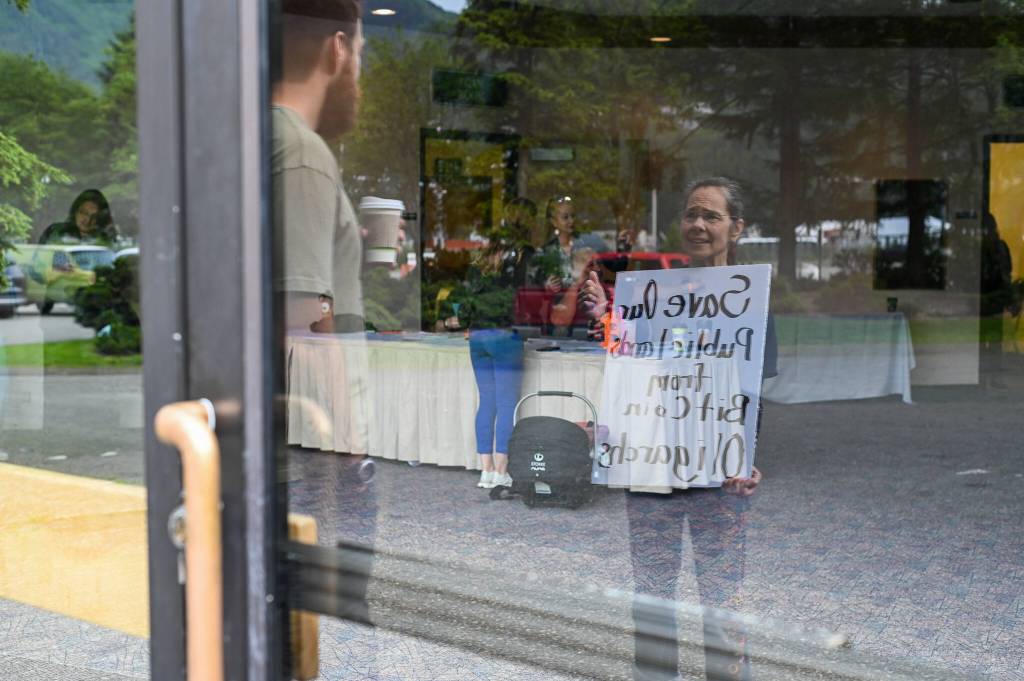


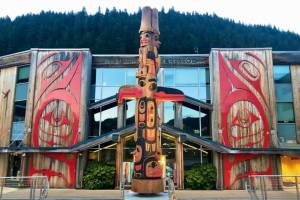
JUNEAU — More than 20 protesters gathered outside Centennial Hall Saturday morning to confront U.S. Rep. Nick Begich III, R-Alaska, who was slated to speak at the first Bitcoin Alaska conference.
But an event organizer notified protesters that the congressman had rescheduled. Begich was at the signing of the budget reconciliation bill in Washington, D.C, on Friday. He voted to pass it on Thursday.
“Nick Begich was supposed to be a speaker at 10 a.m., and he doesn’t have an office here,” Angie Imholt, a member of Juneau Indivisible, said. “He won’t meet with his constituents. He sends us all these letters that don’t have anything to do with what we emailed him about. So he just has form letters that he sends everybody.”
She and other members of Juneau Indivisible, a nonprofit political organization, said the protest was not about the conference itself or Bitcoin — “it was just an opportunity to see Nick Begich, because he won’t see us.”
In contrast, Wade Hoek, the organizer of Bitcoin Alaska, called the level of communication with Begich’s office “incredible.”
“Open communication dialogue up into the night,” he said.
Hoek said Begich was not a paid speaker.
Begich was invited to speak at the Bitcoin Alaska conference two months ago due to his longtime involvement with the digital currency and his introduction of the Bitcoin Act of 2025. The bill, currently being considered by the Senate, seeks to make President Donald Trump’s executive order permanent. The order establishes a Strategic Bitcoin Reserve and a U.S. Digital Asset Stockpile, promising to make the United States the “crypto capital of the world.”
Begich said he owns about seven bitcoins, which he acquired in 2013. The value of his cryptocurrency assets was $250,000 — $500,000, according to his Financial Disclosure Report filed in November 2024.
After his Sunday morning panel discussing his experience with Bitcoin, the Bitcoin Act, and Trump’s “Big, Beautiful Bill,” Begich fielded questions from the Empire. Regarding public forums, he said he has held town halls in Fairbanks, including a February statewide virtual town hall. He said his office receives thousands of phone calls, and serving as Alaska’s lone representative in the House keeps him extremely busy.
“We’re limited by time and staff,” he said. “We have a certain congressional budget that limits how many people we can actually employ to take feedback from the public, but I’m on three committees and eight subcommittees. I have one of the highest workloads in the United States House, and I work 16- to 20-hour days, essentially seven days a week. So, I’m not sure that there’s any way that I know of that we could be more available to the public. I regularly engage in interviews like this. I regularly engage in interviews that are national in scope, and so we are fully transparent.”
The weekend protesters expressed disappointment with the virtual town hall because a moderator screened questions. Some who signed up to ask a question never received the phone call promised by the office, so they were unable to ask their question. They added much has happened since the virtual forum in February, including Begich’s votes to cut Medicaid, SNAP benefits, and public broadcasting.
Begich said he would have been willing to talk with protesters in Juneau, but no one approached him or made a request for a meeting. He said he did not see anyone on his way inside the building, and after his scheduled speaking slot on Sunday morning, he checked outside three times over the course of 40 minutes and the group had left.
“We take meetings,” he said. “It doesn’t matter whether someone is a supporter of mine or not a supporter — whether they support a position I support or they don’t. We listen to everybody, and we try to take as many meetings as possible, hear from as many constituents as possible.”
As a guest of the Bitcoin Alaska conference, Begich said he chose not to schedule a town hall during his weekend visit, and does not have an upcoming public forum. The last time Begich came to Juneau was to address the Alaska Legislature in February.
He concluded the Bitcoin Alaska conference with a keynote address Sunday afternoon.
“We were hoping that Begich would see some of our signs, because we’re really upset,” Merritt Andruss said. “Most of us got a letter the day before yesterday (Thursday) about how wonderful this (budget reconciliation) bill is, and we know how really awful it is for most people. It’s great for the billionaires. It’s really nice for them, but not for anybody else.”
Merritt said that there were fewer protesters on Sunday due to the rainy, cold weather.
Members of Juneau Indivisible said the conference’s organizers were convivial, offering them coffee and conversation. Robert Sewell, a member of Juneau Indivisible, protested outside Centennial Hall both days of the conference. He wanted to ask Begich about what he sees as avoidance of his constituents and the impacts of Trump’s “Big, Beautiful Bill” on Alaska. Event organizers asked him and one other protester to leave Centennial Hall on Sunday morning because they had not paid the $150 general admission fee.
With his American flag in hand, Sewell stood outside in the rain with Rick Thomas, a conference organizer from West Virginia.
“Bitcoin in itself is a protest of the monetary system,” Thomas said. “So how would it look if we didn’t extend the same right to speak that we are actually here trying to express as well? So while we’re kind of on different sides, I think civil discourse is the most important thing that we can achieve here.”
Contact Jasz Garrett at jasz.garrett@juneauempire.com or (907) 723-9356. Contact Natalie Buttner at natalie.buttner@juneauempire.com.