City council candidates talk development, challenges at election forum
Published 1:30 pm Wednesday, October 1, 2025

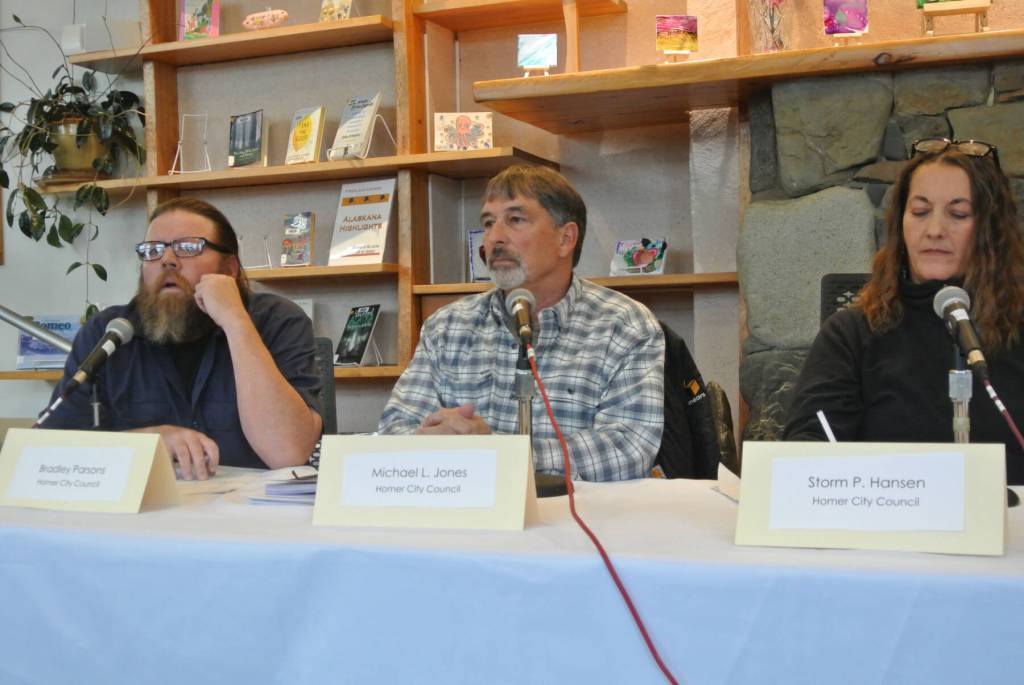
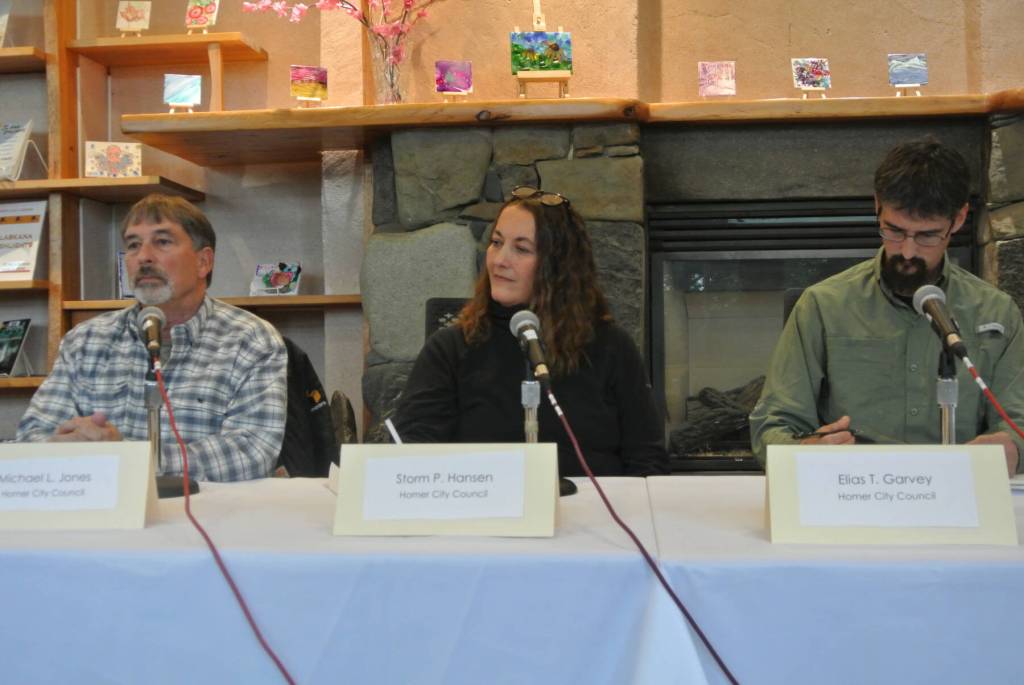
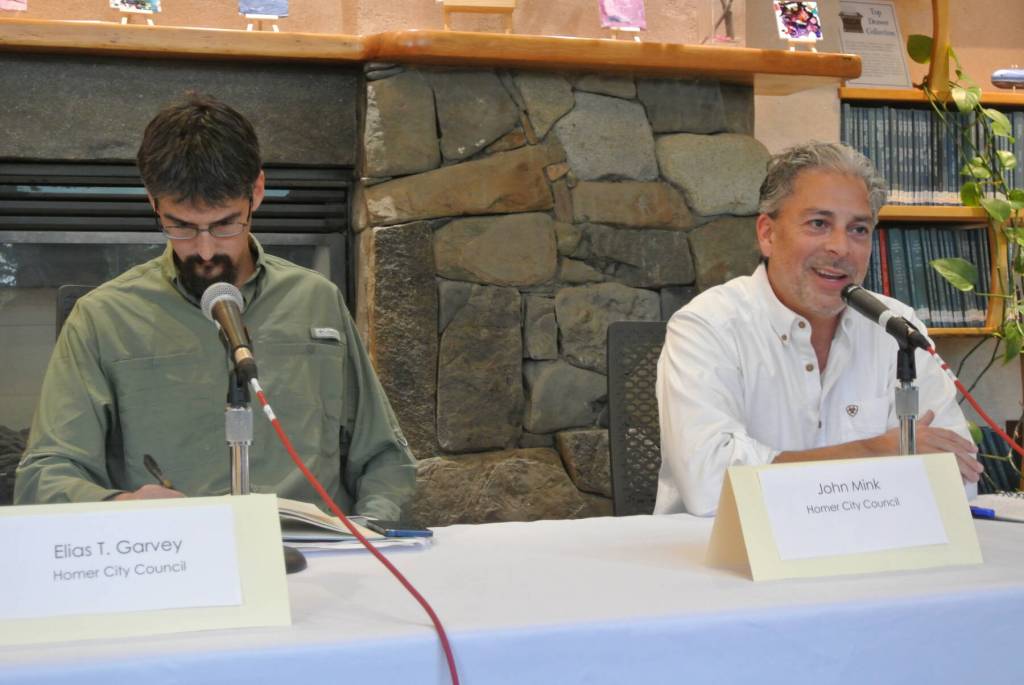


Five of the six candidates vying for seats on the Homer Council Council came together last Wednesday, Sept. 24, for a second forum to share their ideas and views on current and future issues facing the city. The event was hosted by the Homer News, Peninsula Clarion and KBBI AM 890 as part of a series of election forums taking place around the borough in advance of the municipal election on Oct. 7.
Incumbent Bradley Parsons and challenger Michael Jones are competing for the one-year seat on this year’s ballot. Incumbent Storm Hansen and challengers John Mink and Elias Garvey, all vying for one of the two three-year seats, were also present at the forum. Incumbent Jason Davis, also seeking re-election to the council for a three-year term, was unable to attend.
Questions asked by forum moderators ranged from consideration of future city development to budgetary planning and spending to challenges facing the city and its residents. To start, candidates were asked to consider recent community input in the ongoing comprehensive plan rewrite process and how they might balance higher-density development in Homer with maintaining the city’s “quaint” identity.
Mink said that it came down to incoming funds.
“As a city council, and of course the Planning Commission, we have the responsibility to make sure anything that comes through does fit … with the spirit of Homer, but it really does come down to, we’ve got to pull business here, or we’ve got to pull funds to make that happen,” he said.
Garvey said he prioritized community communication and “letting people determine the course of Homer” with regard to the development of their own personal properties. Hansen said that she’d “like to see both” — “a beautiful Pioneer Avenue and downtown, and green space, and business.”
“I think we can do that with more time and more policy changes … to make sure that we can make it structured and yet beautiful and more available for small businesses,” she said.
Jones also agreed that it wasn’t “an either-or kind of question.”
Parsons referred to a presentation last year by “Strong Towns” founder Chuck Marohn, who, when he toured Homer, said all he saw was empty spaces.
“It was basically gravel parking lots that were mostly empty — so I think, building off of what others have said, we need to invest in a vibrant downtown, and one of those ways is to reduce parking minimums,” he said. Parsons added that the city should also examine implementing public parking in order to allow residents and visitors to legally park and then “walk and create this vibrant downtown that I think we all desire.”
Relating to ongoing conversations at the borough and school district levels for funding school pools and theaters, the City of Homer Parks, Art, Recreation and Culture Advisory Commission is considering the creation of a Homer High School pool and theater task force. Candidates were asked what role the city should play in taking on responsibility for those facilities.
Garvey said that he would want to hear community input with regard to potentially funding these facilities and that his default position would be to try other methods of fundraising rather than directly assuming those costs. Hansen said she’d recently spoken to the city’s community recreation manager about this topic and that she thought there was nothing wrong with the city showing support and having a task group, while being mindful of the burden on city staff.
“Most of the people that use those facilities … they’re not just students, there are constituents and those outlying, and I think it’s really important that we figure out a way to keep them going, because they’re pretty vital to our community,” she said.
Jones said that the first question to ask was “is this in the core responsibility of what the city is supposed to be doing?” Parsons said he relies on the community with decisions that he makes, and that he’s curious to see what PARCAC comes back with. Mink answered that he’d like to see what kind of support the Kenai Peninsula Borough can supply.
On the city’s budget, candidates were asked if they thought there were areas where the city was spending either too much or too little. Parsons spoke to the near elimination of two city staff positions, which were eventually funded in the final budget for fiscal year 2026, and said that the biggest investment the city can do is “invest in our staff to retain them.” Mink said that, for the city’s core functionalities, the current budget looked good to him.
Garvey said that in reviewing the city budget, he looked at the “legitimate demand for expenses” and gave an example similar to that which he provided at the forum hosted Sept. 16 by the Homer Chamber of Commerce, where he would support something like a request by the Public Works Department for a new vehicle but would hesitate or be “outright against” large project expenses such as a new recreation center or the proposed Diamond Creek Underpass, which he called “underdeveloped.”
Hansen said she doesn’t think the city spends too much or too little.
“I think we work really hard to go through every item and figure out what it is that we need and what’s prudent to buy or spend money on, knowing that prices are going to adjust,” she said.
On priorities for future development in Homer, Parsons answered downtown development and said he hoped the city could facilitate that largely through the ongoing zoning code rewrite.
“In terms of investing in downtown — and Elias and I kind of see eye-to-eye on this — the more restrictions we can remove when it comes to giving property owners the ability to do creative things, I think we should pursue it,” he said.
Garvey named several projects included on the 2026-2031 Capital Improvement Plan the city council passed at their Sept. 22 meeting, to include the Slope Stability and Erosion Mitigation Program and a new Public Works facility. Hansen agreed, saying that the CIP included “a lot of projects … that are just as important as the really big projects,” and added that she thought it was important for the community to have a new rec center to provide a safe environment for people of all ages to exercise.
With regard to the greatest challenge facing Homer, all candidates spoke to the need for attainable housing while also being mindful of “growing pains” and the path of future development.
Finally, the candidates were asked where they would like to see Homer in the next five to 10 years and how they would describe the council’s role in achieving that vision. Garvey said he wanted to the community to be in good condition and that he viewed the best way to achieve that outcome as loosening regulations and “making sure we don’t add any kind of interference, as per the 2019 plastic bag ban.”
Hansen said that in five to 10 years, she would like to see Homer as somewhere her adult children can “live and sustain and … have jobs and have a place to rent that’s not way out of town (and) doesn’t have water or electricity.”
“We have our comp plan and our (Title 21) rewrite coming up, and I think … it’s really important that we trust the process and the public forums that we have, so we can come together, and in five to ten years this place could be really even more amazing than it already is,” she said.
Jones said for him, it’s not about the things the city has created or built.
“That’s just stuff,” he said. “What I really strive for is that we in city government are executing our jobs fearlessly and excellently every single day.”
Parsons referred to a question on the comprehensive plan outreach survey which asked community members what they thought would be the “single most important project we can do as a community over the next 10 to 20 years.” The answers to that question included attainable housing, a vibrant downtown and supporting young families and Homer’s youth.
“I’m fine with that platform for my vision for the next 10 years,” he said.
Mink also referred to the comp plan and said that the city should invite “strong businesses, strong nonprofits, strong ways for the city to grow in a healthy, responsible way.”
Find the forum recording in full on the Peninsula Clarion Facebook page. Election day is Tuesday, Oct. 7.