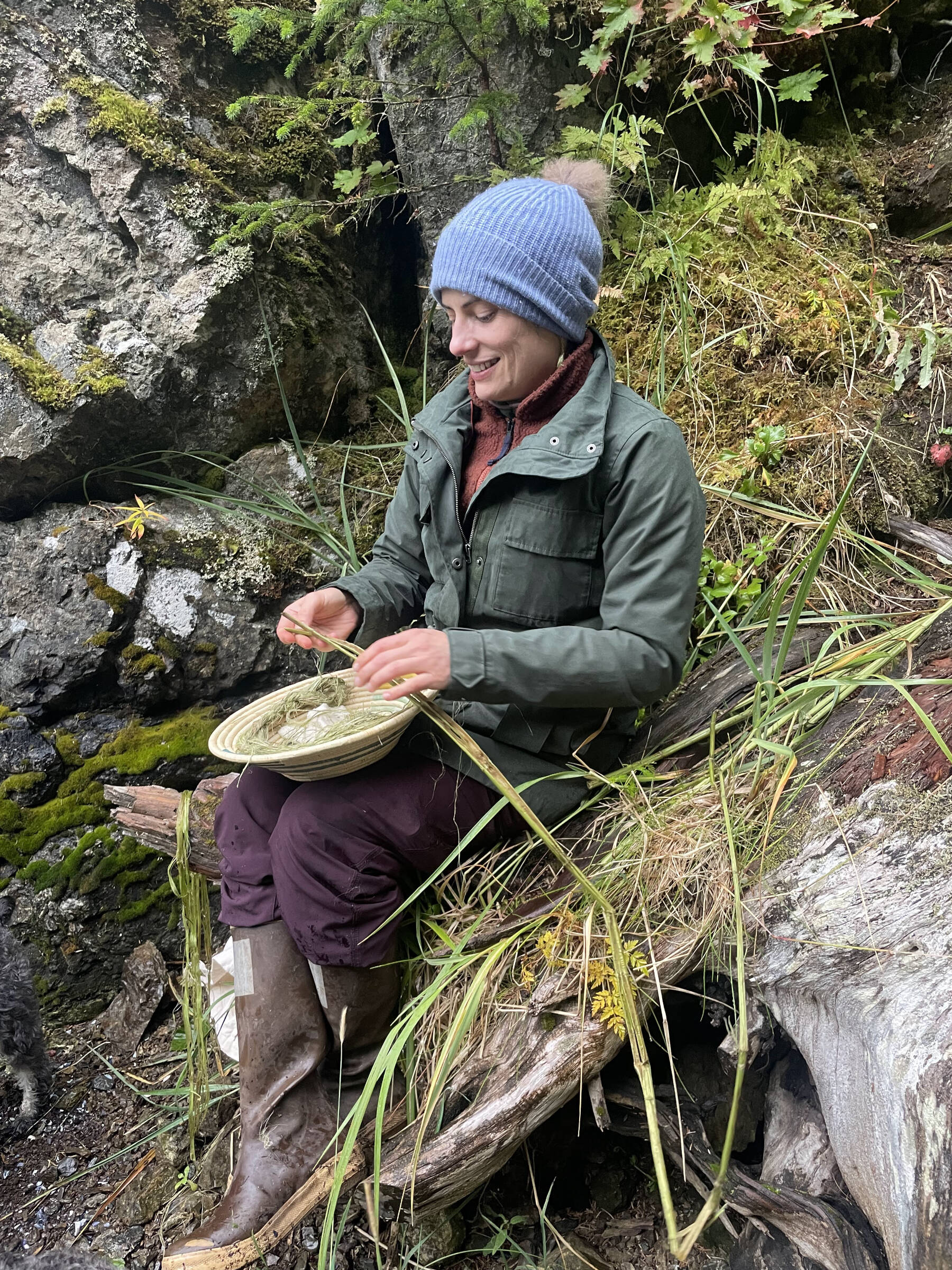
Three Homer artists were among 50 across Alaska named as 2025 Individual Artist Awardees. Brianna Allen, Carla Klinker and Karyn Murphy will each receive a $10,000 project grant to support short-term projects that contribute to their artistic development and practice.
According to a Dec. 4 press release from the Rasmuson Foundation, the Individual Artist Awards program alternates annually between project and fellowship awards to “support Alaskan artists’ time, reflection, immersion or experimentation beneficial to the development of their artistry.” Recipients are selected by a group of 16 panelists from around the U.S. and Canada. The IAA program has invested more than $6.5 million in supporting the career development of Alaska artists since 2003.
This year’s recipients include artists working in a wide range of disciplines, from the literary arts and scriptworks to folk and traditional arts, music composition and visual arts. While the Individual Artist Awards are open to artists at any career stage, the release states, this year’s cohort “reflects a rising tide in Alaska’s creative economy,” with 75% of awardees being first-time recipients, about 50% being first-time applicants and most of the cohort being in their early or mid-career stages.
“It’s our joy to recognize such a diverse group of creatives whose work helps connect, challenge and inspire our communities,” Rasmuson Foundation President and CEO Gretchen Guess said in the release. “These artists are telling Alaska’s stories and shaping our future.”
Telling mothers’ stories
Brianna Allen is the development lead at Bunnell Street Arts Center and a multidisciplinary artist working in painted portraiture, performance and playwriting. She received the IAA grant to support her playscript, “Momologues,” which she will tour in Alaska and New York, and to expand her portrait series of mothers and their children.
“Momologues” is a collection of first-person accounts of motherhood submitted by mothers to Allen and shared anonymously with the world. The first live performance of “Momologues” was presented in 2022 as a collaboration between Bunnell and Pier One Theatre. Allen also curates these stories on The Momologue Collective project website.
“I am a mother of two, who are 5 and 7,” she wrote in an email to Homer News on Sunday. “My social art practice of gathering anonymous stories about motherhood and sharing them publicly, has informed my painting, performance and playwriting since becoming a mother myself.”
Of her continued endeavors with this project, Allen wrote that she believes that sharing the motherhood experience can “create the space needed to inform the rights we all deserve.”
“I also believe sharing what’s vulnerable rebels the overbearing systemic control, which is aimed to lessen the power of the people,” she wrote. “I decided to self-publish my book, ‘The Momologue Collective: An Anthology by Self-Identifying Mothers,’ at the fall of Roe v. Wade, and this is the level of self-determination I’ve held onto since witnessing our federal government continue to limit the power of the people.”
Allen is a first-time IAA recipient. She wrote that she’s applied to the Rasmuson Foundation twice for the “Momologues” project, recrafting her proposal each time as it developed over the years.
“Applying to grants takes a lot of time, but it truly helps you get honest about your work and why you’re compelled to do it,” she wrote. “Whether you’re awarded this round or not, it really helps. Receiving an IAA … is a major boon to my work at this moment in time, when bodily autonomy for all and access to reproductive healthcare is not a fundamental constitutional right like it was when I was making choices about my body and life as a teenager.”
The IAA grant will enable Allen to take her playscript to Anchorage, New York, Maine and back to Homer, which she said are all places where contributors have participated in the project over the years. Throughout the tour, she will host staged readings with local directors and actors, after which she will provide “artist talkbacks” in which she “hopefully becomes part of an audience dialog about the play as written.”
“This can be a very generative time to open up and share how the play left you feeling, what lines resonated, what questions emerged, what characters people related to,” she wrote.
Additionally, she wrote that she plans to use the award to complete six more painted portraits of mothers with their children and exhibit them at the Kenai Fine Arts Center in June 2026, and at the Kenai Peninsula College Kenai River Campus in October.
Allen was also named as a recipient of the 2025 Connie Boochever Fellowship by the Alaska Arts and Culture Foundation and the Alaska State Council on the Arts. According to a Dec. 10 press release, the fellowship is intended to “recognize and support Alaska emerging artists of exceptional talent,” and comes with a $3,000 award.
She wrote on Sunday that this is also the first time she’s received the Boochever fellowship, and in conjunction with the Rasmuson award, it will enable her to bring a new performance piece, titled “Thank You for Your Service,” to life in the spring. “Thank You for Your Service” is framed as a public acknowledgment of care work done by mothers and a commentary on “care as service work to our country.”
Additionally, with the support from the fellowship, Allen will continue her mentorship with dramaturg Sandra Daley, whom she met last June at the Valdez Theatre Conference, to continue developing “Momologues.”
“I’m so delighted to work with her!” Allen wrote. “I am working with Sandra over Zoom and email correspondence. She is an incredible wellspring of enthusiasm and guidance, asking strategic questions about place, the characters, and how I want the audience to feel afterward. She’s like a coach, willing to go deep with the content because she knows we all have a lot at stake.”
In working with Daley, Allen aims to have a “solid draft” of the script by February, at which time she intends to share it with Teresa K. Pond, artistic director at Cyrano’s Theatre Company in Anchorage, who will then cast it and direct the staged reading. A date for the reading has not yet been established.
“By then, I’ll be able to schedule my New York and Maine readings with those directors,” Allen wrote.
Learn more about Allen and her work at www.bmallen.com/.
Threads of connection
Carla Klinker is a multimedia artist whose body of work includes paintings, sculptures, apparel designs and fiber arts. Lately, she’s known around Homer for her work harvesting, processing and utilizing wild nettle cordage in fiber arts projects. She plans to use her Individual Artist Award to create a series of experimental foraged textiles, upgrade her studio and invest in equipment and documentation for her art.
“My college degree is in drawing and painting, but I started out as a fiber major,” she said in an interview Monday. “It’s also been something that’s been really interesting to me. I grew up here, and I feel like I have relationships with the plants that grow here … so it feels really natural to reach for our local materials as a starting place.”
For the last two summers, Klinker has taught nettle fiber workshops at the Pratt Museum, where she said she and workshop participants could harvest nettles and go from “field to cordage in your hands.”
“Most people know me more as a painter, so it’s really fun,” she said. “I’ve always been interested in fiber and textile archaeology, and these ancient crafts that seem so relevant to me and to, I think, a lot of people. I really enjoy teaching because I get to experience (others’) excitement of discovery. Fiber arts, in all its many forms, is something that I think people have always done in community.”
Part of Klinker’s inspiration with wild fibers also stems from Elizabeth Wayland Barber’s book, “Women’s Work: The First 20,000 Years.”
“I read that probably in, like, 1986, and it was only five years old at that point and she (was) really (at the) cutting edge of ancient textile work, and because it’s such an ephemeral material — it decays, it doesn’t stick around in the archaeological record like things made out of metal or clay, but there are traces of it — that really captivated me from a young age,” she said.
She added that while she primarily works with processing techniques that come out of a European tradition, “deeply ancient” nettle traditions exist in Southeast Alaska, going down the coast, and she is interested in learning more about Indigenous or traditional uses of nettle or other wild fibers in Southcentral or Southeast Alaska.
In addition to connecting with the ancient traditions of fiber arts and that historic community, Klinker also loves the beauty of the natural fibers she gathers and processes. Besides wild nettles, she has been experimenting with fireweed fiber this winter — which adds a golden or reddish hue to cordage when blended with the pale green nettle fiber. She said she’s drawn to these materials because of their wild abundance and adaptability to processing.
“It’s all so seasonal, what you can do when,” she said. “Fireweed is so ubiquitous around here but I found in the summertime I can’t really harvest it, but this time of year, it’s been freeze-dried. And what’s really exciting about the fireweed is that (nettle harvesting) process is completely adaptable to this other fiber source that is virtually untapped.”
Klinker said she plans to use part of her Rasmuson award to convert a shed into a studio space, which she can also potentially use to host fiber processing gatherings. She’ll also use part of the grant to prepare for a nettle fiber project exhibit at the Palace Gallery in Ellensburg, Washington, in June. Finally, she will be able to hire a professional photographer to take quality images of her work for documentation.
Her ultimate goal, however, is to create a periodical nettle work newsletter.
“There is this network of people that are doing this kind of work with nettles and wild fibers, or (who are) really interested in it, and I want to have a way to connect us and be part of and create a community,” she said. “I don’t need to be the leader, but I want to be the hub.
“There’s thousands of years of history of this work, but also this kind of quiet resurgence happening all over, so I was really excited to bring it to Alaska and to watch it expand.”
Klinker said she’s applied to the IAA program three times over the past few years, but this is her first time receiving the award. When she previously served on the Bunnell Street Arts Center board of directors, she saw how “transformative” the grant program could be for Alaskan artists.
“Because the nettle work is so community-driven, it feels really special,” she said. “It’s one of those things, it feels like a milestone. It felt like a validation that this work that I love and get obsessed about has value for the larger world, for other people and for an institution.”
Learn more about Klinker and her work at www.carlakcope.com/, or find her on Instagram, @carlaklinker.
Experiencing the natural world through art
Karyn Murphy is a scientist, naturalist, wilderness guide and multimedia artist, using her art as a form of science communication. Her work is inspired by Kachemak Bay and her passion for exploring and explaining the natural world.
“My spirit is enthralled by the cycles of life and the seasons that surround me,” she wrote in an email to Homer News last Thursday, Dec. 11. “I create my art to share those feelings, those connections, with others. While I am focusing more of my time on art, I have not abandoned science! I want my art to be a lens, an entrance, for individuals to begin to explore their own inter-connectedness to this world and to begin their own journey of pondering and creating.”
Using the grant funds from her Individual Artist Award, Murphy will create a collection of large-scale kinetic book structures for a future exhibition. She will also teach bookmaking and pigment-making workshops.
“Bookmaking, weaving, calligraphy, pigment making, papermaking and salmon skin tanning are all part of my practice. I integrate this diversity into projects and enjoy the challenge of exploring new techniques and processes,” she wrote.
Often choosing to work in “tiny scales,” many of Murphy’s works are smaller than 3 or 4 inches, but for the purposes of the projects she will pursue with the Rasmuson award, she is endeavoring to make larger-scale versions of her creations. Still, Murphy’s intrinsic attention to small details will carry over into new works.
“Small details are important to me … however, small doesn’t mean simple,” she wrote. “Each component is carefully collected or created — paint is handmade from rock pigments, seaweed is pressed into paper, responsibly collected bioephemera are incorporated into details. I create exquisite small treasures to attune people to the scale of things in the world that they may walk past and never see, much less value.”
Murphy’s incorporation of large and small pieces will allow the body of her work to reflect the range of size particularly experienced in the ocean, “from giant humpback whale to tiny plankton.” She continues to work on “unusual” structures in bookbinding, incorporating kinetic aspects and various natural materials in continued efforts to infuse her work with the awe and personal connection she holds with the intertidal zone, geology and marine life of Kachemak Bay.
“I have explored and developed a dragon scale binding that rustles as it reveals an overlapping image on the borders of each page,” she wrote. “My hexagonal books unfold into a twisted strand reminiscent of the structure of DNA. I am incorporating humpback whale spectrograms into books that link people to the actual audio of these cetacean vocalizations.”
In creating larger-scale versions of these projects, Murphy hopes that they can be explored by others in a gallery space. A large-format dragon scale book would be “the most ambitious size” she has attempted to date.
“The artistic, overlapping page borders combine to form maps of the Bay and images of the wildlife contained within. Moving the pages replicates the sound of the wind as each image is unveiled. This will require using large format printers and specialty rolls of art paper,” she wrote.
Murphy’s shell books have typically in the past been made with natural clam or cockle shell covers, with a Coptic binding that “encourages manipulation to form various spirals and display positions.” Larger-scale shell books will require Murphy to collaborate with another artist to create larger wood or ceramic shells as covers for a “larger-than-life” shell book that can be manipulated.
Finally, Murphy plans to create a wall-size nested accordion structure book to bring her series of humpback spectrogram books “to a new level.” She’d also like to play audio of humpback whale vocalizations while the book is being viewed.
She wrote that these projects will further develop her bookbinding skills — particularly precision in execution and creative problem-solving. She will also incorporate and expand her skills in seaweed papermaking, weaving, calligraphy and pigment making through these projects, and share her skills in the workshops that will accompany the exhibit.
The date for Murphy’s bookmaking workshop is still to be determined, but her immersive pigment making workshop, using local materials including rocks and shells, will be held on Feb. 21 from 10 a.m. to 4 p.m. at the Kenai Peninsula College Kenai River Campus in Soldotna.
“I am especially excited about sharing skills with others in my local community that may enable them to incorporate new techniques and materials into their own works of creative expression,” she wrote. “This kind of workshop is often a spark that leads participants to a better understanding of the science, history and tradition of Kachemak Bay, giving them another way to be connected to their own world.”
Learn more about Murphy and her art at birchbarkstudio.com/ or find her on Instagram, @staycuriouskaryn.
Find the full list of 2025 Rasmuson Foundation Individual Artist Award recipients at rasmuson.org/find-funding/individual-artist-awards-program/.
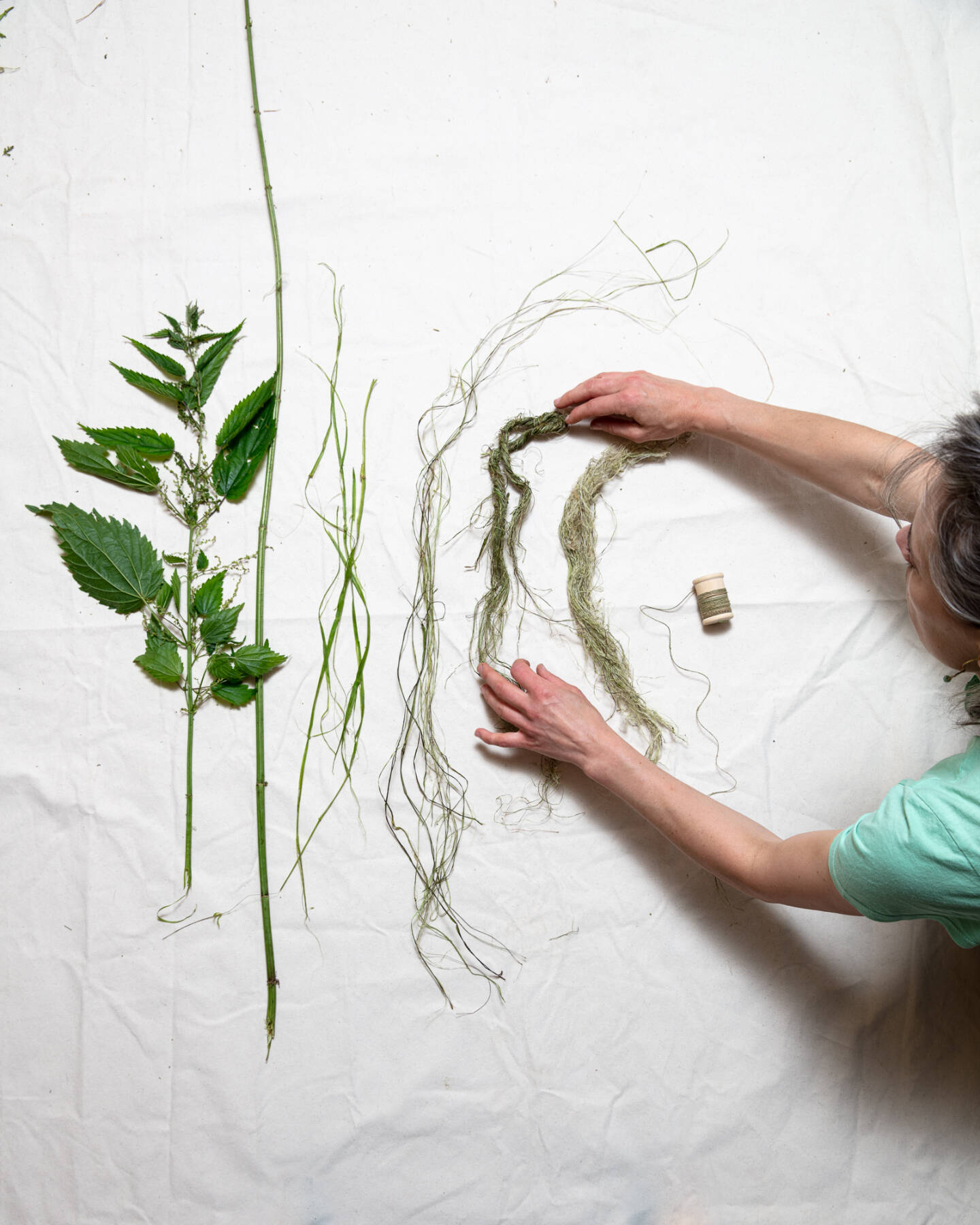
Artist Carla Klinker lays out nettles and nettle fiber in various stages of processing. Photo provided by Carla Klinker
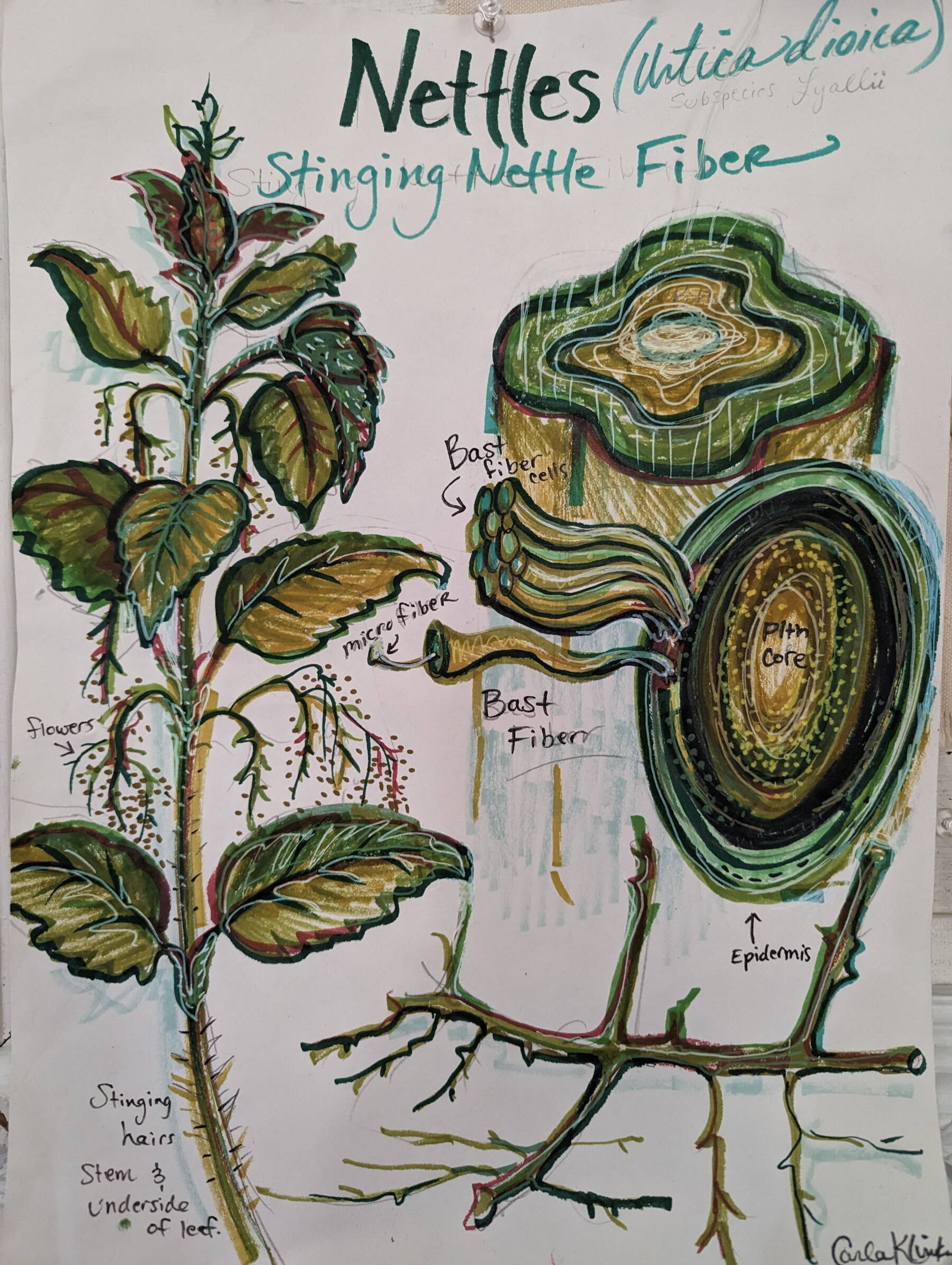
A nettle poster created by artist Carla Klinker depicts the plant’s structure and where fibers are located in the plant that can be processed and used for fiber arts. Photo provided by Carla Klinker
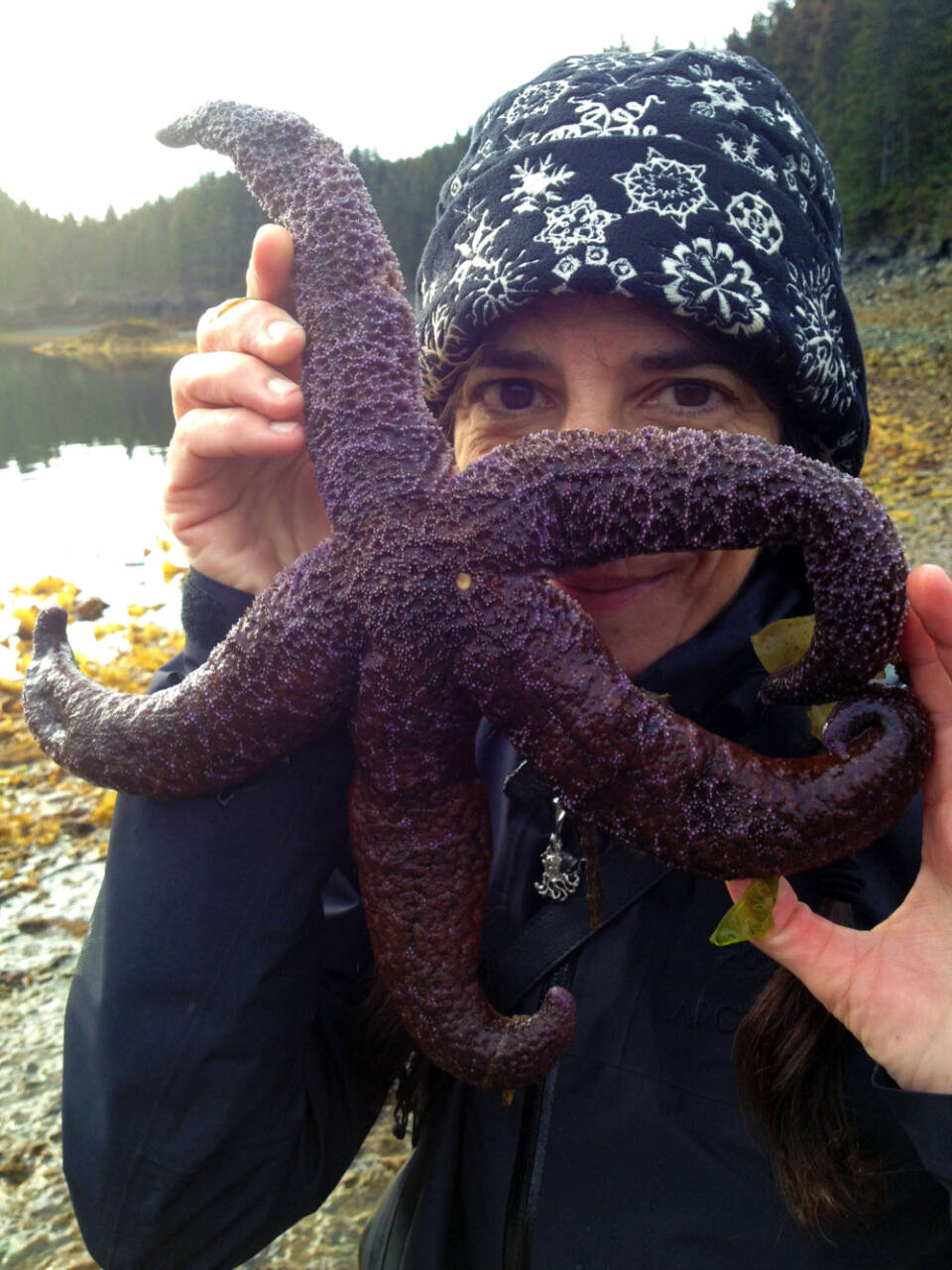
Karyn Murphy holds up a purple seastar in this undated photo. Photo provided by Karyn Murphy
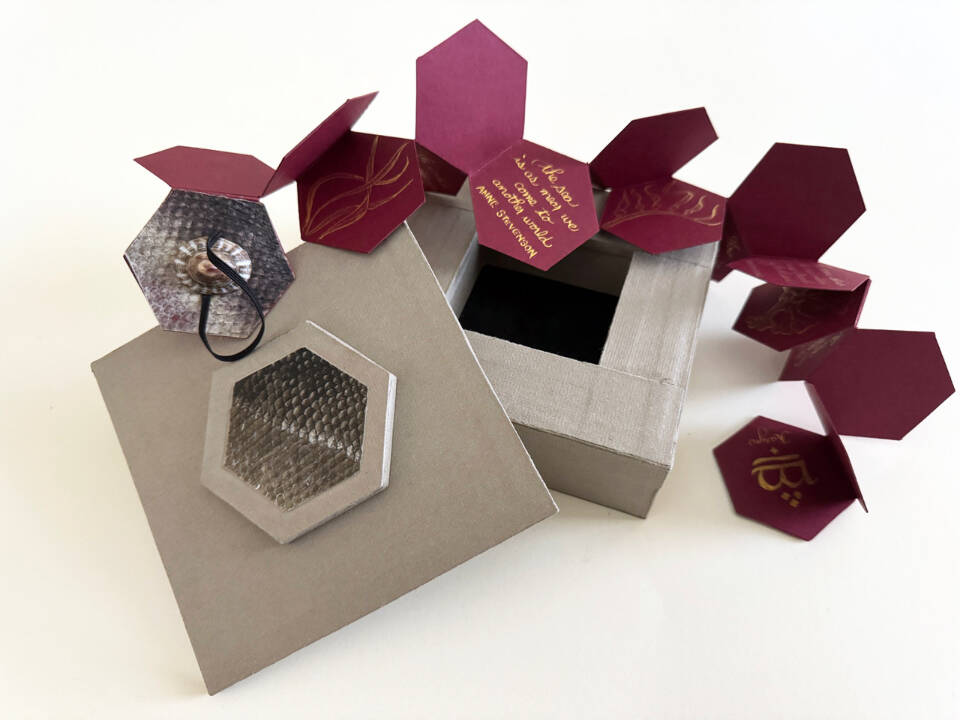
“Hexagon Book of the Sea” is a small-scale multimedia work by Karyn Murphy. Photo provided by Karyn Murphy
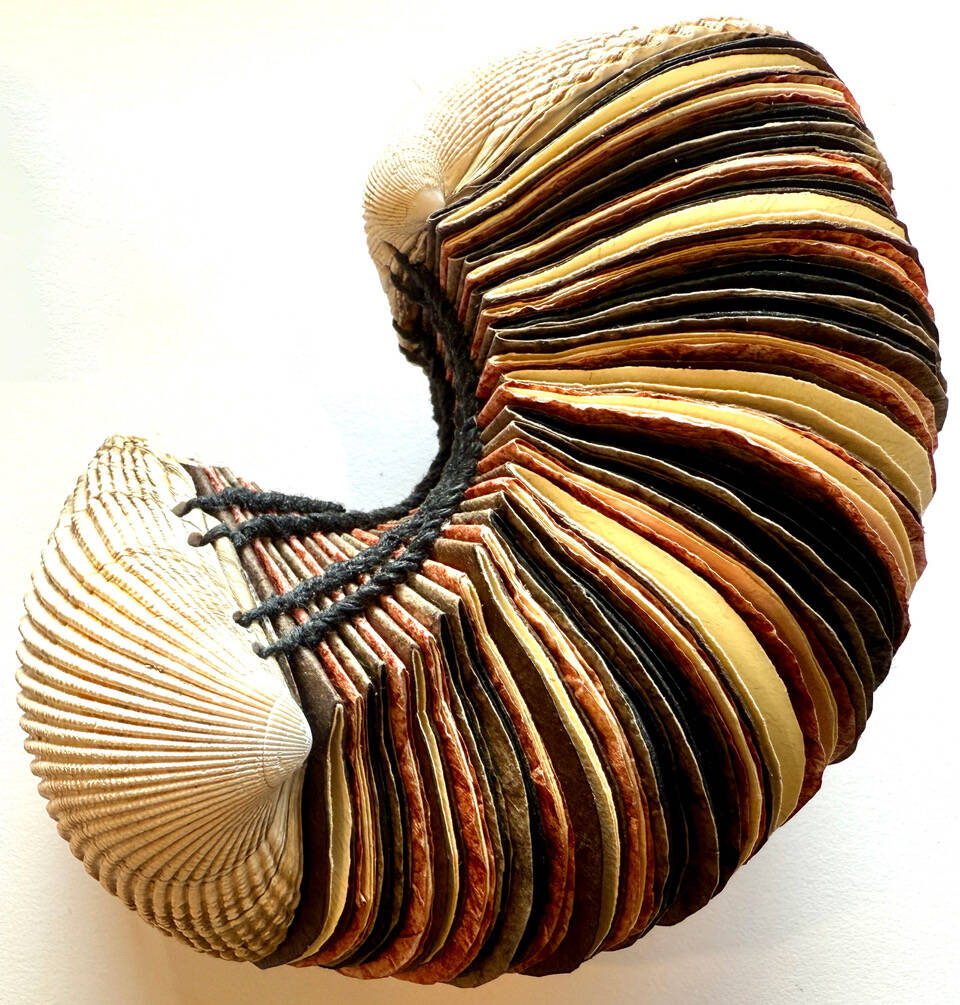
This cockle shell book with a Coptic binding is a multimedia work by artist Karyn Murphy. Photo provided by Karyn Murphy
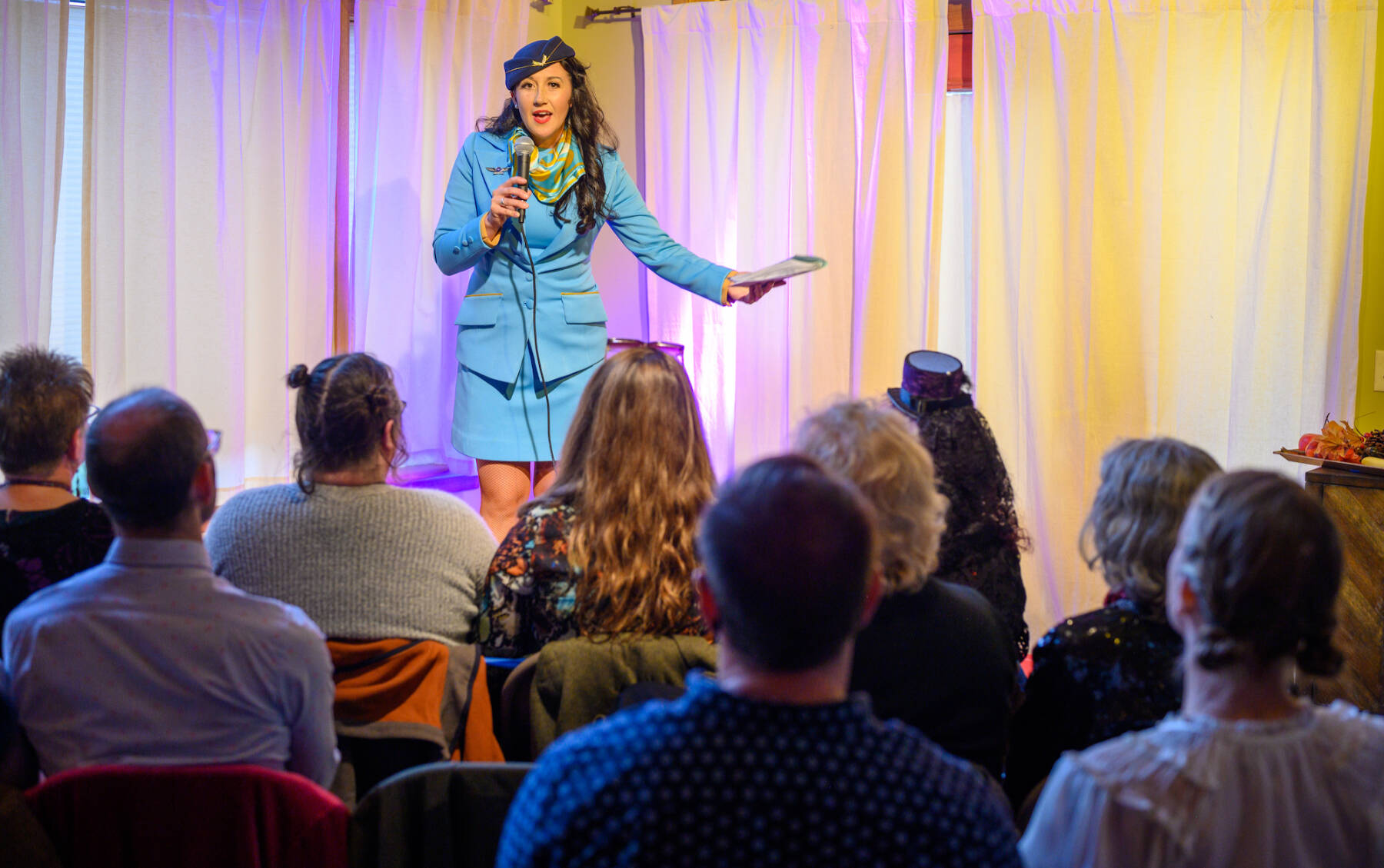
Brianna Allen shares her “Boarding Motherhood” monologue at “The Creative Pursuit for Bodily Autonomy” performance in August 2024 in Homer, Alaska. Photo by Rafael de la Uz
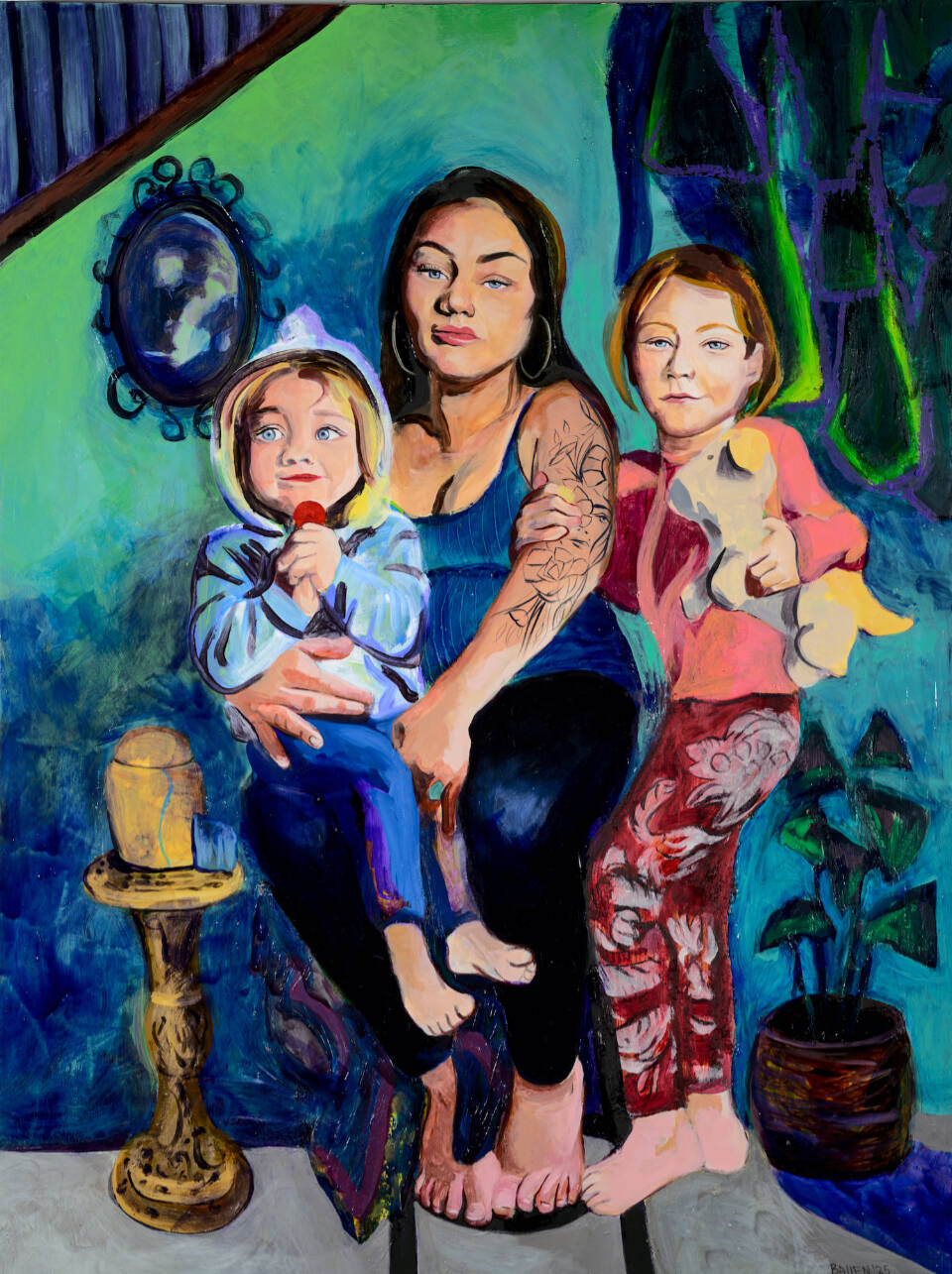
“Mother of JJ, Radly, Ophelia, Revel, and Blaze” by Brianna M. Allen is an oil-on-panel painting completed in June 2025, in Homer, Alaska. Photo by Rafael de la Uz
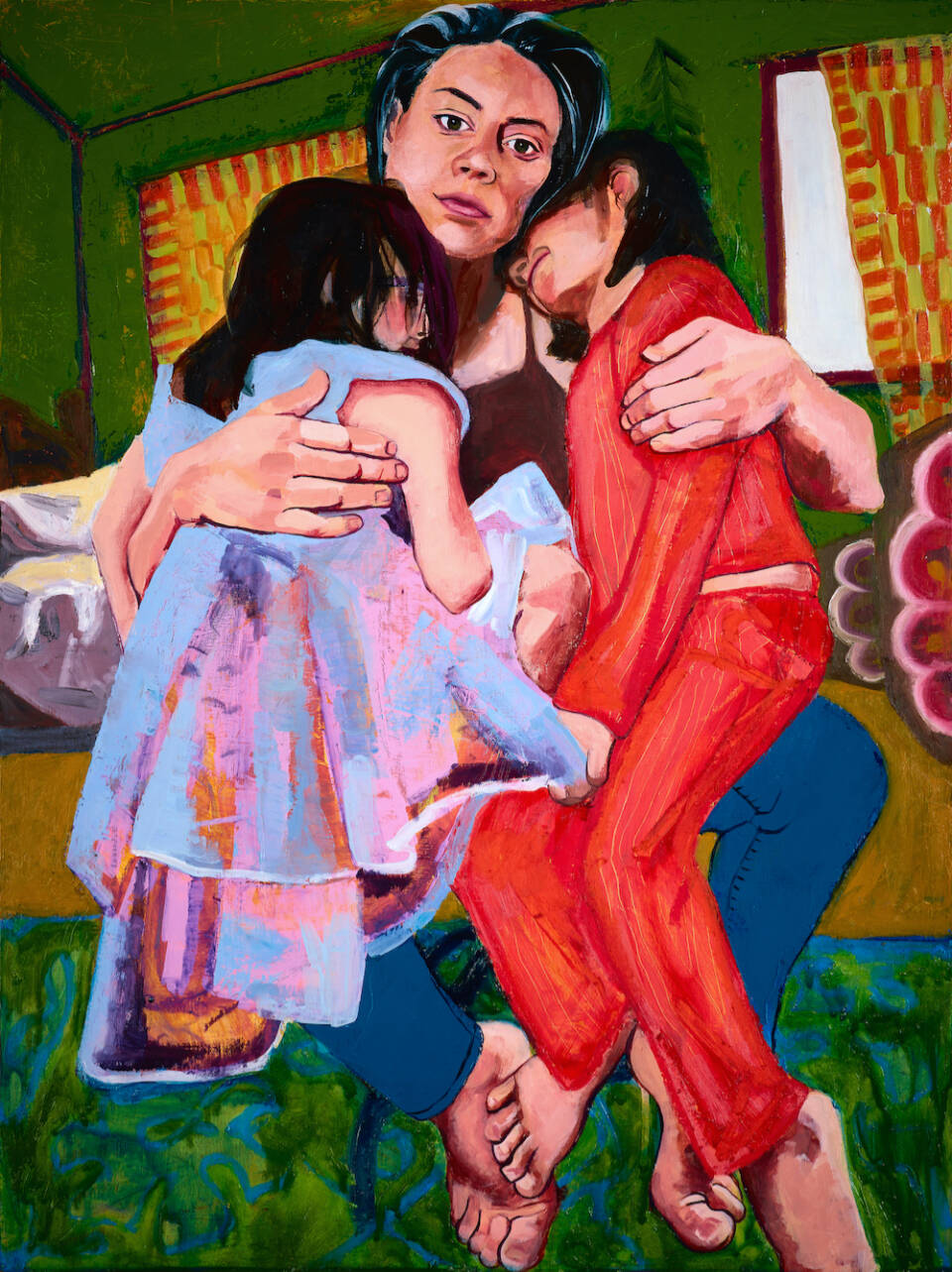
“Mother of Elina and Nova” by Brianna M. Allen is an oil-on-panel painting completed in June 2023 in Homer, Alaska. Photo by Christopher Kincaid/RCKincaidPhoto