
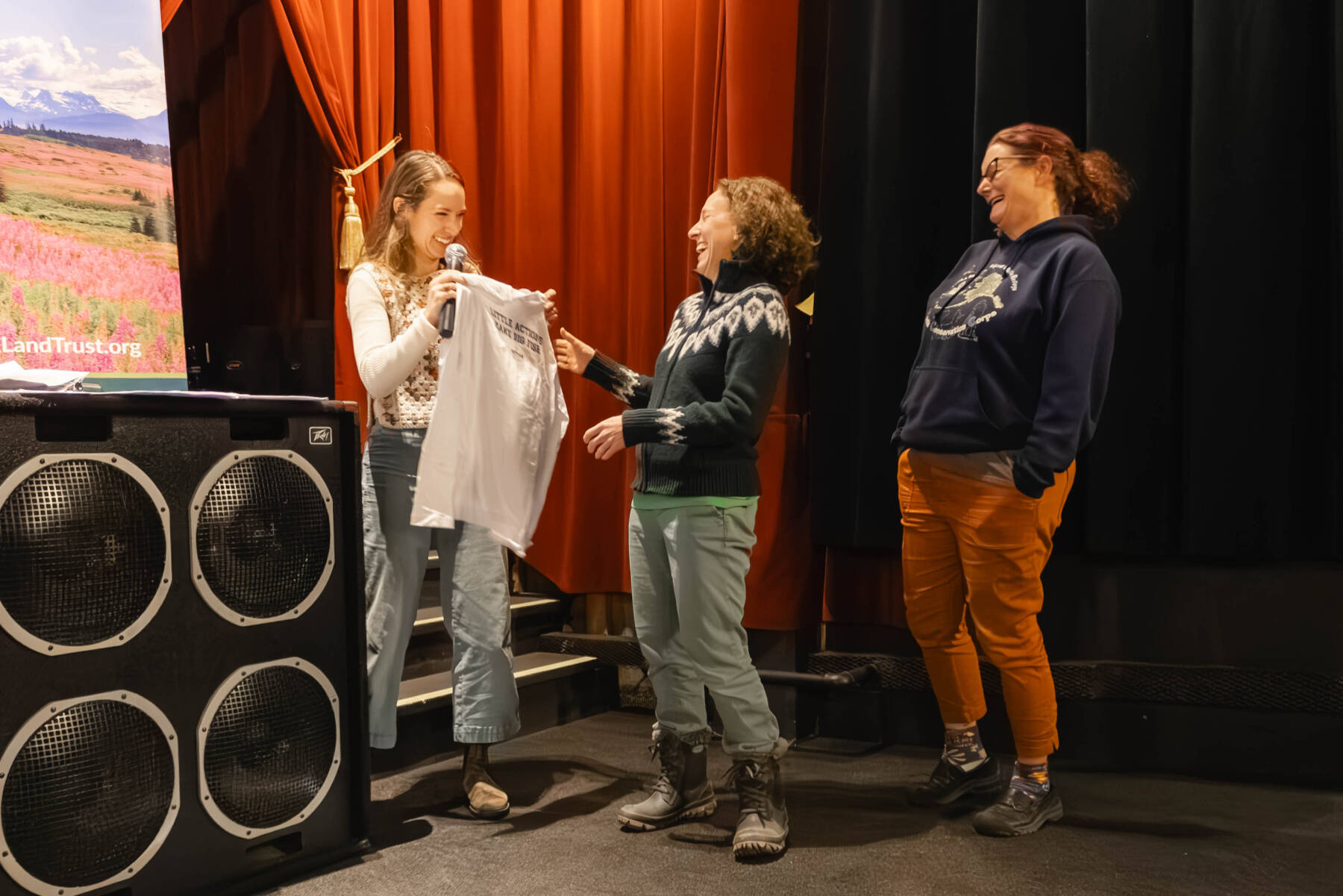
The Kachemak Bay National Estuarine Research Reserve is this year’s King Maker Award recipient, according to a Dec. 15 press release from the Kachemak Heritage Land Trust.
The King Maker Award is presented annually to individuals or organizations who have made “significant commitment” to salmon conservation efforts and contribute to the preservation and protection of salmon in the Kachemak Bay and Cook Inlet regions. KHLT presented the award to KBNERR manager Katherine Schake and education coordinator Ingrid Harrald on Dec. 10 during the annual KHLT members’ meeting.
According to the release, KBNERR was selected as this year’s awardee due to their “pivotal” role in research, education and coastal resource management. The research reserve provides “essential” data and facilitates collaborative educational programs that work to inform local policy and enhance public understanding of critical issues that affect both the salmon and greater ecosystem of Kachemak Bay.
“Their work provides the foundational knowledge necessary for long-term land and water protection and monitoring, making them an indispensable partner in KHLT’s conservation work on the Kenai Peninsula,” land trust communications and development manager Carson Chambers wrote in the release.
Executive director Marie McCarty said in the release that KHLT is “honored to work in multiple capacities with KBNERR for many years.” She described past partnerships between the two organizations, including on-the-ground outreach like joint “Fish Need Land Too” projects and peatlands education. Most recently, KHLT has partnered with KBNERR and the City of Homer to acquire “important” conservation land, an effort which McCarty said “represents the significance of each organization contributing to a good whole, with each organization sharing what they do best to ensure land important to the City of Homer is preserved for the future.”
Pratt Museum Curator of Botanical Exhibits Yarrow Hinnant also said that the museum is “deeply appreciative” of the role that KBNERR plays in both the local community and the larger Kachemak Bay ecosystem.
“We have found the staff at KBNERR to be resourceful and highly motivated, bringing excitement and momentum, as well as science, to classrooms, local naturalist trainings, and education events,” he said in the release. “We are all part of the web of this community, and KBNERR is an essential strand in that web, one that supports and encourages the work that we love to do.”
Hinnant further highlighted a partnership between the Pratt, KBNERR and Smithsonian Environmental Research Center.
“By offering students insight into their local peatlands through the lens of specific plants, we are working together to expand ways of seeing the world and experiencing being in a specific place that we all call home,” he said.
Schake wrote in an email to Homer News Monday that KBNERR “greatly appreciates” the more than 20 years of partnership with KHLT.
“We look forward to the next decades of partnership, with KBNERR’s science informing KHLT’s conservation actions,” she wrote.
Learn more about KHLT at www.kachemaklandtrust.org/.
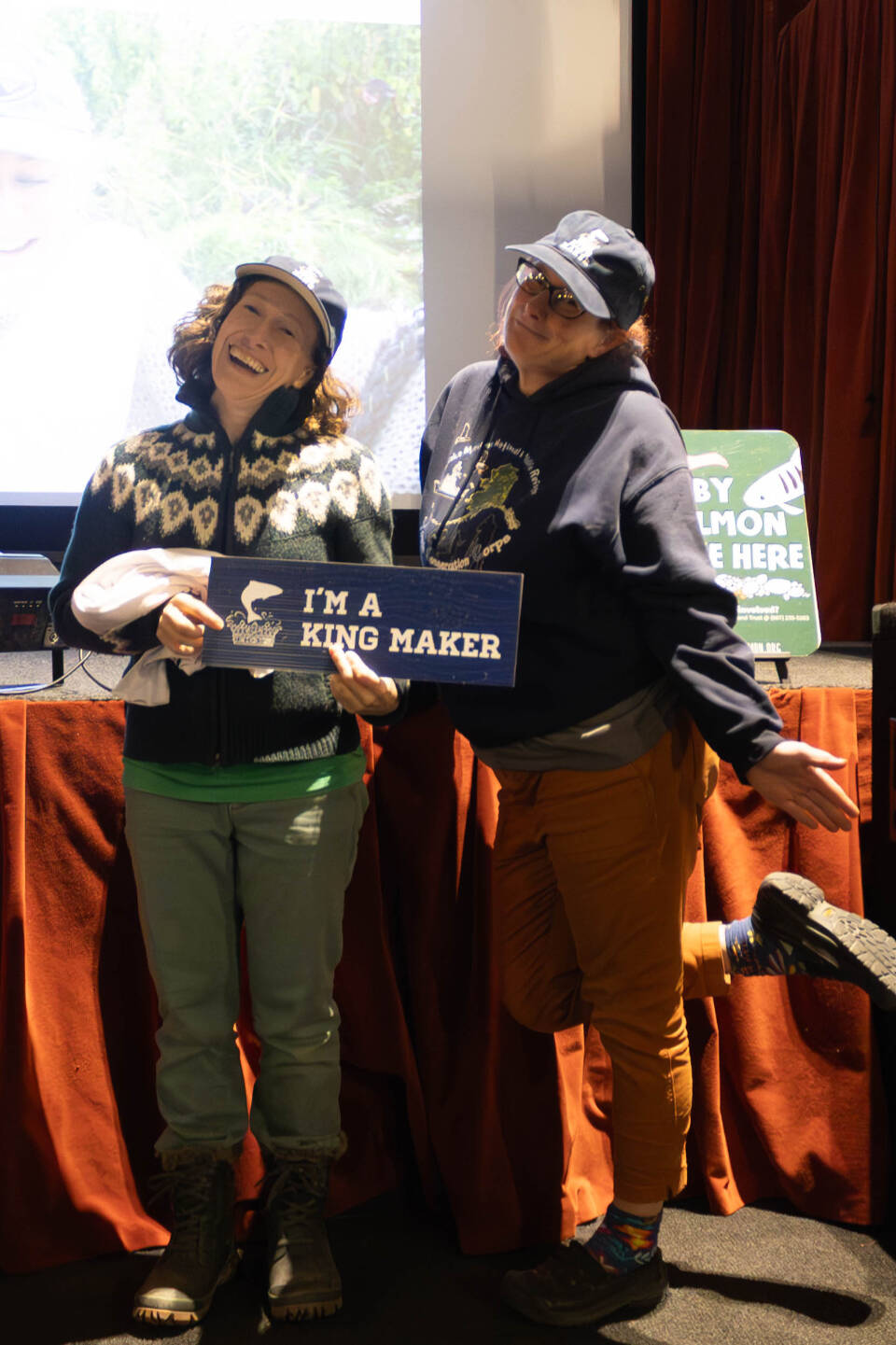
Kachemak Bay National Estuarine Research Reserve Manager Katherine Schake (left) and Education Coordinator Ingrid Harrald receive the 2025 Kachemak Heritage Land Trust King Maker Award on Dec. 10, 2025, in Homer, Alaska. Photo courtesy Hayley Patton/KHLT