The experiment: Kenai becomes an agricultural test site — Part 6
Published 9:30 pm Wednesday, December 17, 2025



AUTHOR’S NOTE: By 1907, the end of the line had nearly arrived for Kenai’s agricultural experiment station, which had begun operation just north of the village in 1899.
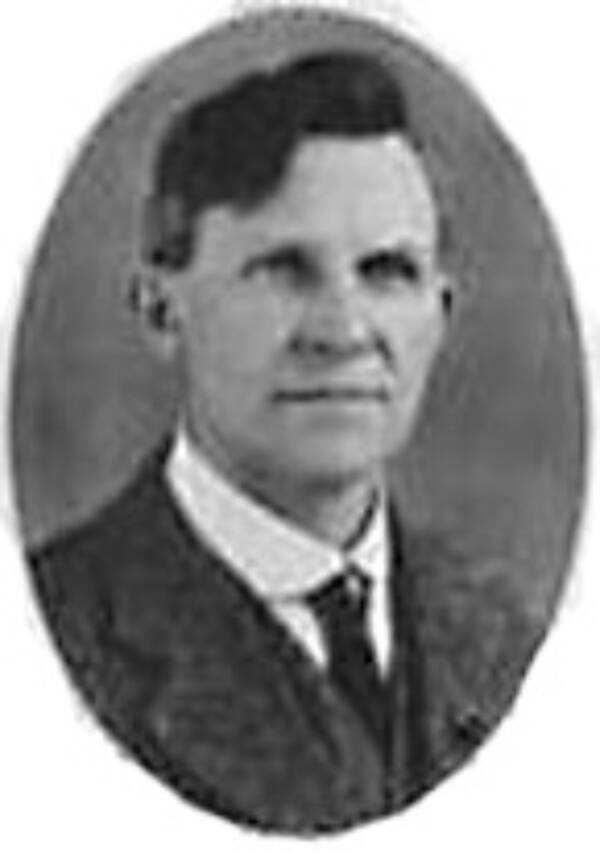
Newlyweds Milton and Margaret Snodgrass boarded the S.S. Tyonic, of the Cook Inlet Transportation Company, on the Fourth of July 1907, bound for the village of Kenai, where Milton had recently been named inspector in Alaska’s system of agricultural experiment stations.
System boss Charles Christian Georgeson had named Snodgrass an inspector in Kenai, as well as the superintendent of the experiment station in Kodiak.
Kenai was to be Snodgrass’s first work-related stop in Alaska. The steamer deposited him, his wife and their luggage at midnight, July 5, on a deserted stretch of beach roughly northwest of the village. They were expected to walk the rest of the way.
“It was wild country,” wrote Snodgrass. “We carried a suitcase which became very heavy before we reached Kenai. Visibility was about a quarter of a mile along the shore, and there was no sign of human habitation, only the barking of dogs in the far distance. Walking the sandy beach at low tide was a new experience to us. Early daylight came at about 2 a.m. The shore fog began to lift, and on the sand spit about one mile southeast, the town of Kenai came into view.
“We arrived in the village about 5:00 a.m., after a steep climb of 50 [vertical] feet, and found what seemed like a deserted habitation except dogs,” he continued. “We walked out to the Greek Catholic Church [which abutted Kenai Station property], and from there we recognized the U.S. Government Experiment Station building, much like an early frontier homestead farm. It was our introduction to Alaska agriculture.”
Georgeson had imbued Snodgrass with the authority to close or keep open the Kenai Station. Georgeson’s 1907-08 report for the U.S. Department of Agriculture quickly clarified what Snodgrass’s decision had been.
“[The] Kenai Station has been closed and the equipment and livestock transferred to the new [breeding and experiment] station at Kodiak…. The station [had been] located at Kenai … [because] it appeared to be a promising location for successful agricultural development, and at that time there was a prospect that this region would be rapidly settled. However, this early promise was not fulfilled.”
Industry flailed instead of prospered. Proposed colonies of immigrants in Kachemak Bay floundered and failed. The railway developing out of Seward promised to direct people primarily through Resurrection Bay, thus bypassing Kenai as a transportation corridor. And the production of grains to feed large herds of cattle during the winter months proved so variable as to be considered unreliable and an unacceptable risk.
Georgeson tried to conclude his Kenai Station report on an upbeat note, but his hopefulness seemed tepid at best: “Should the [Kenai] district develop industrially, experiments can be resumed at any time.”
James W. Gray, who had taken over as station superintendent a year earlier, served his last day on May 1, 1908. Then, the Kenai Station—except for its infrastructure—was no more.
After the closure
The buildings on the experiment station property sat empty and unused for at least a year. On Nov. 13, 1909, Prof. Georgeson consented to allow the Bureau of Education to use the buildings until the Department of Agriculture needed them again. The consent was strictly a “use” agreement; the structures were not formally turned over to the bureau.
It is unclear how the Bureau of Education used the station buildings, if at all, during the first year or so of the agreement, but during the three years (1911-1914) that sisters Willietta and Alice Dolan taught at the government school in Kenai, they once dined in the station’s main quarters.
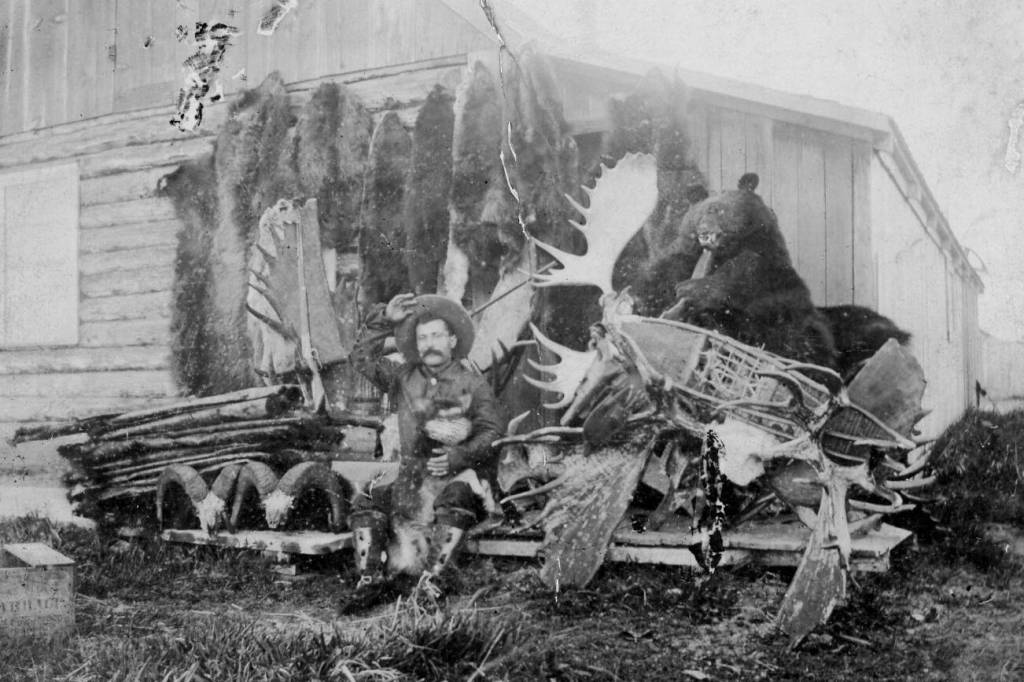
In probably 1912, they were invited to dinner there by P.F. “Frenchy” Vian, a sometimes slippery local entrepreneur and hunting guide who was living at the station house at no cost, having been apparently invited to do so by William Thomas “W.T.” Lopp, chief of the Alaska Division of the U.S. Bureau of Education.
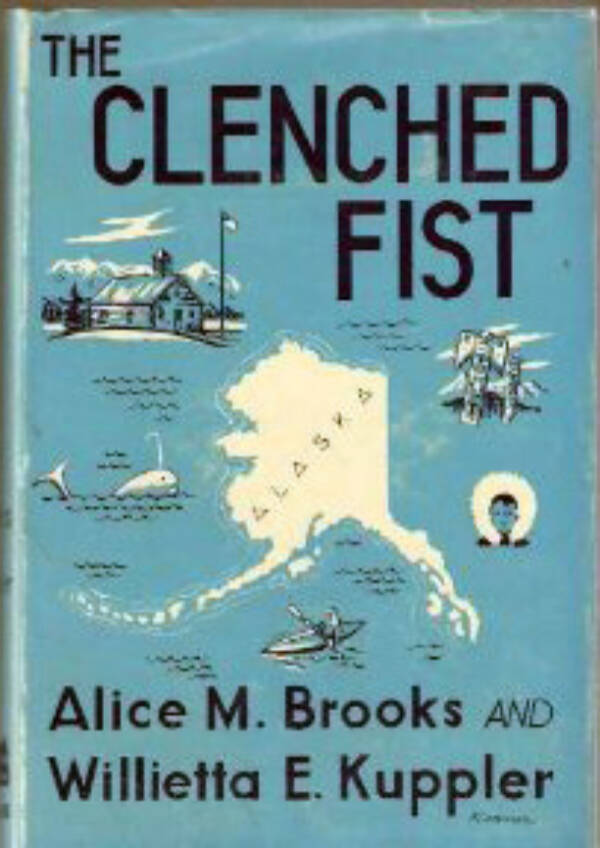
By the time of the dinner, Willietta had married a young Alaska jurist named George W. Kuppler, and he also had been invited to the promised feast. In “The Clenched Fist,” the sisters’ memoir about their time in Alaska, they recalled receiving the invitation and the event that followed:
“Refuse we could not without offending him. George assured us it would be clean, as we asked him with a great deal of trepidation if it would be safe. Also, he added, he is a good cook, when he tries. When the three of us entered his house, our fears vanished. ‘Frenchy’ was living in the Department of Agriculture building, as the experimental farm was closed.
“We found the place as neat and clean as a navy vessel. The table was covered with a clean, white oil-cloth…. It must have been sometime since ‘Frenchy’ had white women as guests. He was visibly very nervous. As soon as he began serving us, his composure returned. He must have been a good waiter, some place, somewhere. He hurried back and forth from table to stove until the table was loaded with heaping platters….”
Eventually, news of Frenchy’s lodging arrangement reached Prof. Georgeson in Sitka, and he was not pleased. Neither was a U.S. Forest Service ranger named L. Keith McCullagh, who arrived in Kenai in the fall of 1912, sometime after the big dinner, in order to locate a site for a proposed ranger station.
Unlike Frenchy had done, McCullagh tried to gain entry to the house by following proper channels, beginning with a Sept. 27 letter to Deputy Forest Supervisor Thomas M. Hunt, of Cordova, who was his boss. He complained that there was precious little room in the village for a new office building, so he offered an alternative.
“I am having more or less inquiry with regard to building sites at Kenai and the Government Farm,” McCullagh wrote. He said that the experiment station grounds and the land set aside for the Russian Orthodox Church occupied so much space “that if anyone wants to build, they have to go out in the wilderness.”
The main house at the Kenai Station, he continued, “is being put to no use whatever by the Bureau of Education, the house being occupied rent-free by P.F. Vian, and the barns being used by saloon men for their team of horses. Is it not possible for the Department of Agriculture [of which the U.S. Forest Service was also a part] to regain possession of this ground and buildings for the use of the service, it being ideal for a ranger station?”
Thus, with a few words, a feisty, sometimes contentious young forest ranger set into motion a drama that would occupy governmental typewriters for months to come.
TO BE CONTINUED….