Porcupine Theater to host ‘LAT59: Filmmaker Forum,’ featuring new films from 3 local artists
Published 4:30 am Tuesday, September 23, 2025




This weekend, a film forum will be held at the Porcupine Theater, featuring new films from three Homer filmmakers. Michael Walsh, Bjørn Olson and Mary Katzke will be celebrated over all three days, kicking off Thursday afternoon with a screening of a variety of their selected short films, and continuing through Saturday night, with the culmination of a live music performance by visiting artists, Pamyua.
Two collections featuring short films from three filmmakers will play throughout the weekend. Program One will have showings Thursday, Sept. 25, at 3:30 p.m. and Saturday, Sept. 27, at 1 p.m. and Program Two will screen Friday, Sept. 26, at 3:30 p.m. and on Saturday, Sept. 27, at 2:45 p.m.
The forum will end Saturday night with a performance from musical group Pamyua, celebrating the premiere of “In the Wake of Justice Delayed.” The film’s soundtrack features music and an original score made by the collective, comprised of composers Phillip Blanchett, Kristoffer Jul Reenberg and Ivan Night.
Pamyua showcases Inuit culture through music and dance, using their performances as a platform to share Indigenous knowledge and history. Their style is often described as “Inuit soul music,” and combines traditional melodies reinterpreted with contemporary vocalization and instrumentation.
While attending the forum over the weekend, audience members can try out the new culinary collaboration between local food truck, Pika Pika, and the theater. You can find a menu on the theater’s Facebook page. Beer and wine sales from each evening will go toward supporting a different Homer nonprofit organization, chosen by the respective filmmakers.
You can learn more about LAT59 and purchase tickets online at porcupinetheater.com/lat59.
Sept. 25, Michael Walsh
Michael Walsh describes himself as a “curator, archivist, arts administrator and studio artist.” Involved in the creation of moving image art since the early 1990s, he has curated programs for everything from San Francisco museums and micro-cinemas to Korean galleries and Milwaukee’s urban meadows and shipyards. According to an online bio, he identifies with “the experimental, avant-garde film practices of the 1960s and champions this tradition in programs interweaving 21st century moving image practices and philosophies.”
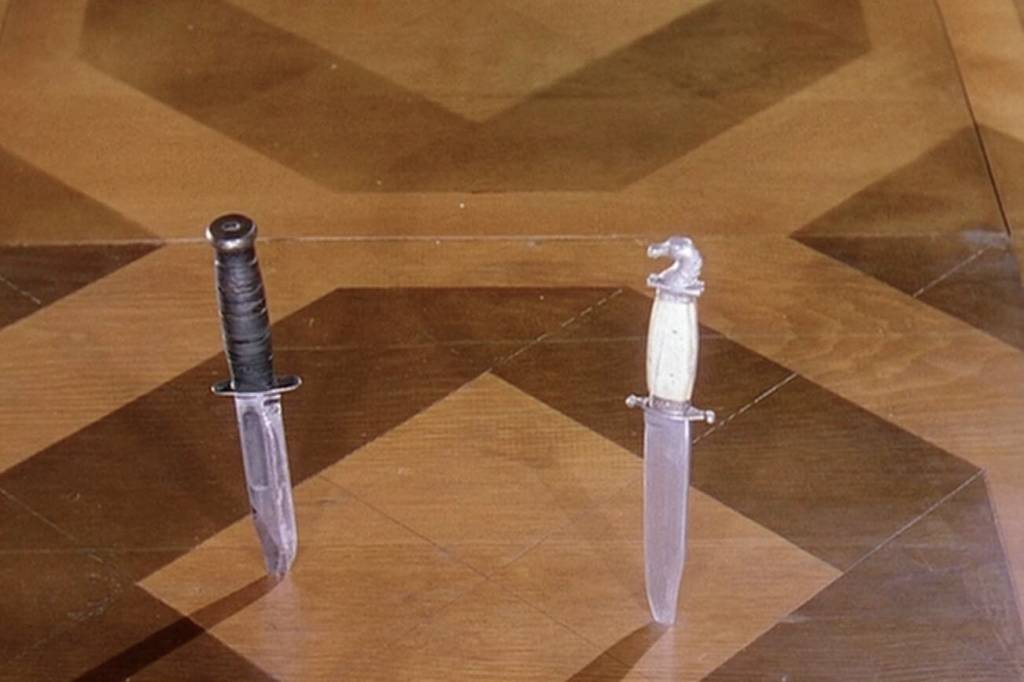
During the “Short Works, Program One” screening, Walsh will feature his films “Watermark” (described as “a memory about living near Kachemak Bay”), “The Dust Dress” (a 35mm to digital conversion featuring poem by Molly Lou Freeman and sound by Michio Kurihara), “Killing the Kiss” (a re-edit of Stanley Kubrick’s 1955 film, “Killer’s Kiss”), and “The Shoplifter” (described as a reenactment of a small town police blotter with original music by Dave Webster and collaboration with Susannah Webster). Program One films will show Thursday, Sept. 25, at 3:30 p.m. and Saturday, Sept. 27, at 1 p.m.
During the “Short Works, Program Two” screening, Walsh will feature his films “Disco Pig” (dedicated to “underground film luminary, Kenneth Anger,” and featuring music from local band, The Wet Spots), “Shakedown” (“the winter blues shakedown!”), “Remember the Sun” (“when the times get dark, remember the sun”), “The Sky Looks Back” (an exploration of the relationship between the natural world and the seemingly inescapable presence and impact of humans, intended to be “a humble reminder of our existence in this immensely beauitful landscape”), and “It’s Alright” (starring Adele Person and looking at a “cabin fever recreational sport”). Program Two films will screen Friday, Sept. 26, at 3:30 p.m. and Saturday, Sept. 27, at 2:45 p.m.
On Thursday, Sept. 25, Walsh will screen three new films at 7 p.m.
“His World and Its Harms” is a 6-minute digital re-edit of the 1951 Hollywood film “The World in His Arms,” which starred Gregory Peck and features Alaska prominently in the plot.
“To this day, it is still the only Hollywood World Premiere in Alaska,” Walsh wrote in an email. “I found old newsreel footage from 1951 of the premiere that is used at the beginning of the edit to provide context.
“The film is a pretty horrible movie from beginning to end with racist and sexist tropes from that period,” Walsh explained. “The re-edit highlights the exploitation of Alaska and makes the film a bit more viewable.”
“Becoming Earth” is a 14-minute film inspired by Walsh’s feelings of grief surrounding the death of his friend and neighbor, Eva Saulitis, who died of breast cancer in 2016.
“Eva was able to express her feelings about death in a way that resonated,” he wrote. “As painful as the experience was for her, she showed so much grace and wisdom in her dying.”
Walsh said in Saulitis’s book “Becoming Earth,” she writes about the concept of “bardo,” a state of existence in Tibetan Buddhism between death and rebirth, which varies according to a person’s conduct in life and the way in which they died. The video is dedicated to Saulitis.
Walsh said “In The Swim” will be projected on 16mm, using his own xenon projector. It will be the first time the theater has projected celluloid film in over 15 years. The silent, black and white film, will be accompanied by live music, performed by Andie Tanning on violin, James Moore on guitar, Marial Roberts on cello, and Katie Cox on flute.
The description for “In The Swim” reads: “Bouncing in waves like a hatchling and gliding through currents like a salmon, a fisherman plunges beneath the surface of a mysterious landscape and swims in the sensual qualities … finding renewal in the energy of the ocean.”
The evening will end with Asia Freeman joining Walsh in conversation about the screening and his approach to moving image making.
Beer and Wine sales for Thursday evening’s event will go directly to Bunnell Street Art Center.
Sept. 26, Bjørn Olson
Local filmmaker and wilderness adventurer, Bjørn Olson, has dedicated his life to exploring far-flung corners of the state through human-powered wilderness adventure and documenting his experiences. Olson moved to Homer in 2008, in search of a community where he could put his passion for environmental activism into action. An online bio states that a life-long closeness to Alaska’s vast wilderness and its unique cultures has helped shape and inform his identity and the media he produces.
During the “Short Works, Program One” screening, Olson will feature his films “Alaska Thaw” (a film about witnessing climate change in Alaska, firsthand), “Seabird Memorial” (a film that also serves as an artist statement for Olson’s adventure companion and partner, the artist Kim McNett, who painted over 900 dead seabirds photographed over a 170 mile, human-powered, coastal Arctic exercusion the two underwent together), “Frostbound: An Arctic Cycling Expedition” (follows Olson and McNett as they traverse an untested, northwest Arctic environment on fat bikes), and “Green Anarchy: A Conversation with John Zerzan.” Program One films will show Thursday, Sept. 25 at 3:30 p.m. and Saturday, Sept. 27 at 1 p.m.
During the “Short Works, Program Two” screening, Olson will feature “Our Language, Our Legacies” (a journey into the “lyrical language” of Sugt’stun, the language of the Sugpiaq people of the Chugach), “Alaska Subsistence: Spirit of the Ancestors” (focuses on the importance of salmon in Indigneous food sovereignty), “No Excuses” (a teaser from an ongoing biopic of George Peck, an 80-year-old adventurer from Seward), and “Libby” (following the restoration of the Libby 76, a former Bristol Bay fishing vessel that was retired in 1951 and restored by the late, great Dave Seaman). Program Two films will screen Friday, Sept. 26 at 3:30 p.m. and Saturday, Sept. 27 at 2:45 p.m.
On Friday, Sept. 26, Olson will screen “How We Survive Diomede” at 7 p.m.
In an interview with Olson on Monday, he said he’s been working with the community of Little Diomede since 2019, when his partner, McNett, spent time on the small, northwest island as an artist in the school there. Facing challenges and travel delays due to the COVID-19 pandemic, as well as unexpected weather and the remote nature of the island, Olson wrapped filming this June and spent the majority of his summer working to edit together the 90-minute film.
Olson said the community present in Little Diomede is just one example of a culture that has lived on a resource base for thousands of years without polluting or overharvesting the ecosystem, learning to “live within the constraints of nature.” He said he feels that awareness and knowledge are something missing from our modern world, and something he believes we should be drawing inspiration from.
“It’s beyond profound,” he said when asked how making the film has affected him. “A lot of this has been theoretical, you know, a lot of the anthropologists and political scientists that I read are talking about these ideas intellectually. But here’s this – for me – the best example of that theory in practice, with all the things that we’re missing, you know, the tight community, the working together, individual autonomy. To be frank, it’s an anarchist utopia.”
He said he plans to return to Little Diomede later this year and screen the film within the community.
After the screening on Friday, Olson will answer questions and lead a discussion on the film.
Beer and Wine sales for Friday evening’s event will go directly to the Kachemak Bay Conservation Society.
More information on Olson’s work can be found online at www.mjolnirofbjorn.com.
Sept. 28, Mary Katzke
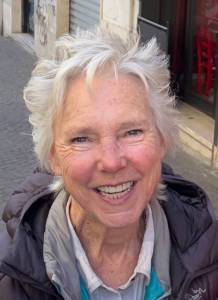
Mary Katzke is a recent Fulbright scholar and 2024 recipient of the governor’s “Individual Artist of the Year” award. After graduating from NYU graduate film school, Katzke began combining creative narrative and classic documentary styles to focus on telling stories about vulnerable populations. Her films have been featured on PBS, at Sundance, MOMA, and “used in intimate settings for smaller, local changes in public awareness, attitude and justice.” In an online bio, Katzke is quoted as saying that cause and art must be balanced to create meaningful media, which can move the heart to change.
During the “Short Works, Program One” screening, Katzke will feature her films “My Third Act” (a film about George Faust), “The Gift” (a “poetic tribute to a 90-year-old grandmother, in the tech age) and “Open Season” (a glimpse of the “wacky world” of dipnetting, set to operatic music). Program One films will show Thursday, Sept. 25, at 3:30 p.m. and Saturday, Sept. 27, at 1 p.m.
During the “Short Works, Program Two” screening, Katzke will feature “Hospice” (with five clips from the service of hospice care), “Speaking from the Heart” (about an adult artist who has special needs), and “I’m Still Inside” (described as “a traumatic brain injury rap piece by Sam Johns). Program Two films will screen Friday, Sept. 26, at 3:30 p.m. and Saturday, Sept. 27, at 2:45 p.m.
On Saturday, Sept. 27, Katzke will screen “In the Wake of Justice Delayed” at 6 p.m.
In an interview with Katzke on Wednesday, Sept. 17, she said she’s been making films in Alaska since 1980 and has found that there is never a shortage of stories.
“My very first film ever was ‘No Word for Rape,’” she said. “That’s when I was trying to raise awareness about sexual assault; a lot of the Indigenous languages didn’t have a word for that, as being even a concept that you could say no and it would be wrong for someone to push forward.”
She said she visited 11 different communities while filming the Alaska Humanities Forum-funded project, talking to all different kinds of families. Katzke was impressed by how welcoming they were, considering it was a taboo topic. She said the film was used for about 30 years, statewide, as a training resource for different domestic violence and sexual assault caregivers, as well as for police training.
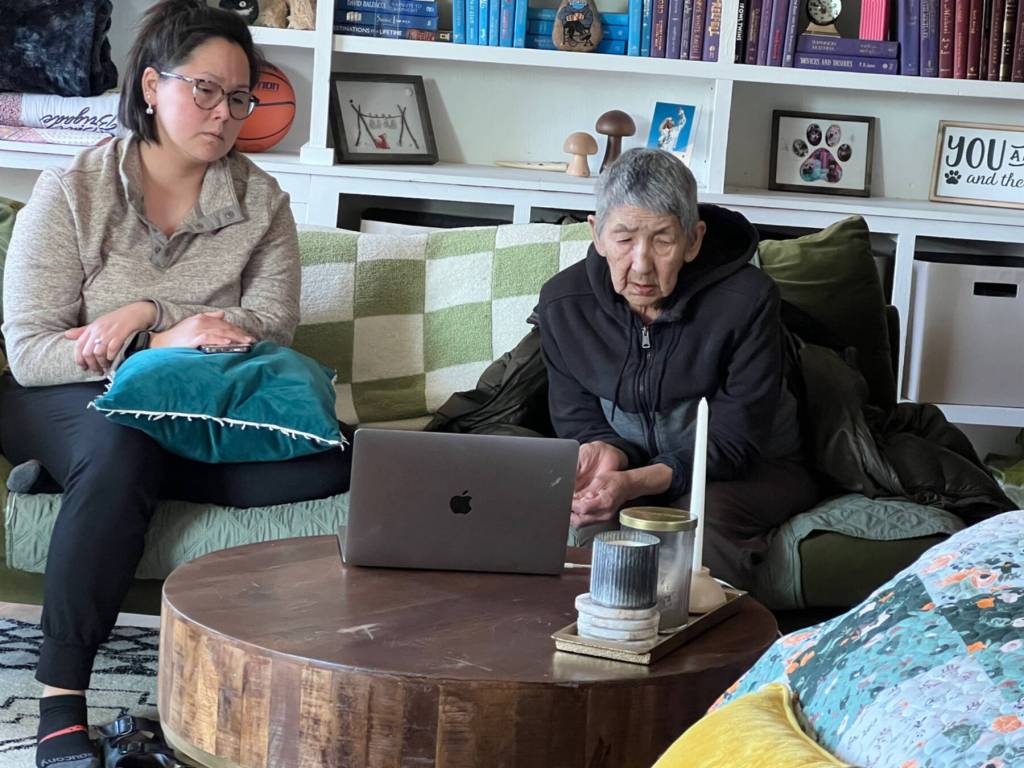
Saturday’s film tells the personal stories of two Indigenous families who’ve lost loved ones to murder in Alaska and follows them on their search to find justice. According to the film description, it explores firsthand “what families endure as they face a cumbersome legal system and the tremendous toll it takes on them.” Katzke said one story follows an ivory carver from the Utqiagvik/Point Hope area, whose mother was abused and murdered, with no one held accountable. The other story follows Billi Jean Miller, a woman who sought justice for the 2018 Palmer murder of her twin sister, Mingnuna Bobbi Jean Miller. Katzke said the Miller case went through a lengthy legal process with multiple delays, forcing the family to travel from Nome to attend court proceedings and creating additional barriers to reaching justice.
Katzke said her target audience for the film is potential jurors, law enforcement, judges, local safety officers, and VPOs. She said that through the act of making the film, she learned how a history of trauma ties into these stories and creates a thread of distrust in the system, triggered by these acts.
“It’s very comprehensive,” she said. “But it all goes into why women don’t report. It’s really the tip of the iceberg.”
In the case of the Palmer murder, Katzke said Bobbi Jean had gone to police three days before she was killed, saying that she needed help and wanted to go home. They refused to help her, turning her away.
Katzke said that maybe if we had a more welcoming law enforcement and legal system, people would be less afraid to be hurt again by a system that’s not working for them.
“These are people whose families love them, who have children and mothers who lost them, who remain traumatized the rest of their lives by losing this person,” said Katzke. “And if we can show them we’ve got their back, it would be very meaningful. That would be a wonderful thing to come out of this.”
After the screening on Friday, Olson will answer questions and lead a discussion on the film, followed by a reception and live music by Pamyua.
Beer and Wine sales for Saturday evening’s event will go directly to supporting Affinityfilms Inc.
More information on Katzke’s work can be found online at affinityfilms.org.