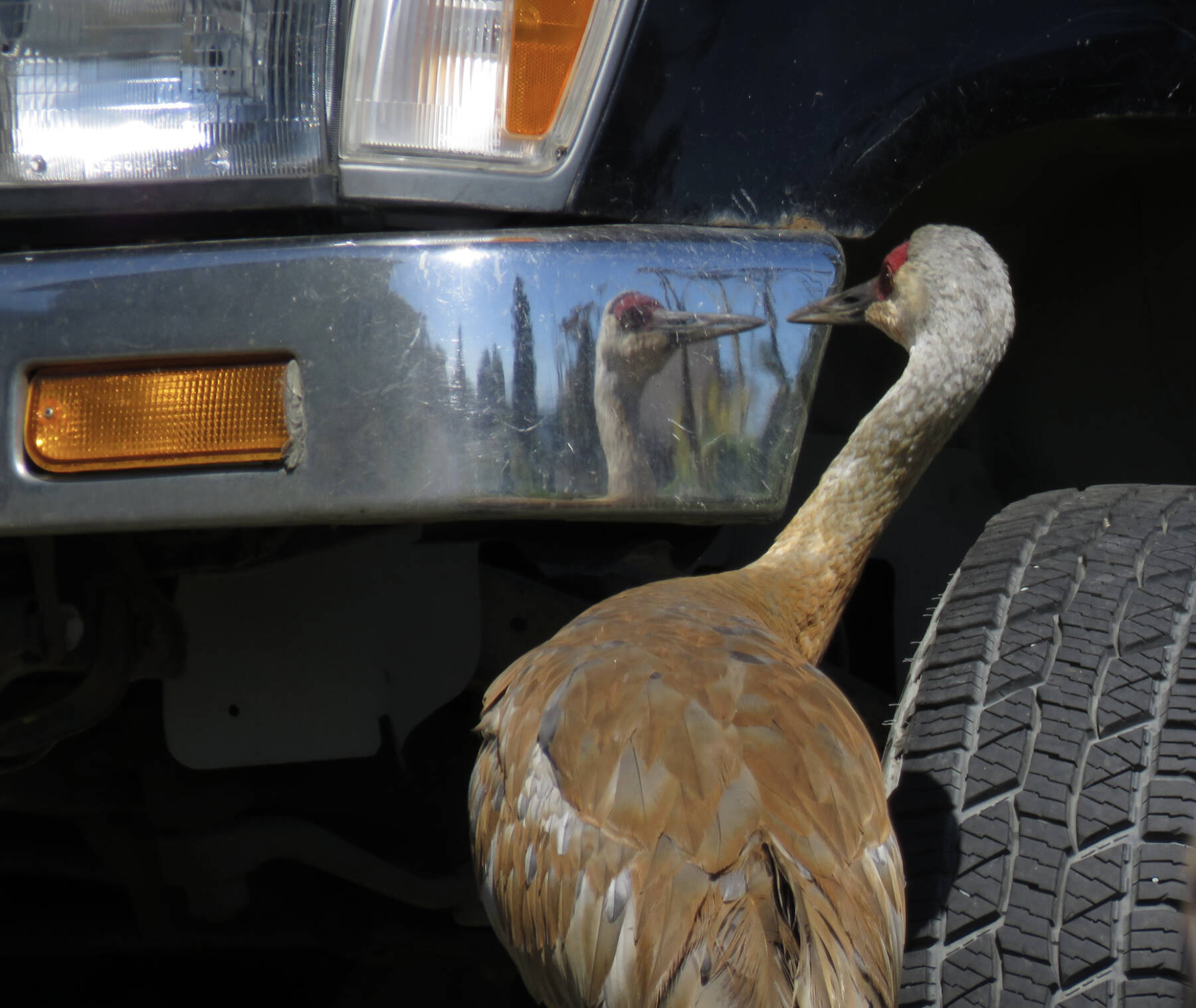
Kachemak Crane Watch, a citizen science project associated with the Center for Alaskan Coastal Studies, has released their annual report of sandhill crane arrivals, nestings, hatchings, fledgings and departures for 2025.
According to the report, the first crane flyover, as local sandhill cranes returned from their winter sojourn near Sacramento, California, occurred on March 29 near Seaside Farms out East End Road. The first reported on-the-ground sighting occurred when a pair of cranes landed at the Beluga Slough picnic table on April 12. This landing, the report states, marked the official beginning of Homer’s sandhill crane nesting season.
Nesting pairs continued to arrive in Homer through the end of May, and began nesting in late April through the first part of June.
“This is a good survival strategy so not all colts hatch at the same time, nor are they all simultaneously ready after fledging to migrate,” KCW wrote in the report. “That is why some nesting pairs are seen with their colts still in town even after the main group has left on migration.”
The number of nests reported this year increased slightly from last year — 54 compared to 51 in 2024. However, nesting success saw a marked decrease — 55.6% compared to 74.5% last year — and only 47 of the 80 crane colts that hatched made it to fledging. The report notes that predators were a problem this year. For example, all three nesting pairs that usually use Mariner Park Lagoon or Beluga Slough lost their nests, and KCW counted 46 mortalities that include destroyed or lost eggs and colts.
Still, according to the report, the local sandhill crane population is increasing.
“More groups of young nonbreeding adults ranging through neighborhoods around town have been seen in diverse parts of town, many in areas that they had not frequented before,” KCW wrote. “Even some of the nesting pairs with colts were easy to see around town.”
The increase is not surprising, the organization wrote, considering that, over 22 years, 791 known colts have fledged in the Kachemak Bay area from all reported nests from Anchor Point south to the head of Kachemak Bay.
The main migration south — a 2,400-mile return trip to Sacramento — began on Sept. 11 with a “magnificent showing” of more than 2,000 cranes circling around Beluga Slough, before they continued their course to upper Kachemak Bay. Flocks of hundreds or thousands of cranes “streamed” over Homer and Anchor Point for the rest of the day. According to the report, the southward migration from the Alaska Peninsula across the Cook Inlet continued for the next few days, and reports of passing cranes continued to be sent to KCW through Sept. 20.
As part of the crane watch season, KCW and Inspiration Ridge Preserve — both affiliated with CACS — hosted 11 Sandhill Crane Tours this summer, between Aug. 21 and Sept. 5. Provided annually to registered community members, the tours provide an opportunity for visitors to view and photograph cranes and learn about their natural history and lives in the Kachemak Bay area.
A video slideshow of crane photos by KCW coordinator Nina Faust can be found on YouTube at www.youtube.com/watch?v=lZLKy9bMfdU.
Find the 2025 report in full at cranewatch.org, under the “Publications” tab at the top of the page, then “Reports.”
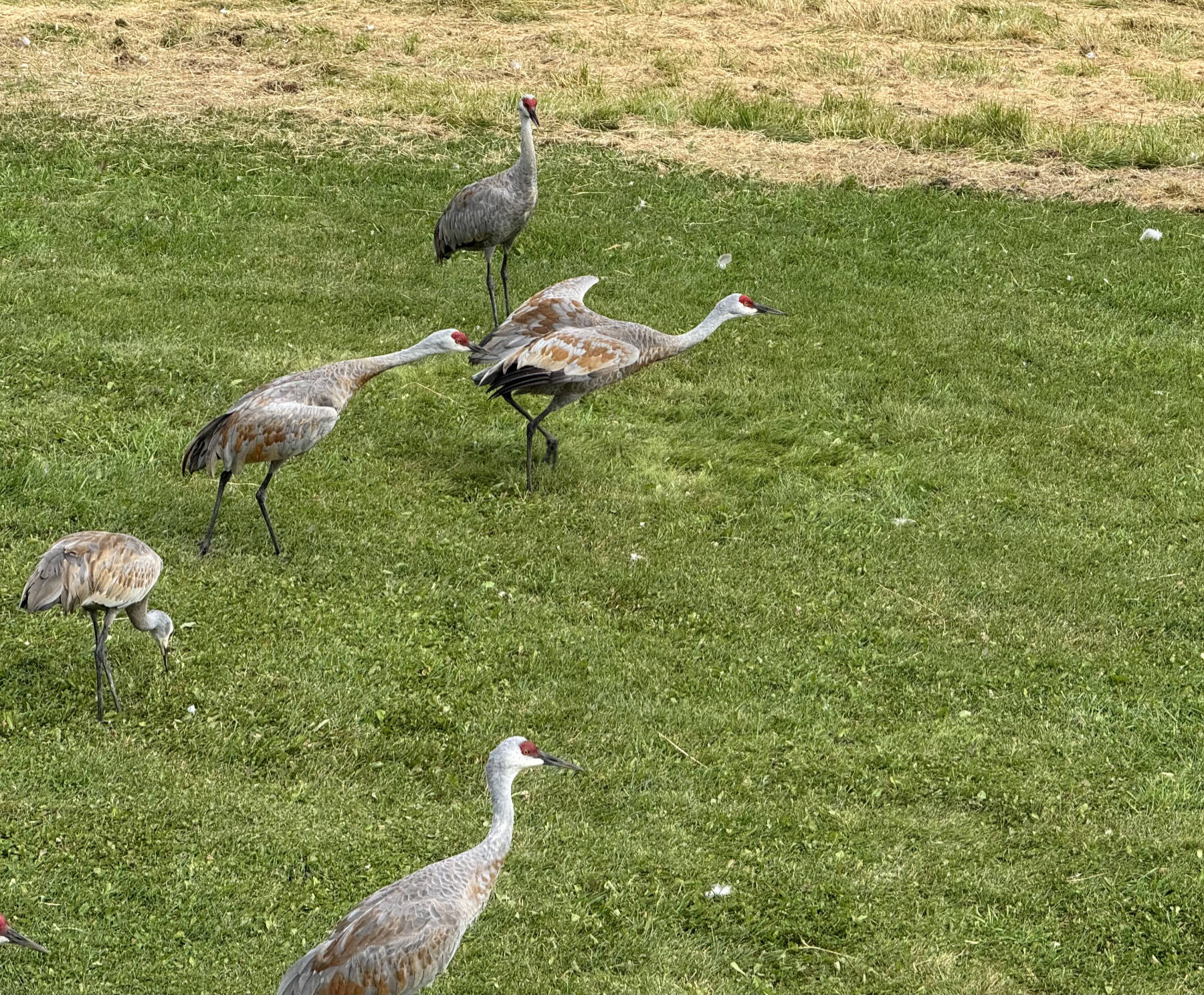
Adult sandhill cranes lead the flock to go on a pre-migration training flight in 2025. Cranes signal their intent to take off by stretching their necks forward and almost parallel to the ground. Photo courtesy of Nina Faust
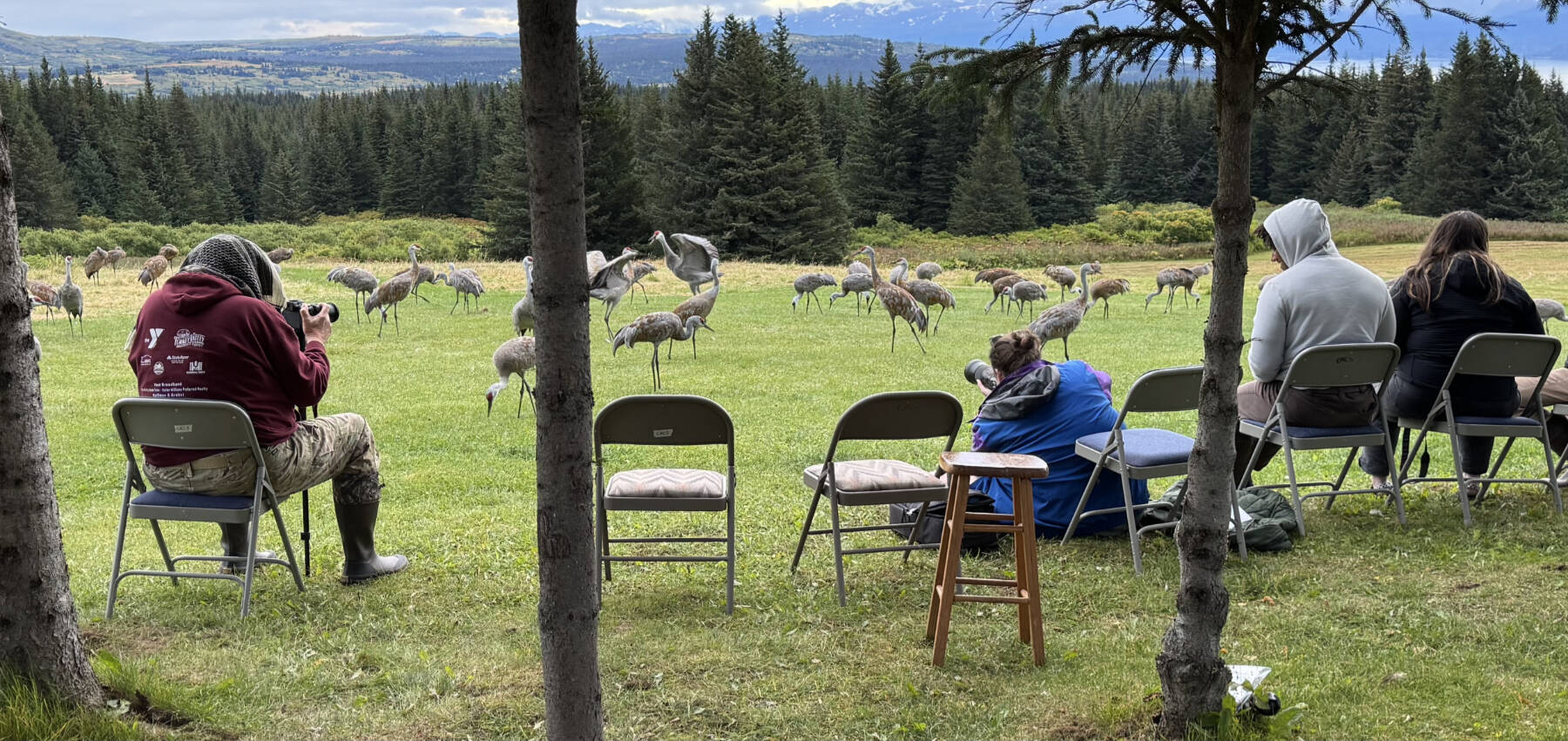
Participants in one of Kachemak Crane Watch’s late summer/fall crane tours enjoy a very intimate viewing and photography experience with the crane flock at Inspiration Ridge Preserve in 2025. Tour participants are instructed in proper crane viewing etiquette so the cranes are not bothered by the group’s presence. Photo courtesy of Nina Faust