‘Girls on the Water’ expedition presents on summer adventures and research
Published 10:30 pm Wednesday, August 6, 2025
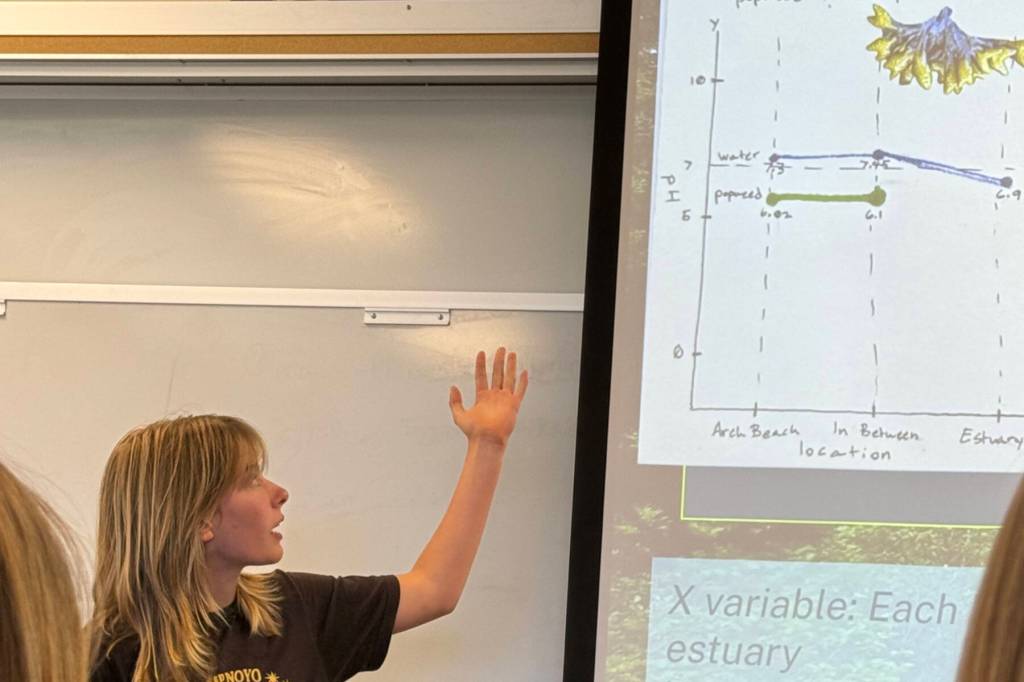
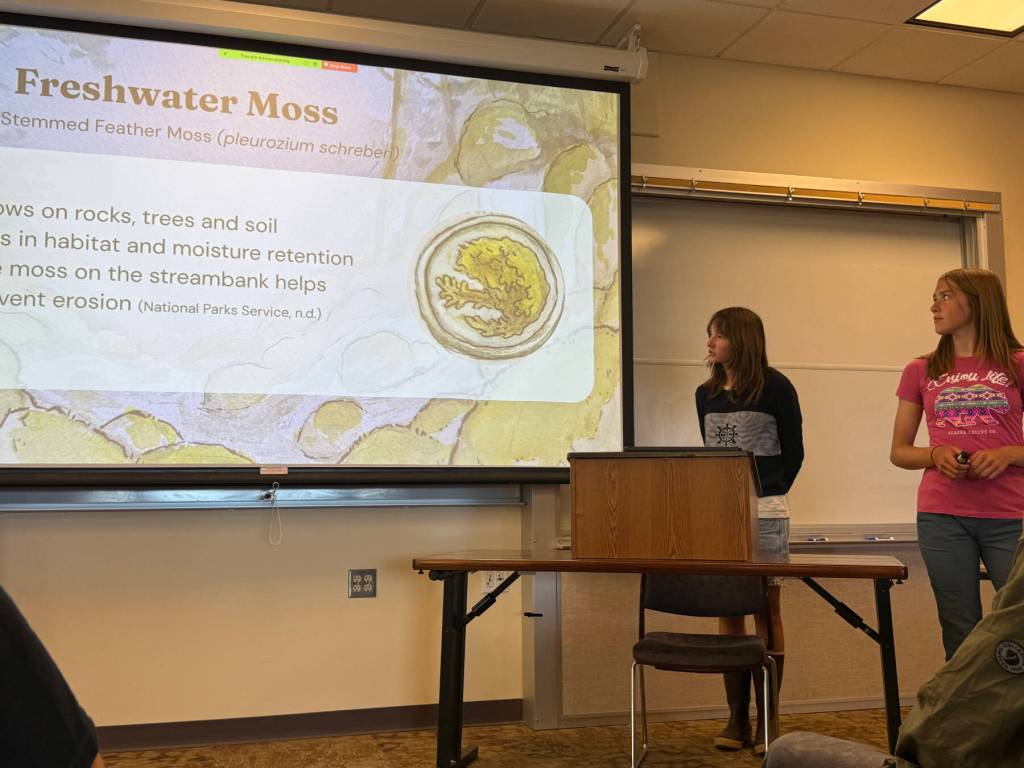
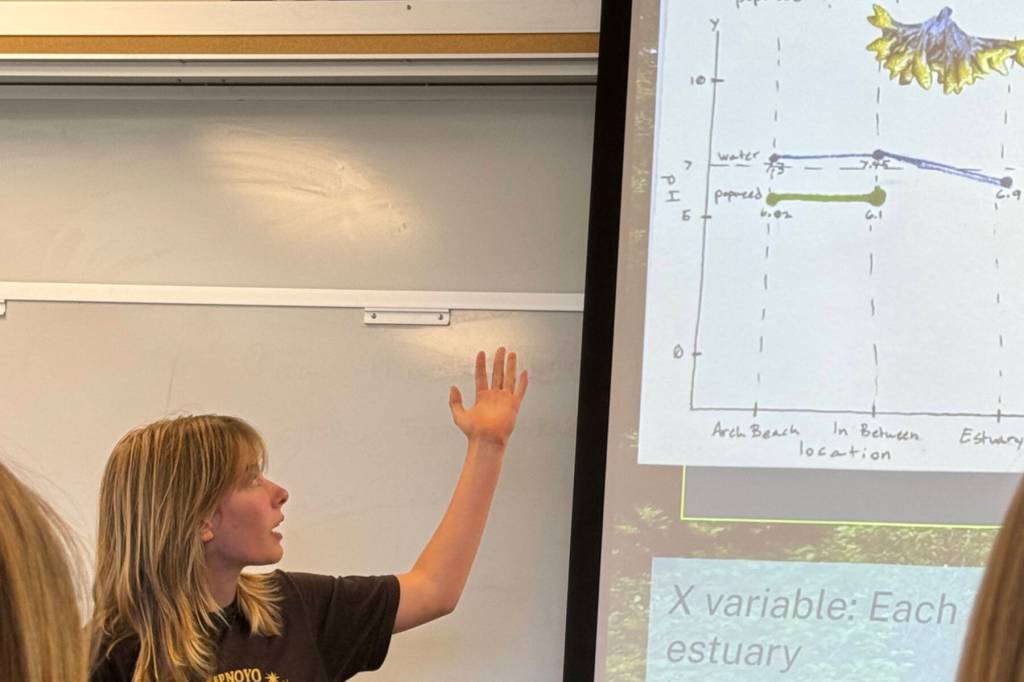

Room 202 in Kachemak Bay Campus’s Pioneer Hall was filled with laughter and enthusiasm on Monday, July 28, as nine young women gathered to present scientific research and art completed during the 2025 Girls on the Water expedition. Students spent time across the bay, camping in Tutka Bay and completing research at NOAA’s Kasistna Bay Laboratory.
Girls on the Water is a project of Inspiring Girls Expeditions, with the Alaska branch of the organization run through the University of Alaska Fairbanks. According to kayak guide and Girls on the Water staff member, Claire Sharp, the goal of Girls on the Water is to foster interest in marine ecosystem education for young women while providing them with the skills needed to explore the coastal realm in a safe and self-reliant manner. The program aims to foster participants’ self-confidence in physical, intellectual, and leadership abilities, creating lifelong advocates for earth sciences and environmental stewardship. According to their website, the program was inspired by Girls on Ice to bring marine scientists and kayaking guides together in 2015.
Students from both Alaska and the Lower 48 were present on the expedition, under the guidance of artistic lead Elly McFarland, oceanographer Ashley Davis and Sharp.
For more information about Inspiring Girls Expeditions, you can visit their website at inspiringgirls.org.
Team Jellyfish
Team Jellyfish was comprised of students Alejandro Figueroa from Florida, Clairice Stewart of Fairbanks, and Sophie He of Los Angeles, California.
The three hypothesized that if the abundance of plankton is high, the pH is around 8.1, and there’s no boat traffic, then there will be more jellyfish in that area.
The group found that jellyfish prevalence was most influenced by plankton levels, temperature (around 10 degrees Celsius), and pH level (around 7.9, which is more acidic). They noticed an abundance of jellyfish in areas with high plankton concentration, cooler water temperatures, and slightly more acidic water.
They also noted that they found jellyfish were less prevalent near freshwater areas and more common where saltwater and freshwater mix. In their research, the team used a plankton net and measured water conditions during their kayak expedition in Tutka Bay.
Team Moss
Team Moss was comprised of Anya Lee from Wasilla, Laura Teele from Virginia, and Ida Bodony from Glennallen.
They were inspired to study moss by the presence of a large blanket of soft moss on a salty, rocky outcropping near the water that Bodony found for a napping spot. The group formed their hypothesis around the expectation that moss from the coastal area would be more durable to seawater than moss from the forest or freshwater areas. They were interested in understanding why coastal moss thrives so close to the ocean and how it differs in its ability to handle salinity compared to forest and freshwater moss.
The students were unable to prove or disprove their hypothesis fully, due to the short observation period. Still, they noted that the coastal moss appeared denser and thicker compared to forest and freshwater moss. They suggested that more research and longer monitoring would be needed to draw definitive conclusions about moss durability in seawater.
Team Seaweed
Team Seaweed was comprised of students Jazz from Florida, Mireya from New York, and Ananda from Northern California.
The group hypothesized that the goo present inside both bull kelp and pop weed would have a lower salinity and be more acidic than the surrounding water.
To conduct their research, the team divided their study area into three zones — coastal, deep sea, and near the estuary — and collected samples of their targeted seaweed from each location, simultaneously taking water samples at each location to measure salinity and pH. After extracting the goo from the kelp samples, the students compared the internal pH and salinity of the kelp with the surrounding water, documenting their findings through graphs and data analysis.
The team proved the opposite of their hypothesis over the course of their research, discovering that the goo inside bull kelp was more salty and less acidic than the surrounding water. In contrast, the goo inside the pop weed was more salty and more acidic than the surrounding water.
They observed that the salinity and pH within the kelp remained relatively stable, even as the external water conditions changed. The coastal salinity dropped significantly from 22.5 to 5 parts per 1000, but the kelp maintained its internal salinity.
Although they were unable to prove their hypothesis, Ananda said at the end of their presentation that sometimes being wrong is what leads to more scientific discoveries, noting that it can be a pathway to improving future research and furthering understanding.